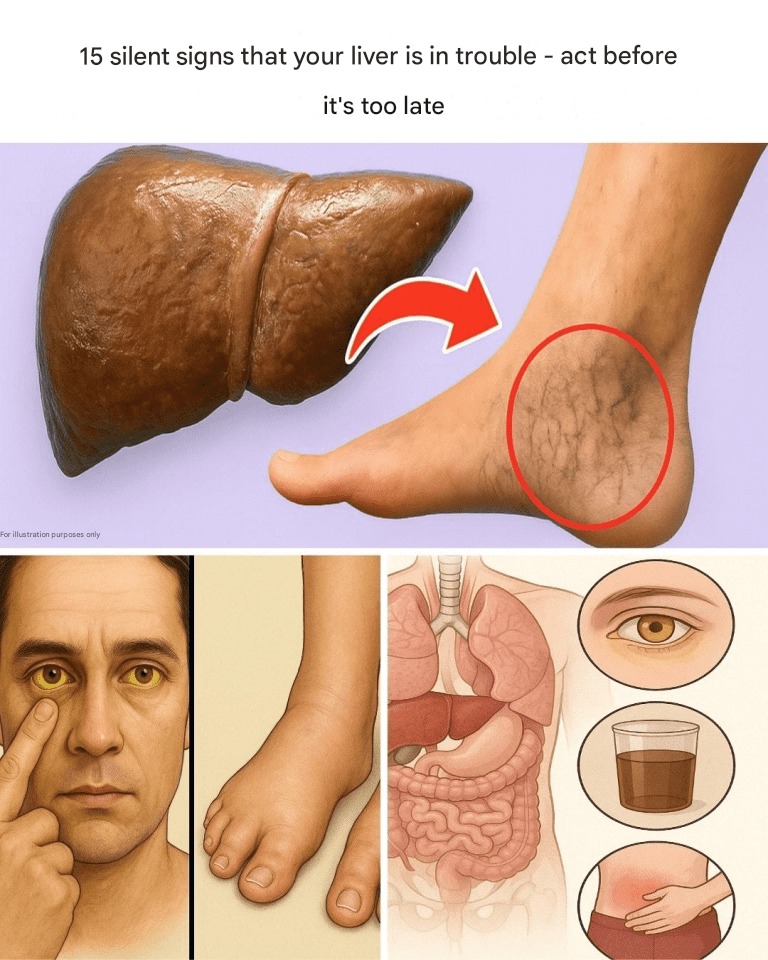
15 Silent Signs Your Liver Is in Trouble – Act Before It’s Too Late

The liver is a powerhouse organ, working tirelessly to detoxify your blood, produce essential proteins, and store energy. Yet, it’s often silent in signaling distress—meaning many people only realize there’s a problem when damage is advanced. Recognizing subtle liver warning signs early can make a huge difference. Here are 15 silent signals your liver may be struggling and what you can do to support it.


1. Fatigue That Won’t Quit

Feeling unusually tired, even after a full night’s sleep, could be your liver sending distress signals. The liver is central to energy production; when it’s compromised, your body’s cells can’t function efficiently, leading to chronic fatigue.

Tip: Support your liver with rest, balanced nutrition, and regular hydration. Foods like leafy greens, beets, and cruciferous vegetables can help boost detoxification.


2. Abdominal Pain or Swelling

Persistent pain or a heavy feeling in the upper right abdomen may indicate liver inflammation or enlargement. Swelling occurs as fluid builds up when liver function is impaired.

Tip: If you notice persistent abdominal discomfort, consult a healthcare professional promptly. Avoid self-diagnosing with pain relievers that can further stress the liver, such as acetaminophen.


3. Yellowing of the Skin or Eyes (Jaundice)

One of the most recognizable liver issues, jaundice, occurs when bilirubin builds up due to impaired liver function. Even mild yellowing can signal that your liver isn’t processing toxins properly.

Tip: Don’t ignore jaundice. Seek immediate medical attention, as it may indicate hepatitis, fatty liver disease, or bile duct obstruction.


4. Dark Urine

Dark, tea-colored urine can be a subtle indicator of excess bilirubin in the blood, often caused by liver dysfunction.

Tip: Increase water intake and track any changes in urine color. Persistent dark urine should be assessed by a doctor to rule out serious conditions.


5. Pale or Clay-Colored Stools

Healthy stool typically ranges from brown to dark brown. Pale or clay-colored stools may indicate bile flow obstruction, a hallmark of liver trouble.

Tip: Regular fiber intake supports digestion, but persistent pale stools require prompt medical evaluation.


6. Nausea or Vomiting

Ongoing nausea, particularly after meals, can be a warning sign that your liver isn’t properly metabolizing toxins.

Tip: Eat small, balanced meals and avoid highly processed foods. Chronic nausea should be investigated by a healthcare professional.


7. Swelling in Legs and Ankles

Fluid retention (edema) in the lower extremities often appears when the liver is struggling to regulate protein levels and fluid balance.

Tip: Reduce salt intake and engage in light physical activity. If swelling persists, it’s a clear signal to check liver function.


8. Chronic Itchy Skin

Persistent itching without an obvious rash may result from bile salt buildup in the skin, a sign of liver stress.

Tip: Moisturizing can help temporarily, but underlying liver function should be evaluated.


9. Easy Bruising or Bleeding

A liver in distress produces fewer clotting factors, making you more prone to bruising or bleeding easily from minor cuts.

Tip: Monitor for unusual bleeding and limit medications or supplements that may thin the blood unless prescribed.


10. Brain Fog and Cognitive Issues

Toxins accumulating in the bloodstream can affect the brain, causing confusion, poor concentration, or memory lapses. This is sometimes referred to as hepatic encephalopathy.

Tip: Avoid alcohol and support your liver with antioxidant-rich foods like berries, nuts, and green tea.


11. Loss of Appetite

A sudden lack of appetite, particularly when combined with other symptoms, can be a subtle signal that the liver is struggling to process nutrients efficiently.

Tip: Prioritize nutrient-dense meals even if portions are small, focusing on vegetables, lean proteins, and whole grains.


12. Persistent Bad Breath (Foetor Hepaticus)

A distinctive, sweet, musty breath odor can appear when liver function declines and toxins accumulate.

Tip: Maintain oral hygiene, but if bad breath is unexplained and persistent, investigate liver health.


13. Spider-Like Blood Vessels

Small, spider-like veins visible on the skin, particularly on the chest and face, may indicate liver disease, often due to elevated estrogen levels caused by impaired liver function.

Tip: While cosmetic, these veins signal deeper issues—medical assessment is crucial.


14. Sudden Weight Changes

Unexplained weight gain or loss, especially when combined with fluid retention, may indicate liver dysfunction.

Tip: Track your weight and consult a healthcare provider if sudden changes occur without diet or exercise explanations.


15. Mood Swings and Depression

Liver problems can influence hormone and toxin levels, affecting mood regulation. Depression, anxiety, or irritability may appear subtly over time.

Tip: Mental health support is important, but if combined with other liver signs, it warrants a liver function check.


Supporting Liver Health

While recognizing early signs is critical, preventive measures are equally important:

  • Limit Alcohol: Excess alcohol can overwhelm liver function.

  • Maintain a Balanced Diet: Emphasize vegetables, fruits, lean proteins, and whole grains.

  • Exercise Regularly: Supports overall metabolic function.

  • Avoid Toxins: Minimize exposure to environmental chemicals, processed foods, and unnecessary medications.

  • Stay Hydrated: Water is essential for flushing toxins.

Signs of Vitamin B12 Deficiency That Are Often Ignored

Vitamin B12, also known as cobalamin, is one of the essential nutrients your body needs to maintain healthy nerve cells, produce DNA, and generate red blood cells. Despite its importance, B12 deficiency is surprisingly common, especially among older adults, vegetarians, vegans, and people with absorption issues. The tricky part? Many early warning signs of a deficiency are subtle, easily mistaken for aging, stress, or other health problems. Ignoring them can lead to serious health consequences over time.

1. Unexplained Fatigue and Weakness
One of the earliest signs of B12 deficiency is persistent fatigue. Even after a full night’s sleep, you may feel exhausted or weak. This happens because vitamin B12 is critical in producing red blood cells, which carry oxygen throughout your body. Without enough oxygen delivery, muscles and organs tire quickly. People often dismiss this as “just stress” or “too much work,” but if fatigue persists despite lifestyle adjustments, it could be a red flag.

2. Numbness or Tingling in Hands and Feet
Neurological symptoms can appear subtly at first. Many people experience a pins-and-needles sensation, numbness, or tingling in the extremities. This happens because B12 plays a crucial role in maintaining the myelin sheath—a protective covering around nerves. Damage to these nerves can affect coordination and balance. Ignoring these signs may lead to long-term nerve damage.

3. Mood Changes and Cognitive Issues
Vitamin B12 deficiency doesn’t only affect your body—it affects your mind too. Low B12 levels are associated with mood disorders such as depression and irritability. Some people report difficulty concentrating, memory lapses, or a sense of “brain fog.” Unfortunately, mental health symptoms are often attributed to stress, anxiety, or aging, leaving the underlying B12 deficiency untreated.

4. Pale or Jaundiced Skin
A deficiency in B12 can lead to megaloblastic anemia, a condition where red blood cells are abnormally large and inefficient. This can cause pale skin, general pallor, or even slight yellowing of the skin and eyes (jaundice). Many people ignore these subtle changes, thinking they are minor cosmetic issues or signs of fatigue.

5. Glossitis and Mouth Ulcers
Changes in the tongue and mouth can also signal a deficiency. Glossitis, which manifests as a swollen, red, or sore tongue, is common. Some may also experience mouth ulcers or a burning sensation in the mouth. These signs are often overlooked or misattributed to spicy foods, dehydration, or other minor irritations.

6. Shortness of Breath and Dizziness
As B12 deficiency impairs red blood cell production, the body struggles to carry enough oxygen. This can result in shortness of breath, lightheadedness, or dizziness, especially during physical activity. Because these symptoms are nonspecific, many ignore them or assume they are related to cardiovascular issues or poor fitness.

7. Vision Changes
An often-overlooked symptom is blurred or disturbed vision, caused by damage to the optic nerve from prolonged B12 deficiency. This may progress gradually, so early signs like slight blurriness or difficulty adjusting to light changes are often ignored.

8. Digestive Disturbances
Digestive issues can also be a clue. B12 deficiency may cause nausea, diarrhea, constipation, or a general feeling of an upset stomach. These symptoms are easy to dismiss as minor dietary issues or stress-related gut problems.

Why Are These Signs Ignored?
There are several reasons why B12 deficiency often goes unnoticed:

  • Subtle onset: Many early symptoms develop gradually and are easily mistaken for stress, aging, or lifestyle factors.

  • Overlap with other conditions: Fatigue, mood changes, and digestive problems are common in many other disorders, making diagnosis tricky.

  • Lack of awareness: Many people, and even some healthcare providers, do not consider B12 deficiency unless specific risk factors are present.

  • Dietary assumptions: People may assume their diet is sufficient, not realizing that absorption issues, medications, or lifestyle choices can prevent proper B12 uptake.

Who Is at Risk?
Certain populations are more prone to B12 deficiency:

  • Vegetarians and vegans: Animal products are the primary source of B12.

  • Older adults: Absorption decreases with age.

  • People with digestive disorders: Conditions like Crohn’s disease, celiac disease, or chronic gastritis can affect absorption.

  • Medication users: Long-term use of proton pump inhibitors or metformin can interfere with B12 absorption.

Testing and Treatment
If you notice multiple signs of B12 deficiency, a simple blood test can confirm your levels. Treatment typically involves oral supplements, sublingual tablets, or, in severe cases, B12 injections. With early intervention, most symptoms are reversible, but prolonged deficiency can cause permanent nerve damage.

Takeaway
Vitamin B12 deficiency is often called the “silent deficiency” because its early signs are subtle and easy to ignore. Persistent fatigue, numbness, mood changes, pale skin, glossitis, and digestive disturbances should not be dismissed as minor issues. Awareness, early detection, and prompt treatment are key to preventing long-term complications. Monitoring your B12 intake through diet or supplements, especially if you fall into a high-risk category, is essential for overall health and well-being.

Vitamin D warnings and symptoms

Vitamin D has long been celebrated as the “sunshine vitamin,” essential for strong bones, immune support, and overall wellness. Found naturally in sunlight, fortified foods, and supplements, Vitamin D plays a critical role in calcium absorption and helps maintain healthy muscle and nerve function. However, like all nutrients, balance is key. Recent health advisories have raised warnings for individuals taking Vitamin D supplements, highlighting four specific symptoms that may indicate excessive intake or imbalance. Understanding these signs is crucial for anyone supplementing their diet with Vitamin D to ensure safety while reaping its benefits.

1. Persistent Fatigue and Weakness
One of the earliest warning signs of excessive Vitamin D intake is persistent fatigue or unusual weakness. While Vitamin D deficiency can lead to tiredness, taking too much may paradoxically cause similar feelings. Excess Vitamin D can lead to elevated calcium levels in the blood, a condition known as hypercalcemia. High calcium levels interfere with the body’s normal functioning, often resulting in fatigue, muscle weakness, and difficulty concentrating. Individuals may find themselves struggling with daily tasks that previously felt effortless. If you notice persistent tiredness despite adequate rest, and you are taking Vitamin D supplements, this could be an early indicator that your dosage needs adjustment.

2. Nausea, Vomiting, and Digestive Disturbances
Another symptom linked to high Vitamin D intake is gastrointestinal discomfort. This includes nausea, vomiting, poor appetite, constipation, or diarrhea. The underlying issue is often elevated calcium levels caused by excessive supplementation. When calcium accumulates in the bloodstream, it can irritate the digestive tract and lead to discomfort. People who regularly experience nausea after taking their supplement or notice ongoing digestive issues should monitor their Vitamin D intake and consult a healthcare professional. Often, lowering the dose or spacing out supplementation can resolve these digestive disturbances.

3. Frequent Urination and Increased Thirst
Hypercalcemia caused by excessive Vitamin D can also affect kidney function. One of the hallmark symptoms is polyuria—frequent urination—and polydipsia, or excessive thirst. When calcium levels are elevated, the kidneys work harder to filter it out, leading to increased urine production. This, in turn, can cause dehydration if fluid intake does not keep pace. Individuals taking high doses of Vitamin D supplements may find themselves constantly reaching for water or waking up multiple times at night to urinate. These symptoms should not be ignored, as prolonged hypercalcemia can strain kidney function and potentially cause kidney stones.

4. Confusion, Heart Palpitations, and Mood Changes
Vitamin D toxicity, though rare, can also affect mental and cardiovascular health. High calcium levels can disrupt normal heart rhythm, leading to palpitations or irregular heartbeat. Additionally, hypercalcemia may contribute to confusion, memory lapses, irritability, or mood swings. In severe cases, this can escalate to more serious cardiac or neurological complications. Individuals who notice sudden changes in mood or cognition while supplementing with Vitamin D should seek medical advice immediately. Early detection can prevent long-term damage and help maintain safe nutrient levels.

Managing Vitamin D Intake Safely
The recommended daily allowance (RDA) of Vitamin D varies depending on age, sex, and health status. For most adults, 600 to 800 IU per day is sufficient, though higher doses may be prescribed in specific deficiency cases. Importantly, exceeding 4,000 IU daily over extended periods is generally considered unsafe without medical supervision. To avoid toxicity, follow these guidelines:

  • Get tested: Periodic blood tests can measure 25-hydroxyvitamin D levels, helping to tailor your supplementation.

  • Monitor dosage: Stick to recommended amounts and avoid self-adjusting high doses unless instructed by a healthcare provider.

  • Consider dietary sources: Fatty fish, fortified dairy, and mushrooms provide natural Vitamin D, which may reduce reliance on high-dose supplements.

  • Sun exposure: Sensible sun exposure contributes to Vitamin D production, though caution is necessary to avoid skin damage.

The Takeaway
Vitamin D is a powerful nutrient, but more is not always better. The four warning symptoms—persistent fatigue, gastrointestinal disturbances, excessive thirst or urination, and mood or cardiac changes—serve as critical alerts to potential over-supplementation. Anyone experiencing these signs should stop high-dose supplements and consult a healthcare professional for evaluation. Maintaining optimal Vitamin D levels supports bone health, immunity, and overall wellness, but safety and moderation remain essential.

By paying attention to your body’s signals and staying within recommended limits, you can enjoy the benefits of Vitamin D without risking harmful side effects. Remember, supplementation should complement a balanced diet, not replace it. In the end, the goal is not just higher numbers in a blood test, but sustainable health and energy for everyday life.

I Soaked My Strawberries in Salt Water and These White Things Appeared: What It Means and How to Clean Your Fruit Properly

Strawberries are one of the most loved fruits around the world. Their sweet flavor, bright red color, and juicy texture make them perfect for desserts, smoothies, salads, and snacks. However, many people recently discovered something surprising when cleaning strawberries at home. After soaking them in salt water, tiny white worm-like things sometimes appear. This can be shocking and even a little disturbing if you are seeing it for the first time.

If this happened to you, don’t panic. There is a simple explanation, and it is more common than most people realize. Understanding why it happens and how to properly clean your fruit can help you enjoy strawberries safely and confidently.

Why Do White Worm-Like Things Come Out of Strawberries?

The tiny white creatures sometimes seen after soaking strawberries in salt water are usually larvae of a small insect known as the spotted wing fruit fly. The scientific name of this insect is Drosophila suzukii. Unlike common fruit flies that lay eggs on rotting fruit, this insect lays eggs inside fresh fruit while it is still growing on the plant.

When the eggs hatch, tiny larvae develop inside the fruit. Because strawberries are soft and delicate, they can easily become a host for these insects. Most of the time the larvae are extremely small and invisible to the naked eye, so people eat strawberries without ever noticing them.

However, when strawberries are soaked in salt water, the salt irritates the larvae. This causes them to wriggle out of the fruit and float in the water, making them visible.

Is It Dangerous?

The good news is that these larvae are not harmful to humans. They are not poisonous and do not carry diseases that affect people. In fact, if you have eaten strawberries before without soaking them, there is a chance you may have consumed a few larvae without realizing it.

While this might sound unpleasant, it is generally considered harmless. Still, most people prefer to remove them before eating the fruit.

Why Salt Water Works

Salt water works because it creates an environment that the larvae cannot tolerate. The salt pulls moisture from their bodies and irritates them, forcing them to leave the fruit. Once they come out, they float in the water and can easily be discarded.

This simple trick has become popular online because it reveals what may be hiding inside fresh berries.

The Best Way to Clean Strawberries

If you want to make sure your strawberries are as clean as possible, you can follow this easy method.

Ingredients

  • 1 bowl of fresh strawberries

  • 1 tablespoon salt

  • 3–4 cups water

  • A clean bowl

  • A strainer

Instructions

  1. Fill a large bowl with water.

  2. Add one tablespoon of salt and stir until it dissolves completely.

  3. Place the strawberries into the bowl of salt water.

  4. Let them soak for about 5–10 minutes.

  5. Watch carefully. If any tiny white larvae are present, they may float to the surface.

  6. Remove the strawberries and rinse them thoroughly under clean running water.

  7. Drain them in a strainer and pat dry with a clean towel.

This process not only removes larvae but can also help wash away dirt, pesticide residues, and small insects.

Alternative Cleaning Methods

If you do not want to use salt water, there are other safe ways to clean strawberries.

Vinegar Wash

Mix one part vinegar with three parts water and soak the strawberries for five minutes. Vinegar helps kill bacteria and mold spores. After soaking, rinse the berries well to remove the vinegar taste.

Baking Soda Wash

A small amount of baking soda in water can also help remove pesticide residue. Soak for a few minutes and rinse thoroughly.

Tips for Choosing Better Strawberries

While cleaning helps, selecting good strawberries from the start can reduce the chances of finding larvae.

  • Choose firm berries without holes or soft spots.

  • Avoid fruit that looks damaged or overly ripe.

  • Buy strawberries from trusted farms or markets when possible.

  • Store them in the refrigerator and wash them only before eating.

Why This Happens More Often Than You Think

Strawberries grow close to the ground and have a soft structure filled with tiny seeds on the outside. This makes them attractive to insects looking for a place to lay eggs. Farmers work hard to control pests, but completely eliminating them in open fields is nearly impossible.

Because of this, small insects occasionally find their way into fruit before it reaches the grocery store.

Should You Stop Eating Strawberries?

Absolutely not. Strawberries are incredibly nutritious and provide many health benefits. They are rich in vitamin C, antioxidants, fiber, and natural plant compounds that support heart health and immunity.

The discovery of tiny larvae might be surprising, but it does not mean strawberries are unsafe to eat. Washing fruit properly is simply part of preparing fresh produce.

Final Thoughts

Soaking strawberries in salt water can reveal tiny white larvae that were hidden inside the fruit. While the sight can be shocking, it is a natural occurrence caused by insects laying eggs in fresh berries. The larvae are generally harmless, but using a salt water soak helps remove them and ensures your fruit is clean.

Anyone Taking Vitamin D Issued Warning Over Four Symptoms

Vitamin D is one of the most important nutrients for maintaining overall health. Often called the “sunshine vitamin,” it plays a key role in supporting strong bones, maintaining immune function, regulating mood, and helping the body absorb calcium effectively. Many people take vitamin D supplements, especially those who live in areas with limited sunlight or who spend most of their time indoors. While vitamin D can provide numerous benefits when taken correctly, experts warn that excessive intake may lead to unwanted side effects.

Health professionals emphasize that vitamin D supplements should be taken responsibly. Although deficiency is common in many parts of the world, consuming very high doses for long periods may lead to vitamin D toxicity. This condition, though rare, can cause an excess of calcium in the blood, which may negatively affect various organs in the body. Because of this, doctors often recommend paying attention to certain symptoms that could indicate the body is receiving too much vitamin D.

Understanding these warning signs can help individuals protect their health while still benefiting from this essential nutrient.


Why Vitamin D Is Important

Vitamin D plays a vital role in several biological processes. Its most well-known function is helping the body absorb calcium and phosphorus, both of which are essential for building and maintaining strong bones and teeth. Adequate vitamin D levels can reduce the risk of bone disorders such as osteoporosis and rickets.

In addition to bone health, vitamin D contributes to immune system regulation. Some studies suggest it may help the body fight infections and support overall immune response. It is also believed to play a role in muscle function, mood regulation, and inflammation control.

People typically obtain vitamin D from three primary sources:

  1. Sunlight exposure

  2. Certain foods such as fatty fish, egg yolks, and fortified dairy products

  3. Dietary supplements

Because modern lifestyles often limit sun exposure, many individuals rely on supplements to maintain healthy vitamin D levels.


The Risk of Too Much Vitamin D

Although vitamin D is beneficial, more is not always better. Unlike water-soluble vitamins that the body easily eliminates, vitamin D is fat-soluble. This means it can accumulate in body tissues over time.

When excessive vitamin D builds up, it may increase calcium levels in the bloodstream. This condition, known as hypercalcemia, can cause several uncomfortable or potentially harmful symptoms.

Medical experts have highlighted four common warning signs that may indicate excessive vitamin D intake.


1. Persistent Nausea or Vomiting

One of the earliest warning signs of excessive vitamin D intake is digestive discomfort. Individuals may experience persistent nausea, vomiting, or a general feeling of stomach upset.

High levels of calcium in the blood can irritate the digestive system, leading to these symptoms. Some people may also notice a reduced appetite or difficulty tolerating certain foods.

If these digestive issues appear shortly after starting high-dose vitamin D supplements, it may be worth discussing the dosage with a healthcare professional.


2. Frequent Urination and Excessive Thirst

Another common symptom linked to high vitamin D levels is increased urination. When calcium levels rise in the bloodstream, the kidneys work harder to filter and remove the excess.

As a result, people may find themselves needing to urinate more frequently than usual. This can also lead to increased thirst, as the body attempts to maintain fluid balance.

Frequent urination combined with persistent thirst should never be ignored, especially if it develops after beginning vitamin supplementation.


3. Muscle Weakness or Fatigue

Vitamin D normally helps support healthy muscle function, but excessive amounts may have the opposite effect. Some individuals with elevated calcium levels report experiencing unusual muscle weakness, fatigue, or lack of energy.

This occurs because high calcium levels can interfere with normal nerve and muscle signaling. Over time, this may cause muscles to feel heavy or tired even after minimal physical activity.

If someone begins feeling unusually weak while taking high doses of vitamin D, reducing intake and consulting a medical professional may be necessary.


4. Confusion or Difficulty Concentrating

In more severe cases, excessive vitamin D intake may affect the nervous system. High calcium levels can lead to symptoms such as confusion, difficulty concentrating, or unusual mental fatigue.

While these symptoms may appear gradually, they can become more noticeable if vitamin D levels continue to rise. Cognitive changes should always be taken seriously, especially if accompanied by other symptoms of hypercalcemia.


Safe Vitamin D Intake

Health organizations generally recommend moderate daily doses of vitamin D for most adults. The exact requirement varies depending on age, health status, and individual needs. For many adults, a daily intake of around 600–800 IU is considered sufficient, although some individuals may require slightly higher amounts under medical supervision.

Doctors often advise testing vitamin D levels through a blood test before taking very high doses of supplements. This helps ensure the body receives the right amount without exceeding safe limits.


How to Maintain Healthy Vitamin D Levels

There are several simple ways to maintain balanced vitamin D levels:

• Spend short periods in natural sunlight when possible
• Eat vitamin D-rich foods such as salmon, tuna, egg yolks, and fortified dairy products
• Take supplements only as recommended by a healthcare professional
• Avoid extremely high doses unless prescribed by a doctor

Balancing these sources can help ensure the body gets enough vitamin D while minimizing the risk of toxicity.


Final Thoughts

Vitamin D remains an essential nutrient that supports bone strength, immune health, and overall well-being. However, like many supplements, it must be used carefully. Taking excessively high doses over long periods can lead to elevated calcium levels and several uncomfortable symptoms.

Persistent nausea, frequent urination, muscle weakness, and confusion are four warning signs that should not be ignored. Recognizing these symptoms early and seeking medical advice can help prevent more serious complications.

Maintaining a balanced approach to vitamin D intake—through sunlight, diet, and responsible supplementation—allows individuals to enjoy its benefits safely while protecting their long-term health.

Very Dirty Mop? Don’t Throw It Away Yet — Try This Simple Cleaning Method

A dirty mop is one of the most frustrating household problems. You use it to clean your floors, yet over time it becomes stained, smelly, and full of grime. Many people believe that once a mop reaches this stage, the only solution is to throw it away and buy a new one. However, that isn’t always necessary. With a simple cleaning method using common household ingredients, you can restore your mop, remove unpleasant odors, and make it usable again.

This easy technique is inexpensive, quick, and surprisingly effective. Instead of spending money on a new mop every few weeks, you can extend the life of the one you already have. Let’s explore why mops become so dirty and how you can bring them back to life with a simple “cleaning recipe.”

Why Mops Get So Dirty

Every time you mop your floor, the mop head collects dust, grease, food particles, hair, and bacteria. Over time these particles accumulate deep within the fibers of the mop. Even when you rinse it after cleaning, residue often remains trapped inside.

Moisture also plays a role. A damp mop stored in a bucket or closet becomes the perfect environment for bacteria and mildew to grow. That’s why old mops often develop a strong unpleasant smell.

Instead of replacing your mop repeatedly, cleaning it thoroughly once a week can keep it fresh and hygienic.

The Simple Mop Cleaning “Recipe”

This powerful cleaning mixture uses ingredients most people already have at home. The combination helps remove dirt, kill bacteria, and eliminate odors.

Ingredients

  • 1 liter of hot water

  • 1 cup white vinegar

  • 2 tablespoons baking soda

  • 1 tablespoon dish soap

  • Juice of half a lemon (optional for freshness)

Step-by-Step Method

1. Prepare a Deep Cleaning Bucket

Fill a large bucket or basin with one liter of hot water. The water should be hot but not boiling, as extremely hot water may damage certain mop materials.

2. Add the Vinegar

Pour one cup of white vinegar into the water. Vinegar is well known for its natural disinfecting properties. It helps dissolve grease, remove odors, and break down dirt trapped in the mop fibers.

3. Add Baking Soda

Slowly add two tablespoons of baking soda. The mixture may fizz slightly—this is normal. Baking soda helps lift stubborn stains and neutralize bad smells.

4. Add Dish Soap

Add one tablespoon of dish soap and mix gently. Dish soap cuts through oily residue that often builds up on mop heads, especially in kitchens.

5. Add Lemon Juice (Optional)

Squeeze in the juice of half a lemon. Lemon gives the mop a fresh scent and also has mild antibacterial properties.

Soaking the Mop

Place the dirty mop head into the bucket and fully submerge it in the mixture. Let it soak for 30 to 60 minutes.

During this time, the cleaning solution penetrates the fibers and loosens the dirt. If the mop is extremely dirty, you can gently press and squeeze it several times while soaking.

Scrub and Rinse

After soaking, remove the mop and gently scrub the fibers using a brush or your hands while wearing cleaning gloves. You will likely notice the water turning very dark as the dirt releases.

Rinse the mop thoroughly with clean running water until all the soap and residue are gone.

Proper Drying Is Important

Drying the mop correctly is just as important as washing it.

  1. Squeeze out as much water as possible.

  2. Hang the mop in a well-ventilated area.

  3. Allow it to dry completely before storing.

A dry mop prevents bacteria and mildew from returning.

Extra Tips to Keep Your Mop Clean Longer

Rinse After Every Use

After mopping your floors, rinse the mop head with hot water and wring it out well.

Use a Disinfecting Soak Weekly

Soaking your mop once a week in vinegar water can prevent odors and bacteria buildup.

Avoid Leaving It in Dirty Water

Never leave your mop sitting in the bucket after cleaning. This causes bacteria to multiply quickly.

Replace When Necessary

Even with good care, mop heads eventually wear out. If the fibers are falling apart or permanently stained, it may be time to replace it.

Why This Method Works

This simple cleaning combination works because each ingredient has a specific role:

  • Vinegar dissolves mineral buildup and disinfects.

  • Baking soda removes odors and loosens dirt.

  • Dish soap breaks down grease and grime.

  • Lemon adds freshness and mild antibacterial action.

Together, they create a powerful but natural cleaning solution.

Save Money and Reduce Waste

Many people throw away their mop the moment it becomes dark and smelly. But with this simple cleaning method, you can restore it easily and avoid unnecessary waste.

Regular mop cleaning also helps keep your floors truly clean. A dirty mop can spread bacteria around the house instead of removing it. By maintaining your cleaning tools, you make your home healthier and fresher.

Final Thoughts

A very dirty mop does not always mean it is time to buy a new one. With this easy household “recipe,” you can remove grime, eliminate odors, and bring your mop back to life in less than an hour.

I Soaked My Strawberries in Salt Water – Here’s What Happened (And Why You Might Want to Try It Too)

Strawberries are one of the most delicious and refreshing fruits you can enjoy. Their bright red color, sweet flavor, and juicy texture make them perfect for desserts, smoothies, salads, or simply eating fresh. But many people don’t realize that strawberries often carry tiny insects, dirt, and pesticide residues that are difficult to see with the naked eye. Recently, a simple kitchen trick has gone viral: soaking strawberries in salt water before eating them.

At first, this idea might sound strange, but many people who try it are surprised by what they discover. When strawberries are soaked in salt water for a few minutes, tiny white larvae or worms may wriggle out of the fruit. While this can be shocking, it is actually a natural occurrence. Strawberries grow close to the ground and can attract small insects during the growing process. These insects sometimes lay eggs inside the fruit, which can develop into tiny larvae.

This simple salt water trick helps reveal what may be hiding inside your strawberries while also helping clean them more thoroughly.

Why Soak Strawberries in Salt Water?

Soaking strawberries in salt water is an easy and natural method to remove:

  • Tiny insects or larvae

  • Dirt and debris

  • Pesticide residues

  • Hidden particles inside the fruit

Salt water works because the salt changes the environment around the fruit. The insects and larvae cannot tolerate the salty solution, so they come out of the strawberries.

Even if nothing appears, the soak still helps clean the fruit more deeply than a quick rinse with plain water.

Ingredients

To try this simple strawberry cleaning method, you only need a few things:

  • 1 pound fresh strawberries

  • 1 teaspoon salt

  • 2 cups warm water

  • A large bowl

  • Clean running water for rinsing

Instructions

Step 1: Prepare the Salt Water

Fill a large bowl with about two cups of warm water. Add one teaspoon of salt and stir until the salt dissolves completely. The water should taste slightly salty but not extremely strong.

Step 2: Add the Strawberries

Place the strawberries into the bowl. Make sure they are fully submerged in the salt water. If needed, gently move them around so all sides are covered.

Step 3: Let Them Soak

Allow the strawberries to soak for about 5 minutes. During this time, you may notice small white specks or tiny worm-like larvae coming out of the fruit and floating in the water.

Not every batch of strawberries will contain insects, but if they do, the salt water soak helps bring them out.

Step 4: Rinse Thoroughly

After soaking, remove the strawberries and rinse them very well under clean running water. This step is important because it removes the salt and anything that came out of the fruit.

Step 5: Dry and Enjoy

Pat the strawberries dry with a clean towel or paper towel. Now they are ready to eat, slice, or use in your favorite recipes.

Why Strawberries Sometimes Contain Tiny Larvae

Many people are surprised or even worried when they see tiny white worms coming out of strawberries. However, this is more common than most people realize.

Small fruit flies can lay eggs on strawberries while they are growing in the field. When the eggs hatch, the larvae remain hidden inside the fruit. Because strawberries have many small crevices and seeds on their surface, they provide a perfect hiding place.

These insects are generally harmless and often go unnoticed when people eat strawberries without soaking them first. The salt water trick simply reveals what might already be there.

Benefits of Cleaning Fruit Properly

Taking a few extra minutes to clean strawberries properly has several advantages:

1. Removes Hidden Dirt

Strawberries grow close to the soil, so they can easily collect dust and dirt during harvesting.

2. Reduces Pesticide Residue

While washing doesn’t remove all pesticides, soaking and rinsing can help reduce residues on the fruit’s surface.

3. Improves Freshness

Cleaning strawberries thoroughly can help them last longer in the refrigerator when stored properly.

4. Gives Peace of Mind

Knowing your fruit is clean and safe to eat helps you enjoy it without worry.

Tips for Choosing the Best Strawberries

When buying strawberries, keep these tips in mind:

  • Look for bright red berries with fresh green leaves

  • Avoid berries with mold or soft spots

  • Choose strawberries that smell sweet and fragrant

  • Store them in the refrigerator and wash them just before eating

Washing strawberries too early can cause them to spoil faster, so it’s best to clean them right before you plan to eat or use them.

A Simple Habit for Cleaner Fruit

Soaking strawberries in salt water may seem like a small step, but it can make a big difference in how clean your fruit really is. This simple kitchen trick has helped many people discover what might be hiding in their berries and encourages better fruit-washing habits.

I Soaked My Strawberries in Salt Water and These White Things Wriggled Out

Strawberries are one of the most beloved fruits in the world. Their bright red color, juicy texture, and sweet flavor make them a favorite in desserts, smoothies, salads, and snacks. However, many people recently discovered something surprising when cleaning their strawberries: tiny white worm-like creatures appearing after soaking the fruit in salt water. Videos showing this phenomenon have gone viral on social media, leaving many people shocked and concerned.

If you’ve ever tried soaking strawberries in salt water and noticed small white things wriggling out, you’re not alone. While it may look alarming at first, the explanation behind it is actually quite simple and surprisingly common in nature.

What Are the White Worms in Strawberries?

The tiny white creatures that sometimes emerge from strawberries during a salt water soak are usually the larvae of a small fruit fly called the Spotted Wing Drosophila (Drosophila suzukii). This insect lays its eggs inside soft fruits like strawberries, raspberries, and cherries. When the eggs hatch, the larvae grow inside the fruit.

Unlike many other fruit flies that only lay eggs in overripe fruit, the Spotted Wing Drosophila can pierce the skin of fresh fruit and deposit eggs while the fruit is still ripening. This means the larvae may be present even in strawberries that look perfectly fresh from the outside.

These larvae are extremely small—often only a few millimeters long—and are nearly transparent or white in color. Because they hide inside the fruit, they usually go unnoticed when people eat strawberries.

Why Salt Water Makes Them Come Out

Soaking strawberries in salt water is a simple trick that many people use to clean fruit more thoroughly. When strawberries are placed in a bowl of water mixed with salt, it creates an environment that irritates or disturbs small insects or larvae inside the fruit.

The salt causes the larvae to move toward the surface, and they may wriggle out of the fruit into the water. This is why people suddenly see the tiny white worms moving in the bowl after soaking their berries.

Although the sight can be unsettling, this process simply reveals something that may already exist in many fruits grown outdoors.

Are They Harmful to Eat?

The good news is that these larvae are generally harmless to humans. Fruits and vegetables grown outdoors often contain tiny insects or larvae because they are part of natural ecosystems. In most cases, people have unknowingly eaten them without any health problems.

Food safety experts say that accidental consumption of fruit fly larvae typically does not pose a health risk. Our digestive system easily breaks down these small organisms.

However, many people understandably prefer to remove them for peace of mind and better hygiene.

How to Properly Clean Strawberries

Cleaning strawberries thoroughly before eating them is always a good idea. Here is a simple method many people use:

Ingredients

  • 1 bowl of fresh strawberries

  • 4 cups of water

  • 1 teaspoon of salt

Instructions

  1. Fill a large bowl with water.

  2. Add the salt and stir until it dissolves.

  3. Place the strawberries in the bowl.

  4. Let them soak for about 5 minutes.

  5. You may notice tiny particles or larvae floating in the water.

  6. Remove the strawberries and rinse them well under clean running water.

  7. Pat them dry with a clean towel.

This method helps remove dirt, pesticide residue, and any small insects that may be present.

Other Ways to Wash Strawberries

Some people prefer alternative cleaning methods. One popular option is soaking strawberries in a mixture of water and vinegar.

For example, you can mix:

  • 1 part vinegar

  • 3 parts water

Soak the strawberries for a few minutes and then rinse them thoroughly. Vinegar helps kill bacteria and loosen dirt.

Another method is simply rinsing strawberries under running water while gently rubbing their surface. While this method is quicker, soaking may remove more hidden debris.

Why This Happens More Often Now

Many people believe the issue is becoming more common, but the truth is that it has likely existed for a long time. Social media has simply made people more aware of it.

Insects like the Spotted Wing Drosophila are widespread in many fruit-growing regions around the world. Farmers use various methods to control them, but it is difficult to eliminate them entirely without heavy pesticide use.

Because many consumers prefer fruits grown with fewer chemicals, occasional insect presence is considered a normal part of natural agriculture.

Should You Stop Eating Strawberries?

Absolutely not. Strawberries remain one of the healthiest fruits you can eat. They are rich in vitamin C, antioxidants, fiber, and other nutrients that support heart health and immune function.

The discovery of tiny larvae may be unpleasant, but it does not make strawberries unsafe. Proper washing and cleaning can greatly reduce the chances of encountering them.

In fact, the presence of small insects often indicates that the fruit was grown in a natural environment rather than being heavily treated with chemicals.

Final Thoughts

Seeing tiny white worms wriggling out of strawberries after a salt water soak can definitely be surprising. However, this phenomenon is simply part of the natural life cycle of small insects like the Spotted Wing Drosophila.

The important thing to remember is that strawberries are still safe, nutritious, and delicious. By washing them properly before eating, you can enjoy their sweet flavor while keeping them as clean as possible.

Discover the 9 Early Warning Signs of Stroke

A stroke is a serious medical emergency that occurs when the blood supply to the brain is interrupted or reduced. When this happens, brain cells begin to die within minutes due to a lack of oxygen and nutrients. Because strokes can cause permanent disability or even death, recognizing the early warning signs is extremely important. Many people experience subtle symptoms days or even weeks before a stroke occurs, but these signs are often ignored or mistaken for minor health problems.

Understanding these warning signs can help you or someone around you seek medical help quickly. Early treatment can dramatically reduce the risk of severe brain damage and improve recovery outcomes. In this article, we will explore nine early warning signs of stroke that everyone should know.

1. Sudden Numbness or Weakness

One of the most common early signs of a stroke is sudden numbness or weakness, especially on one side of the body. This may affect the face, arm, or leg. Many people notice that one side of their face feels droopy or that they struggle to lift one arm.

For example, if you try to raise both arms and one slowly drifts downward, it could indicate a neurological issue related to reduced blood flow in the brain. This symptom often appears suddenly and should never be ignored.

2. Difficulty Speaking or Understanding Speech

Another key warning sign is trouble speaking or understanding language. A person experiencing a stroke may suddenly have slurred speech or may struggle to find the right words.

Sometimes they may speak clearly but say things that don’t make sense. Others may have difficulty understanding what someone else is saying. These language problems occur because certain parts of the brain responsible for speech and comprehension are affected.

3. Sudden Vision Problems

A stroke can also affect your vision. You might experience blurred vision, double vision, or sudden loss of vision in one or both eyes. Some people describe it as a dark curtain suddenly covering part of their field of vision.

Vision issues related to stroke often happen quickly and may be accompanied by dizziness or confusion. Even temporary vision disturbances should be evaluated by a medical professional.

4. Severe Headache with No Known Cause

A sudden, intense headache that appears without any clear cause can be another warning sign. Some stroke survivors describe it as the worst headache of their life.

This symptom is particularly common in hemorrhagic strokes, which occur when a blood vessel in the brain ruptures. The headache may also be accompanied by nausea, vomiting, or sensitivity to light.

5. Dizziness and Loss of Balance

Feeling dizzy, unsteady, or unable to maintain balance can also signal a potential stroke. People may suddenly struggle to walk straight or feel like the room is spinning.

Because dizziness can have many causes, it’s sometimes dismissed as fatigue or dehydration. However, when it appears suddenly and is accompanied by other neurological symptoms, it could indicate a stroke.

6. Confusion or Trouble Thinking Clearly

Stroke can affect the brain’s ability to process information, leading to sudden confusion. A person may struggle to concentrate, forget simple things, or appear disoriented.

They might have difficulty following conversations, remembering familiar names, or completing simple tasks. If someone suddenly seems mentally confused without a clear explanation, it should be taken seriously.

7. Facial Drooping

Facial drooping is one of the most recognizable symptoms of a stroke. When the muscles on one side of the face become weak, the face may appear uneven.

A simple test is to ask the person to smile. If one side of the face droops or doesn’t move properly, it could be a sign of a stroke. This happens because the nerves controlling facial muscles are affected by reduced blood flow to the brain.

8. Sudden Fatigue or Weakness

While fatigue can occur for many reasons, sudden and unusual exhaustion may be an early warning sign of stroke, particularly in women.

Some people report feeling extremely tired for no apparent reason days before experiencing a stroke. This type of fatigue may come with other symptoms such as headaches, dizziness, or confusion.

9. Numbness or Tingling in the Body

Unexplained tingling sensations in the face, arms, or legs can also occur before a stroke. This sensation may feel similar to when a limb “falls asleep,” but it happens suddenly and without a clear cause.

Persistent or recurring tingling should always be evaluated by a healthcare professional, especially if it appears on only one side of the body.

Remember the FAST Method

Health experts often recommend remembering the FAST method to recognize stroke symptoms quickly:

  • F – Face: Ask the person to smile. Does one side droop?

  • A – Arms: Ask them to raise both arms. Does one arm drift downward?

  • S – Speech: Is their speech slurred or strange?

  • T – Time: If you notice any of these signs, call emergency services immediately.

Acting quickly can save a life and reduce long-term complications.

Final Thoughts

A stroke can happen suddenly, but the body often provides warning signals before a major event occurs. Recognizing these nine early warning signs—such as numbness, confusion, speech problems, vision changes, and severe headaches—can make a life-saving difference.

If you or someone around you experiences these symptoms, do not wait to see if they disappear. Immediate medical attention is essential because treatment is most effective when given as early as possible.

Vinegar Is Key to Whiter Clothes and Softer Towels, But Most People Use It Incorrectly

Many households are constantly searching for simple, affordable ways to keep clothes bright, towels soft, and laundry fresh. While there are countless commercial laundry products promising spotless results, one of the most effective cleaning agents has been sitting quietly in kitchen cabinets for decades: vinegar. This humble ingredient is inexpensive, natural, and incredibly versatile. However, despite its popularity in cleaning routines, many people unknowingly use vinegar the wrong way in their laundry, which prevents them from enjoying its full benefits.

Understanding how vinegar works and how to use it properly can completely transform the way your laundry looks and feels. When used correctly, vinegar can help restore whiteness to dull clothing, remove odors, soften towels, and even extend the life of fabrics.

Why Vinegar Works So Well in Laundry

White vinegar is a mild acid known as acetic acid. This natural compound has powerful cleaning abilities that help dissolve mineral deposits, detergent residue, and body oils that build up in fabrics over time.

Many people assume their laundry detergent is doing all the cleaning work, but detergent often leaves behind a thin film. Over time, that residue can trap odors, make fabrics feel stiff, and cause whites to look gray or yellow. Vinegar helps break down that buildup, allowing fabrics to return to their natural softness and brightness.

Another advantage of vinegar is its ability to neutralize odors. Unlike artificial fragrances that simply mask smells, vinegar eliminates odor-causing bacteria, leaving clothes smelling fresh and clean once they dry.

The Biggest Mistake People Make

One of the most common mistakes people make is pouring vinegar directly onto clothes in the washing machine. While vinegar itself is gentle, pouring it directly on fabric can weaken certain fibers over time and may cause uneven treatment.

Another mistake is mixing vinegar with bleach or adding it at the wrong time during the wash cycle. Combining vinegar with chlorine bleach can create harmful fumes, and adding vinegar too early in the wash may reduce the effectiveness of detergent.

The correct method is much simpler and safer.

The Right Way to Use Vinegar for Whiter Clothes

If your white clothes have started looking dull or slightly yellow, vinegar can help restore their brightness. Instead of adding it directly to the drum, pour ½ to 1 cup of white vinegar into the fabric softener dispenser of your washing machine.

This ensures the vinegar is released during the rinse cycle, when it can remove leftover detergent and mineral buildup from the fabric. As a result, clothes come out cleaner and brighter without any vinegar smell remaining.

For heavily stained or yellowed white clothes, you can also soak them before washing. Fill a basin or bucket with warm water and add one cup of vinegar. Let the clothes soak for about one hour before running them through a normal wash cycle.

How Vinegar Makes Towels Softer

Towels often become stiff and rough because of detergent residue and mineral deposits from hard water. Fabric softeners may temporarily mask the problem, but they actually leave behind a coating that reduces the towel’s absorbency.

Vinegar works differently. It breaks down that residue, restoring the towel’s natural fibers.

To soften towels, wash them as usual with detergent. During the rinse cycle, add one cup of white vinegar to the fabric softener compartment. After drying, the towels will feel noticeably fluffier and more absorbent.

If towels are extremely stiff, try washing them once with vinegar and no detergent at all. This deep cleaning cycle helps remove old buildup completely.

Eliminating Odors from Clothes

Gym clothes, kitchen towels, and heavily used fabrics often hold onto unpleasant odors even after washing. This happens because bacteria and detergent residue become trapped within the fibers.

Adding half a cup of vinegar during the rinse cycle helps neutralize these smells naturally. The vinegar breaks down the odor-causing bacteria, leaving clothes fresh once they dry.

For persistent smells, such as mildew from damp towels, soaking the fabric in warm water with vinegar for 30 to 60 minutes before washing can make a significant difference.

Cleaning the Washing Machine with Vinegar

Another benefit of vinegar is that it can help clean the washing machine itself. Over time, soap scum, mold, and mineral deposits can build up inside the machine, which may transfer unpleasant odors to clothes.

Running an empty hot wash cycle with two cups of white vinegar helps dissolve these residues and refresh the machine. This simple maintenance step can improve washing performance and keep laundry smelling cleaner.

When Not to Use Vinegar

Although vinegar is extremely useful in laundry, there are a few situations where it should be avoided.

Do not use vinegar on delicate fabrics such as silk or certain elastic materials, as the acidity may weaken them over time. Additionally, never mix vinegar with bleach or products containing chlorine, since the combination can create dangerous gases.

A Simple Ingredient with Powerful Results

Vinegar proves that effective cleaning does not always require expensive products or complicated routines. By using it properly during the rinse cycle, you can brighten whites, soften towels, remove stubborn odors, and even keep your washing machine cleaner.