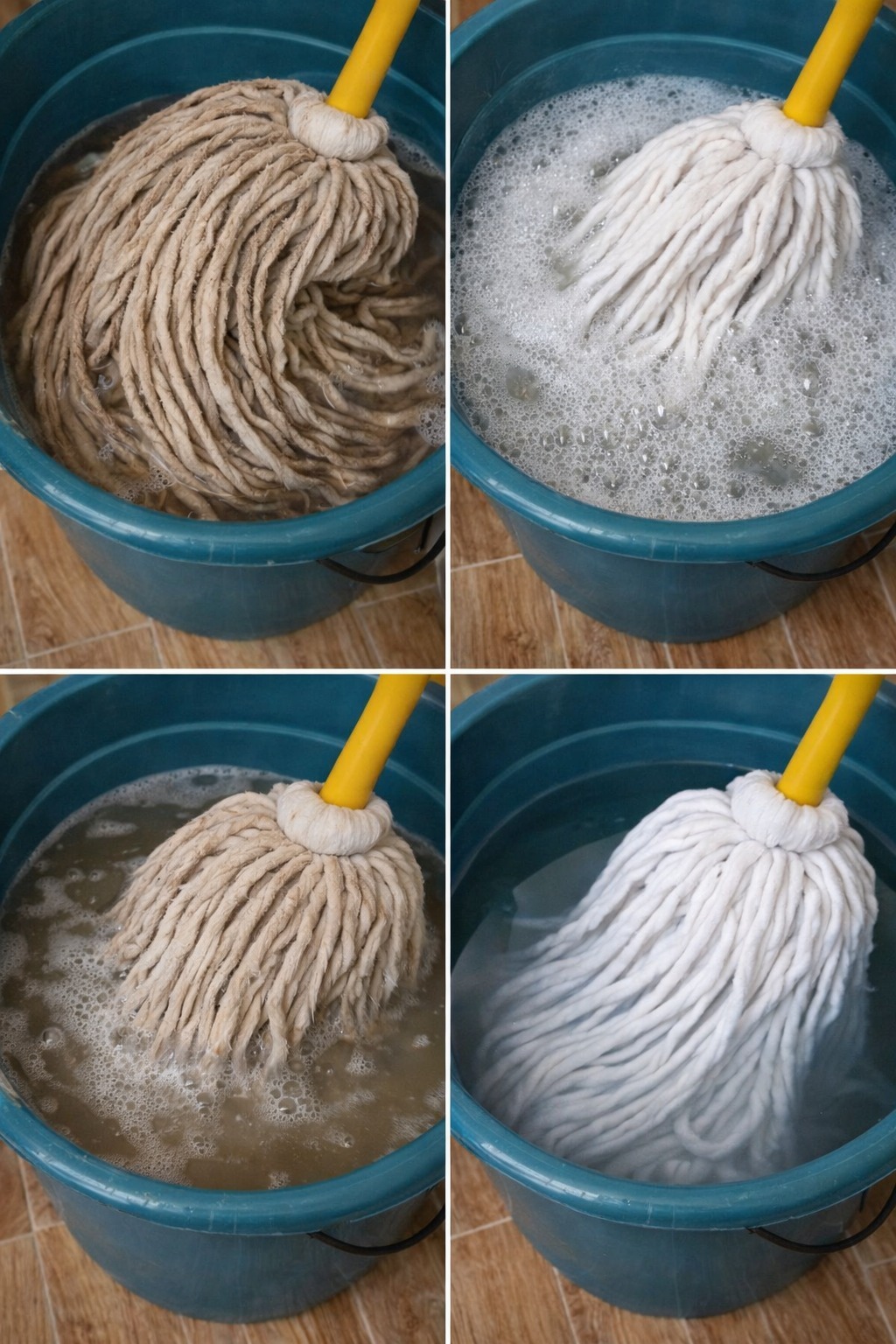
A dirty mop is one of the most frustrating household problems. You use it to clean your floors, yet over time it becomes stained, smelly, and full of grime. Many people believe that once a mop reaches this stage, the only solution is to throw it away and buy a new one. However, that isn’t always necessary. With a simple cleaning method using common household ingredients, you can restore your mop, remove unpleasant odors, and make it usable again.
🚀 Make Money Online – Up to $50 Per Day!
This easy technique is inexpensive, quick, and surprisingly effective. Instead of spending money on a new mop every few weeks, you can extend the life of the one you already have. Let’s explore why mops become so dirty and how you can bring them back to life with a simple “cleaning recipe.”
Why Mops Get So Dirty
Every time you mop your floor, the mop head collects dust, grease, food particles, hair, and bacteria. Over time these particles accumulate deep within the fibers of the mop. Even when you rinse it after cleaning, residue often remains trapped inside.
Moisture also plays a role. A damp mop stored in a bucket or closet becomes the perfect environment for bacteria and mildew to grow. That’s why old mops often develop a strong unpleasant smell.
Instead of replacing your mop repeatedly, cleaning it thoroughly once a week can keep it fresh and hygienic.
The Simple Mop Cleaning “Recipe”
This powerful cleaning mixture uses ingredients most people already have at home. The combination helps remove dirt, kill bacteria, and eliminate odors.
Ingredients
-
1 liter of hot water
-
1 cup white vinegar
-
2 tablespoons baking soda
-
1 tablespoon dish soap
-
Juice of half a lemon (optional for freshness)
Step-by-Step Method
1. Prepare a Deep Cleaning Bucket
Fill a large bucket or basin with one liter of hot water. The water should be hot but not boiling, as extremely hot water may damage certain mop materials.
2. Add the Vinegar
Pour one cup of white vinegar into the water. Vinegar is well known for its natural disinfecting properties. It helps dissolve grease, remove odors, and break down dirt trapped in the mop fibers.
3. Add Baking Soda
Slowly add two tablespoons of baking soda. The mixture may fizz slightly—this is normal. Baking soda helps lift stubborn stains and neutralize bad smells.
4. Add Dish Soap
Add one tablespoon of dish soap and mix gently. Dish soap cuts through oily residue that often builds up on mop heads, especially in kitchens.
5. Add Lemon Juice (Optional)
Squeeze in the juice of half a lemon. Lemon gives the mop a fresh scent and also has mild antibacterial properties.
Soaking the Mop
Place the dirty mop head into the bucket and fully submerge it in the mixture. Let it soak for 30 to 60 minutes.
During this time, the cleaning solution penetrates the fibers and loosens the dirt. If the mop is extremely dirty, you can gently press and squeeze it several times while soaking.
Scrub and Rinse
After soaking, remove the mop and gently scrub the fibers using a brush or your hands while wearing cleaning gloves. You will likely notice the water turning very dark as the dirt releases.
Rinse the mop thoroughly with clean running water until all the soap and residue are gone.
Proper Drying Is Important
Drying the mop correctly is just as important as washing it.
-
Squeeze out as much water as possible.
-
Hang the mop in a well-ventilated area.
-
Allow it to dry completely before storing.
A dry mop prevents bacteria and mildew from returning.
Extra Tips to Keep Your Mop Clean Longer
Rinse After Every Use
After mopping your floors, rinse the mop head with hot water and wring it out well.
Use a Disinfecting Soak Weekly
Soaking your mop once a week in vinegar water can prevent odors and bacteria buildup.
Avoid Leaving It in Dirty Water
Never leave your mop sitting in the bucket after cleaning. This causes bacteria to multiply quickly.
Replace When Necessary
Even with good care, mop heads eventually wear out. If the fibers are falling apart or permanently stained, it may be time to replace it.
Why This Method Works
This simple cleaning combination works because each ingredient has a specific role:
-
Vinegar dissolves mineral buildup and disinfects.
-
Baking soda removes odors and loosens dirt.
-
Dish soap breaks down grease and grime.
-
Lemon adds freshness and mild antibacterial action.
Together, they create a powerful but natural cleaning solution.
Save Money and Reduce Waste
Many people throw away their mop the moment it becomes dark and smelly. But with this simple cleaning method, you can restore it easily and avoid unnecessary waste.
Regular mop cleaning also helps keep your floors truly clean. A dirty mop can spread bacteria around the house instead of removing it. By maintaining your cleaning tools, you make your home healthier and fresher.
Final Thoughts
A very dirty mop does not always mean it is time to buy a new one. With this easy household “recipe,” you can remove grime, eliminate odors, and bring your mop back to life in less than an hour.
