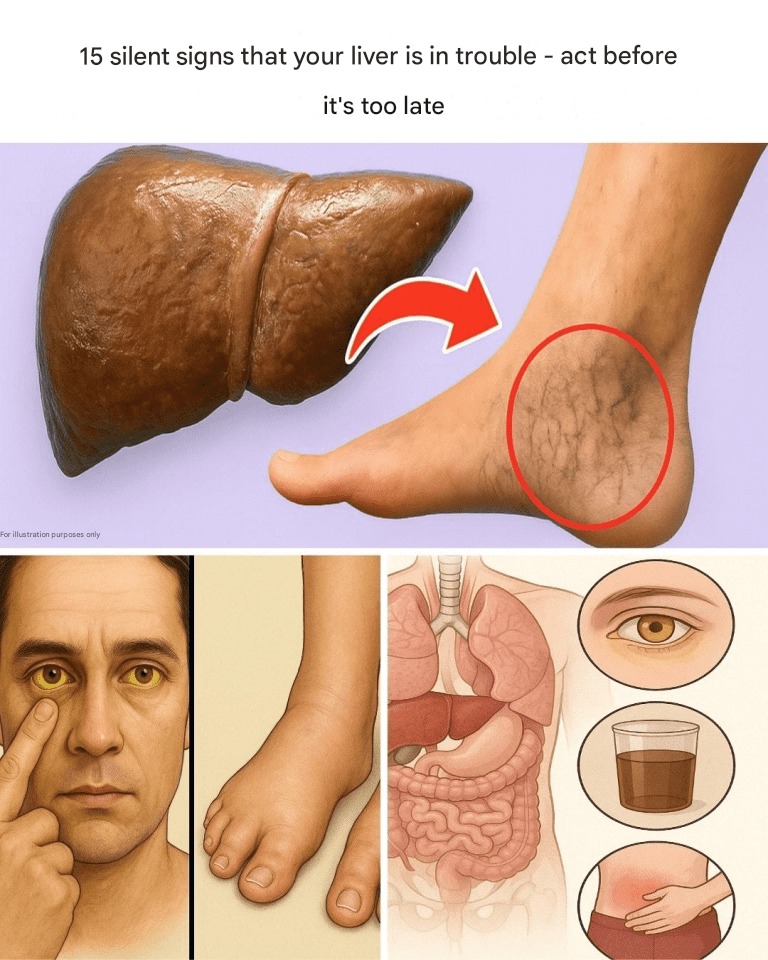
The liver is a powerhouse organ, working tirelessly to detoxify your blood, produce essential proteins, and store energy. Yet, it’s often silent in signaling distress—meaning many people only realize there’s a problem when damage is advanced. Recognizing subtle liver warning signs early can make a huge difference. Here are 15 silent signals your liver may be struggling and what you can do to support it.
🚀 Make Money Online – Up to $50 Per Day!
1. Fatigue That Won’t Quit
Feeling unusually tired, even after a full night’s sleep, could be your liver sending distress signals. The liver is central to energy production; when it’s compromised, your body’s cells can’t function efficiently, leading to chronic fatigue.
Tip: Support your liver with rest, balanced nutrition, and regular hydration. Foods like leafy greens, beets, and cruciferous vegetables can help boost detoxification.
2. Abdominal Pain or Swelling
Persistent pain or a heavy feeling in the upper right abdomen may indicate liver inflammation or enlargement. Swelling occurs as fluid builds up when liver function is impaired.
Tip: If you notice persistent abdominal discomfort, consult a healthcare professional promptly. Avoid self-diagnosing with pain relievers that can further stress the liver, such as acetaminophen.
3. Yellowing of the Skin or Eyes (Jaundice)
One of the most recognizable liver issues, jaundice, occurs when bilirubin builds up due to impaired liver function. Even mild yellowing can signal that your liver isn’t processing toxins properly.
Tip: Don’t ignore jaundice. Seek immediate medical attention, as it may indicate hepatitis, fatty liver disease, or bile duct obstruction.
4. Dark Urine
Dark, tea-colored urine can be a subtle indicator of excess bilirubin in the blood, often caused by liver dysfunction.
Tip: Increase water intake and track any changes in urine color. Persistent dark urine should be assessed by a doctor to rule out serious conditions.
5. Pale or Clay-Colored Stools
Healthy stool typically ranges from brown to dark brown. Pale or clay-colored stools may indicate bile flow obstruction, a hallmark of liver trouble.
Tip: Regular fiber intake supports digestion, but persistent pale stools require prompt medical evaluation.
6. Nausea or Vomiting
Ongoing nausea, particularly after meals, can be a warning sign that your liver isn’t properly metabolizing toxins.
Tip: Eat small, balanced meals and avoid highly processed foods. Chronic nausea should be investigated by a healthcare professional.
7. Swelling in Legs and Ankles
Fluid retention (edema) in the lower extremities often appears when the liver is struggling to regulate protein levels and fluid balance.
Tip: Reduce salt intake and engage in light physical activity. If swelling persists, it’s a clear signal to check liver function.
8. Chronic Itchy Skin
Persistent itching without an obvious rash may result from bile salt buildup in the skin, a sign of liver stress.
Tip: Moisturizing can help temporarily, but underlying liver function should be evaluated.
9. Easy Bruising or Bleeding
A liver in distress produces fewer clotting factors, making you more prone to bruising or bleeding easily from minor cuts.
Tip: Monitor for unusual bleeding and limit medications or supplements that may thin the blood unless prescribed.
10. Brain Fog and Cognitive Issues
Toxins accumulating in the bloodstream can affect the brain, causing confusion, poor concentration, or memory lapses. This is sometimes referred to as hepatic encephalopathy.
Tip: Avoid alcohol and support your liver with antioxidant-rich foods like berries, nuts, and green tea.
11. Loss of Appetite
A sudden lack of appetite, particularly when combined with other symptoms, can be a subtle signal that the liver is struggling to process nutrients efficiently.
Tip: Prioritize nutrient-dense meals even if portions are small, focusing on vegetables, lean proteins, and whole grains.
12. Persistent Bad Breath (Foetor Hepaticus)
A distinctive, sweet, musty breath odor can appear when liver function declines and toxins accumulate.
Tip: Maintain oral hygiene, but if bad breath is unexplained and persistent, investigate liver health.
13. Spider-Like Blood Vessels
Small, spider-like veins visible on the skin, particularly on the chest and face, may indicate liver disease, often due to elevated estrogen levels caused by impaired liver function.
Tip: While cosmetic, these veins signal deeper issues—medical assessment is crucial.
14. Sudden Weight Changes
Unexplained weight gain or loss, especially when combined with fluid retention, may indicate liver dysfunction.
Tip: Track your weight and consult a healthcare provider if sudden changes occur without diet or exercise explanations.
15. Mood Swings and Depression
Liver problems can influence hormone and toxin levels, affecting mood regulation. Depression, anxiety, or irritability may appear subtly over time.
Tip: Mental health support is important, but if combined with other liver signs, it warrants a liver function check.
Supporting Liver Health
While recognizing early signs is critical, preventive measures are equally important:
-
Limit Alcohol: Excess alcohol can overwhelm liver function.
-
Maintain a Balanced Diet: Emphasize vegetables, fruits, lean proteins, and whole grains.
-
Exercise Regularly: Supports overall metabolic function.
-
Avoid Toxins: Minimize exposure to environmental chemicals, processed foods, and unnecessary medications.
-
Stay Hydrated: Water is essential for flushing toxins.
