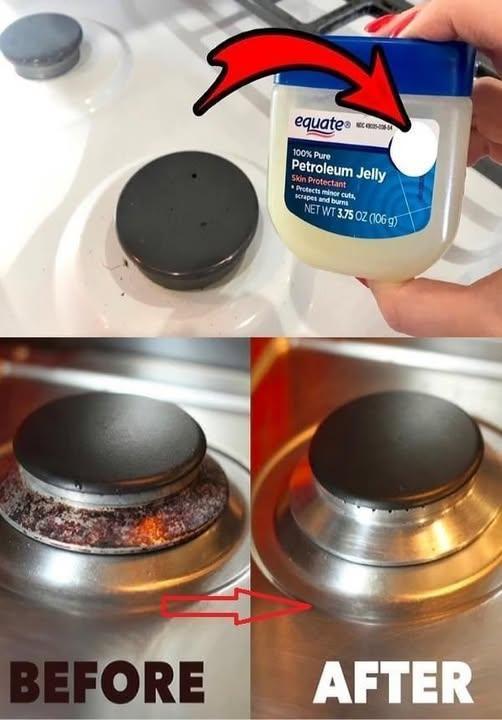
Stubborn stovetop grease is one of those kitchen problems that never seems to go away. No matter how often you wipe, splattered oil hardens, turns sticky, and clings to burners, knobs, and metal surfaces. Many people reach for harsh degreasers, but these can be expensive, abrasive, and unpleasant to use. Surprisingly, a simple product you probably already have at home—Vaseline (petroleum jelly)—can help loosen and remove persistent stovetop grease with minimal effort.
This guide explores why Vaseline works, how to use it safely and effectively, and a step-by-step “unique recipe” cleaning method that makes greasy stovetops shine again.
Why Grease Is So Hard to Remove
Cooking grease is made of fats and oils. When heated repeatedly, these fats oxidize and polymerize, forming a sticky film that bonds tightly to surfaces—especially stainless steel and enamel. Over time, dust and food particles stick to this layer, creating a stubborn mess that resists soap and water.
Traditional degreasers work by breaking down fats chemically, but petroleum jelly works differently—by bonding with grease instead of fighting it.
Why Vaseline Works on Grease
Vaseline is a semi-solid mixture of hydrocarbons, which makes it oil-based. The principle behind its effectiveness is simple chemistry:
Like dissolves like.
Because Vaseline is oil-based, it bonds with and softens hardened grease. Instead of scrubbing aggressively, Vaseline penetrates the grease layer, loosening it so it can be wiped away easily. This makes it especially useful for:
-
Burned-on stovetop grease
-
Sticky residue around knobs
-
Grease splatter on stainless steel surfaces
As a bonus, Vaseline also leaves behind a light protective layer that helps repel future grease buildup.
The Vaseline Stovetop Degreasing Recipe
What You’ll Need
-
1 tablespoon Vaseline (petroleum jelly)
-
1 teaspoon baking soda
-
A soft microfiber cloth
-
Paper towels
-
Warm soapy water
Step-by-Step Cleaning Method
Step 1: Prepare the Surface
Make sure the stovetop is completely cool. Wipe away loose crumbs or debris using a dry cloth. This prevents spreading dirt during cleaning.
Step 2: Create the Grease-Lifting Paste
In a small bowl, mix:
-
1 tablespoon Vaseline
-
1 teaspoon baking soda
The baking soda adds mild abrasiveness, while Vaseline softens and lifts the grease.
Step 3: Apply to Greasy Areas
Using your finger or a cloth, apply a thin layer of the mixture directly onto greasy spots—especially around burners, edges, and knobs. Don’t overuse; a little goes a long way.
Step 4: Let It Sit
Allow the mixture to sit for 5–10 minutes. This resting time lets the Vaseline penetrate hardened grease, breaking its grip on the surface.
Step 5: Wipe Away the Grease
Using a microfiber cloth, gently wipe the area in circular motions. You’ll notice grease lifting off effortlessly instead of smearing.
For tight areas, such as burner crevices, wrap the cloth around a finger or use a cotton swab.
Step 6: Final Rinse
Dampen a cloth with warm soapy water and wipe the surface again to remove residue. Dry with paper towels for a streak-free finish.
Extra Benefits of Using Vaseline
1. Protective Barrier
After cleaning, a barely visible film of Vaseline can help repel grease and fingerprints. This makes future cleanups easier.
2. Gentle on Surfaces
Unlike harsh chemical cleaners, Vaseline won’t scratch enamel, stainless steel, or glass stovetops when used properly.
3. Cost-Effective
A single jar lasts for years and serves multiple household purposes—cleaning, polishing, lubricating, and more.
Where NOT to Use Vaseline
While Vaseline is surprisingly versatile, avoid using it on:
-
Gas burner ports (can clog them)
-
Electric coil connections
-
Glass cooktops in large amounts (can leave streaks if not wiped thoroughly)
Always wipe away excess thoroughly to prevent slippery surfaces.
Maintenance Tip: Keep Grease Away Longer
Once your stovetop is clean:
-
Wipe spills immediately after cooking (once cooled)
-
Use splatter guards while frying
-
Do a light Vaseline wipe-down once a month for maintenance
These habits prevent grease from hardening again.
Final Thoughts
Using Vaseline to tackle stubborn stovetop grease might sound unconventional, but it’s a simple, effective, and budget-friendly solution rooted in basic chemistry. Instead of scrubbing endlessly or inhaling harsh fumes, this method works smarter—not harder.
