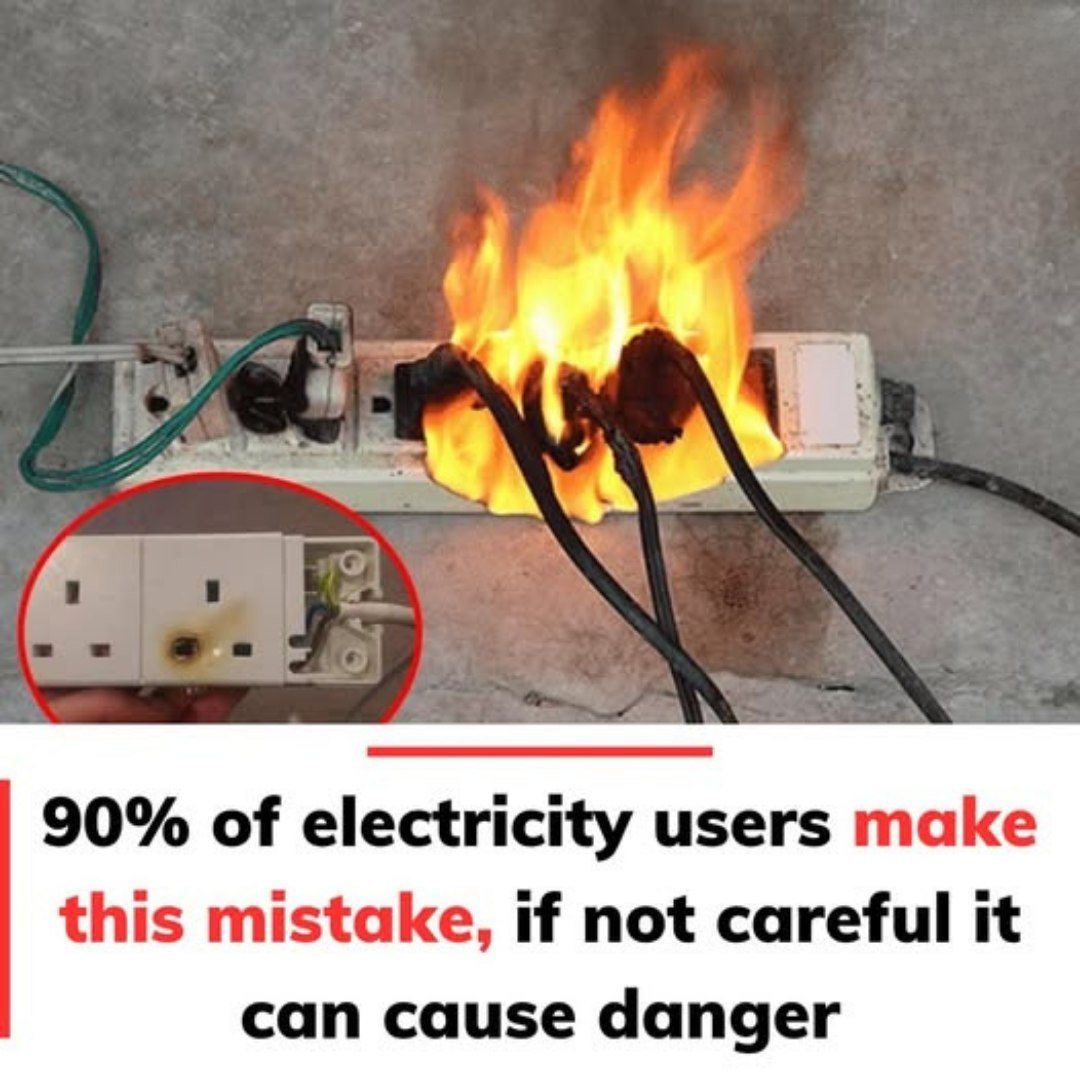
Most homes look safe on the surface. Lights turn on, appliances hum quietly, and outlets sit innocently on the walls doing their job. Yet behind this sense of normalcy lies a hidden danger that causes countless house fires, damaged electronics, and even serious injuries every year. The shocking truth is that nearly 90% of people make the same electrical mistake in their homes—often without realizing it. This mistake isn’t dramatic or obvious. It’s simple, routine, and deeply ingrained in daily life.
The most common electrical mistake is overloading outlets and power strips.
Why This Mistake Is So Common
Modern life depends on electricity more than ever before. Televisions, routers, chargers, kitchen appliances, heaters, air fryers, computers, and smart devices all compete for power. Yet most homes were designed decades ago, long before this level of electrical demand was normal. Instead of upgrading wiring or adding outlets, people adapt in the quickest way possible: plugging more devices into the same outlet.
Power strips and extension cords feel like safe solutions. They are cheap, widely available, and easy to use. Unfortunately, convenience often hides risk.
How Overloading Becomes Dangerous
Every electrical outlet is designed to handle a specific amount of current. When too many devices are connected, especially high-wattage appliances, the wiring behind the wall can overheat. This heat builds silently. You won’t hear it, smell it, or see it—until damage is already happening.
Over time, this overheating can:
-
Melt insulation around wires
-
Damage internal outlet components
-
Create sparks inside walls
-
Trigger electrical fires
Many house fires begin this way, without any dramatic warning signs. People often assume fires come from faulty appliances, but in reality, misuse of outlets is a leading cause.
The Illusion of “It’s Been Fine for Years”
One of the most dangerous assumptions is: “I’ve always done it this way and nothing has happened.” Electrical systems don’t always fail immediately. Damage builds slowly. Each time an overloaded outlet heats up and cools down, the materials weaken just a little more.
Think of it like bending a paper clip. The first few bends do nothing noticeable. But eventually, it snaps. Electrical failures work the same way.
Chargers: The Silent Contributors
Phone chargers, laptop adapters, and tablet cords are often left plugged in all day and all night. Individually, they draw little power, but collectively they add up—especially when connected to cheap power strips.
Worse, low-quality chargers can continue drawing power even when no device is attached. This creates unnecessary heat and increases fire risk, particularly when chargers are left plugged in near curtains, bedding, or furniture.
High-Risk Appliances You Should Never Combine
Certain devices should never share the same outlet or power strip:
-
Space heaters
-
Microwaves
-
Air conditioners
-
Electric kettles
-
Hair dryers
-
Toasters
These appliances draw a large amount of power. Plugging even two of them into one outlet can overload the circuit instantly.
Warning Signs Most People Ignore
Your home often gives subtle clues that something is wrong. These signs are frequently overlooked:
-
Warm outlets or power strips
-
Flickering lights when devices turn on
-
Buzzing or crackling sounds
-
Discolored outlet covers
-
Circuit breakers that trip repeatedly
These are not minor inconveniences. They are warnings.
The Power Strip Myth
Many people believe power strips “increase” outlet capacity. They do not. A power strip simply divides the same amount of electricity into multiple sockets. If the outlet can safely supply 15 amps, plugging in six devices doesn’t magically increase that limit.
Some power strips include surge protection, which helps protect electronics from voltage spikes—but surge protection does not prevent overloading.
A Safer Way to Power Your Home
Avoiding this common mistake doesn’t require fear or expensive upgrades. Simple habits make a huge difference:
-
Plug high-wattage appliances directly into wall outlets
-
Use one major appliance per outlet whenever possible
-
Unplug chargers when not in use
-
Replace damaged cords immediately
-
Use power strips with built-in circuit breakers
-
Never run extension cords under rugs or furniture
If your home frequently runs out of outlets, it may be time to have an electrician add more. This is far safer than relying on extensions and adapters.
Why This Knowledge Matters
Electricity is invisible, which makes it easy to underestimate. But unlike many household risks, electrical dangers don’t always give second chances. Fires can start when you’re asleep. Damage can occur inside walls where you’ll never see it.
The real danger isn’t electricity itself—it’s familiarity. When something becomes routine, we stop questioning it. That’s why this mistake is so widespread.
Final Thought
Your home should be a place of safety, not hidden risk. Taking a few minutes to rethink how you use outlets and power strips can protect your family, your belongings, and your peace of mind. The most dangerous electrical mistakes are rarely dramatic—they’re ordinary habits we never thought to change.
