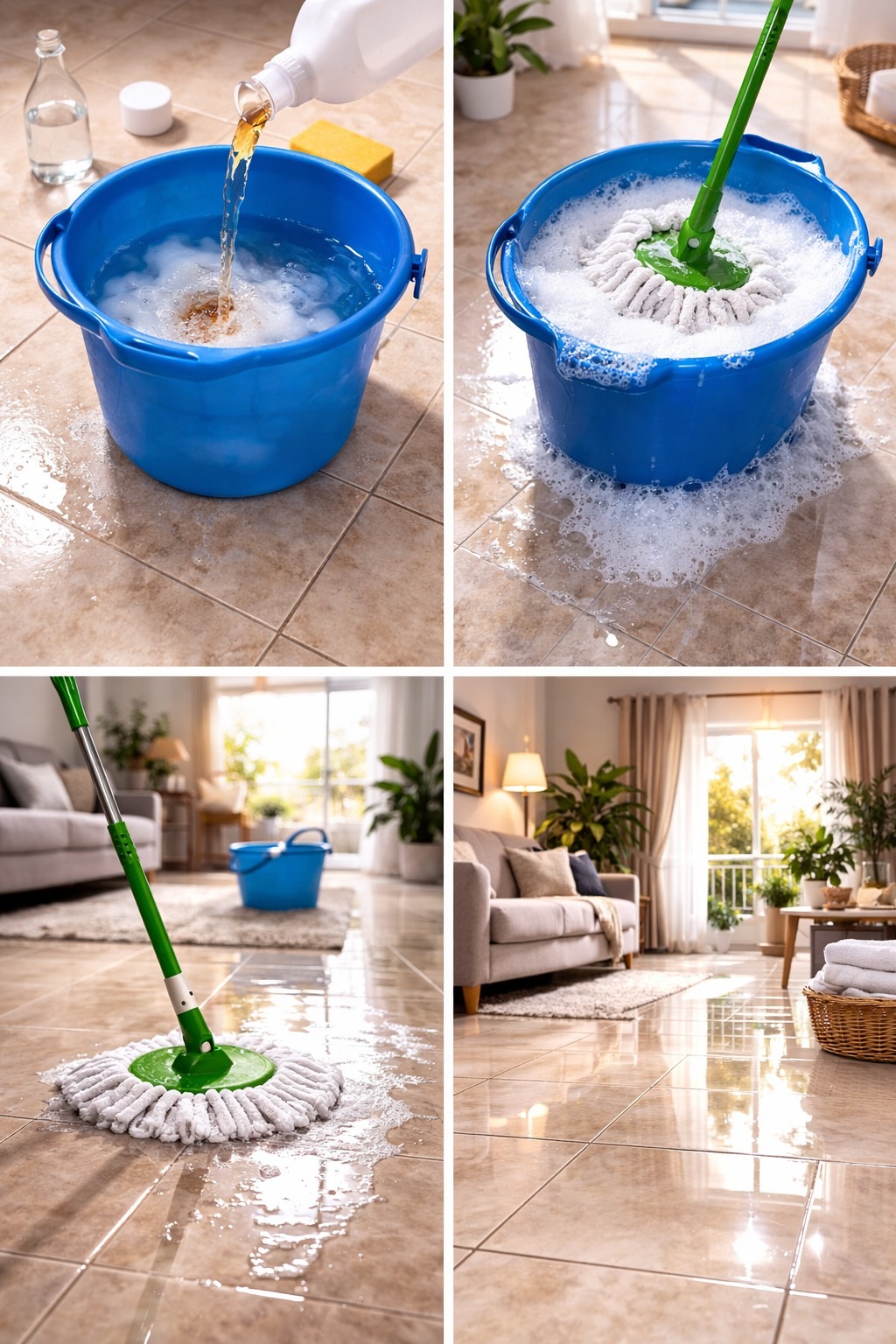
Keeping your floors clean, shiny, and beautifully scented doesn’t require expensive commercial products filled with harsh chemicals. In fact, the secret to sparkling parquet, gleaming tiles, and fresh-smelling linoleum may already be sitting in your kitchen. This genius homemade floor-cleaning trick is affordable, effective, and safe for most surfaces when used correctly.
Let’s dive into the ultimate universal floor cleaner recipe that leaves your home glowing and pleasantly perfumed.
Why Homemade Floor Cleaners Work So Well
Store-bought cleaners often leave behind residue that dulls shine over time. Many contain strong synthetic fragrances that smell overwhelming instead of fresh. A natural cleaner, on the other hand:
-
Removes dirt and grease effectively
-
Leaves no sticky film
-
Restores natural shine
-
Gently perfumes the room
-
Is budget-friendly
-
Reduces chemical exposure
This recipe works wonderfully on parquet (sealed wood floors), ceramic or porcelain tiles, and linoleum. The key is using the right balance of ingredients.
The Genius All-Floor Shine & Perfume Recipe
Ingredients:
-
2 liters warm water
-
2 tablespoons white vinegar
-
1 tablespoon baking soda
-
1 tablespoon liquid dish soap (mild, grease-cutting)
-
10–15 drops essential oil (lemon, lavender, eucalyptus, or orange)
Why These Ingredients Are So Powerful
White Vinegar
Vinegar is a natural disinfectant and degreaser. It dissolves mineral buildup and soap residue that make floors look dull. It also helps eliminate odors instead of masking them.
Baking Soda
Baking soda gently lifts grime and neutralizes bad smells. It enhances cleaning power without scratching most surfaces.
Dish Soap
Just a small amount breaks down grease, footprints, and everyday dirt.
Essential Oils
These provide a natural fragrance that lingers beautifully. Lemon brightens and refreshes, lavender relaxes, eucalyptus purifies, and orange adds warmth and sweetness.
Step-by-Step Instructions
-
Fill a bucket with 2 liters of warm (not hot) water.
-
Add the white vinegar.
-
Slowly stir in the baking soda (it will fizz slightly — that’s normal).
-
Add the liquid dish soap.
-
Finish with your chosen essential oil drops.
-
Mix gently to combine.
Your powerful homemade floor cleaner is ready!
How to Use on Different Floor Types
1. Parquet (Sealed Wood Floors)
-
Always wring your mop thoroughly. Wood does not like excess water.
-
Mop gently following the wood grain.
-
Avoid soaking the floor.
-
Let air dry for a streak-free shine.
Important: Do not use this solution on unsealed or waxed wood floors. Vinegar can damage raw wood.
Result: Natural shine restored and a fresh, subtle scent throughout the room.
2. Tiles (Ceramic & Porcelain)
-
Mop normally.
-
For grout lines, use a soft brush dipped in the solution.
-
No rinsing needed unless you used too much soap.
Tiles will look brighter, and dull residue disappears instantly.
3. Linoleum
-
Mop lightly without over-wetting.
-
Avoid excessive vinegar concentration.
-
Dry with a microfiber mop for extra shine.
Linoleum regains its smooth glow without becoming slippery.
Extra Shine Booster Trick
If you want even more brilliance, especially on tiles:
After mopping, go over the floor with a dry microfiber cloth or mop. This simple step buffs the surface and enhances reflection instantly.
For wood floors, you can add 1 teaspoon of olive oil to the mixture once a month only — not weekly — to enhance glow. Use sparingly to avoid buildup.
Why Your House Will Smell Incredible
Unlike artificial fragrances that fade quickly, essential oils disperse gently through the air as the water evaporates. The scent lingers without being overpowering. Lemon and eucalyptus give a “just-cleaned” freshness, while lavender creates a calm, cozy atmosphere.
If you want a seasonal twist:
-
Winter: Add orange + clove essential oil
-
Summer: Use lemon + mint
-
Relaxing evenings: Lavender + vanilla
How Often Should You Use It?
-
High-traffic areas: 2–3 times per week
-
Bedrooms: Once weekly
-
Deep clean: Once weekly with slightly warmer water
Because it leaves no residue, your floors won’t develop the cloudy buildup common with commercial cleaners.
Safety Tips
-
Always test on a small hidden area first.
-
Do not mix vinegar with bleach.
-
Keep essential oils away from pets if they are sensitive.
-
Use minimal water on wooden surfaces.
The Secret to Long-Lasting Shine
The real genius trick isn’t just the ingredients — it’s consistency and proper wringing of the mop. Most dull floors are caused by:
-
Too much product
-
Too much water
-
Not drying properly
Less is more. A damp mop cleans better than a soaking one.
Final Thoughts
You don’t need expensive specialty products for parquet, tiles, and linoleum. This simple homemade solution cleans deeply, restores shine, and perfumes your entire home naturally.
With just vinegar, baking soda, dish soap, and essential oils, your floors can look professionally cleaned — without harsh chemicals or high costs.
