The Dashboard Button Most Drivers Ignore—And Why It Actually Matters
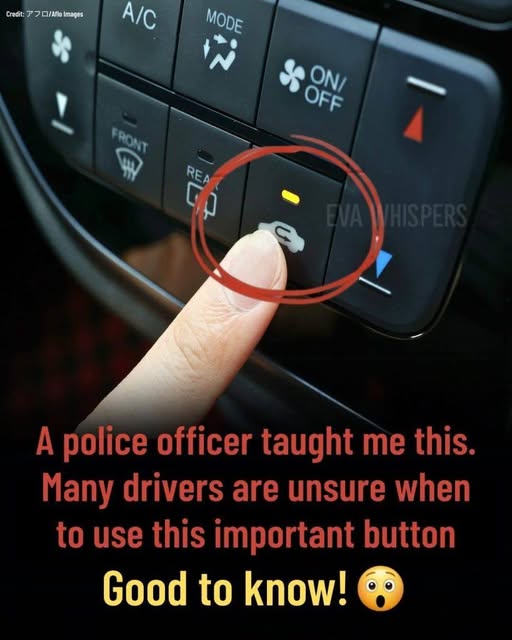
If you’ve ever glanced at your dashboard and noticed a button labeled “TCS,” “ESC,” “ESP,” or showing a small car with squiggly lines behind it, you’re not alone in wondering what it actually does. For many drivers, this is the most ignored button in the vehicle. Some assume it’s unimportant. Others believe it’s only for racing or off-road driving. In reality, this simple button can be the difference between maintaining control and losing it in a critical moment.
That button controls your vehicle’s traction control system—and in modern cars, it’s often linked to the electronic stability control system. Let’s break down what it does, when to use it, and why understanding it could make you a safer driver.
What Is Traction Control?
Traction control (often abbreviated as TCS) is a safety feature designed to prevent your wheels from spinning when they lose grip on the road. It works hand-in-hand with your car’s anti-lock braking system (ABS). When sensors detect that one wheel is spinning faster than the others—usually due to slippery conditions—the system automatically reduces engine power or applies braking to that specific wheel.
This helps restore traction and keeps your vehicle stable.
Electronic Stability Control (ESC), sometimes labeled ESP (Electronic Stability Program), goes a step further. It monitors your steering angle and vehicle direction. If your car starts to skid or slide sideways, ESC selectively brakes individual wheels to help guide the vehicle back on track.
In many modern vehicles, including brands like Toyota, Honda, Ford, and Hyundai, traction control and stability control are integrated into one system.
Why Most Drivers Ignore It
There are a few common reasons drivers overlook this button:
-
They assume it should always stay on.
-
They don’t understand when to turn it off.
-
They’ve never experienced a situation where it mattered.
-
The symbol isn’t clearly labeled.
In most cases, traction control is automatically activated when you start your car. Many drivers never touch the button because the system works quietly in the background. But knowing when to temporarily disable it can actually help you in certain conditions.
When Traction Control Helps the Most
1. Rainy Roads
Wet roads reduce tire grip significantly. If you accelerate too quickly, your wheels can spin. Traction control immediately detects this and reduces power to maintain grip.
2. Snow and Ice
In slippery winter conditions, traction control prevents dangerous wheel spin that can cause your vehicle to fishtail or slide.
3. Sharp Turns
If you enter a turn too fast and the car begins to skid, electronic stability control helps correct your direction.
4. Emergency Maneuvers
If you suddenly swerve to avoid an obstacle, stability control can prevent your car from spinning out.
In fact, studies from the National Highway Traffic Safety Administration (NHTSA) have shown that electronic stability control significantly reduces the risk of single-vehicle crashes and rollovers.
When You Might Actually Turn It Off
Here’s where many drivers get confused. There are specific situations where temporarily disabling traction control can help:
1. Stuck in Deep Snow or Sand
If your car is stuck, traction control may prevent the wheels from spinning enough to dig out. Turning it off allows controlled wheel spin, helping you rock the vehicle free.
2. Mud or Loose Gravel
In off-road situations, a little wheel spin can be helpful for gaining momentum.
3. Performance Driving (Closed Tracks Only)
On racetracks, experienced drivers sometimes disable traction control for maximum control over acceleration. This should never be done on public roads.
After freeing your vehicle, you should turn the system back on immediately for normal driving.
The Warning Light You Shouldn’t Ignore
If you see a flashing light of a car with squiggly lines while driving, that means the traction control system is actively working. That’s good—it’s protecting you.
However, if the light stays on continuously, it could indicate a system malfunction. In that case, it’s wise to have your vehicle checked by a professional.
Ignoring a malfunctioning traction control system can increase your risk in slippery conditions.
Why It Truly Matters
Many drivers believe safe driving is just about skill. While skill is important, modern safety systems act as backup protection when human reaction time isn’t fast enough.
Imagine hydroplaning during heavy rain. Even experienced drivers can lose control in seconds. Traction control and stability systems react faster than human reflexes, applying precise braking adjustments in milliseconds.
This technology has saved countless lives worldwide.
In countries with heavy monsoon seasons or winter snow, like parts of northern Pakistan or colder global regions, this feature becomes even more important. Road conditions can change suddenly, and having electronic assistance can mean avoiding a serious accident.
Common Myths About Traction Control
Myth 1: It reduces performance.
Reality: It only limits power when wheel slip is detected.
Myth 2: Good drivers don’t need it.
Reality: Even professional drivers rely on stability systems in unpredictable conditions.
Myth 3: It’s only for snow.
Reality: It works in rain, gravel, oil-slicked roads, and sudden swerves.
The Bottom Line
That small dashboard button with the skidding car icon is far more important than it looks. It’s not just another feature—it’s a powerful safety tool designed to keep you in control when the unexpected happens.
For everyday driving, keep traction control and stability control turned on. Only disable it briefly if you’re stuck in snow, sand, or mud—and turn it back on immediately afterward.
The next time you start your car, take a moment to notice that button. Understanding what it does might not seem exciting—but in a split-second emergency, it could make all the difference.
