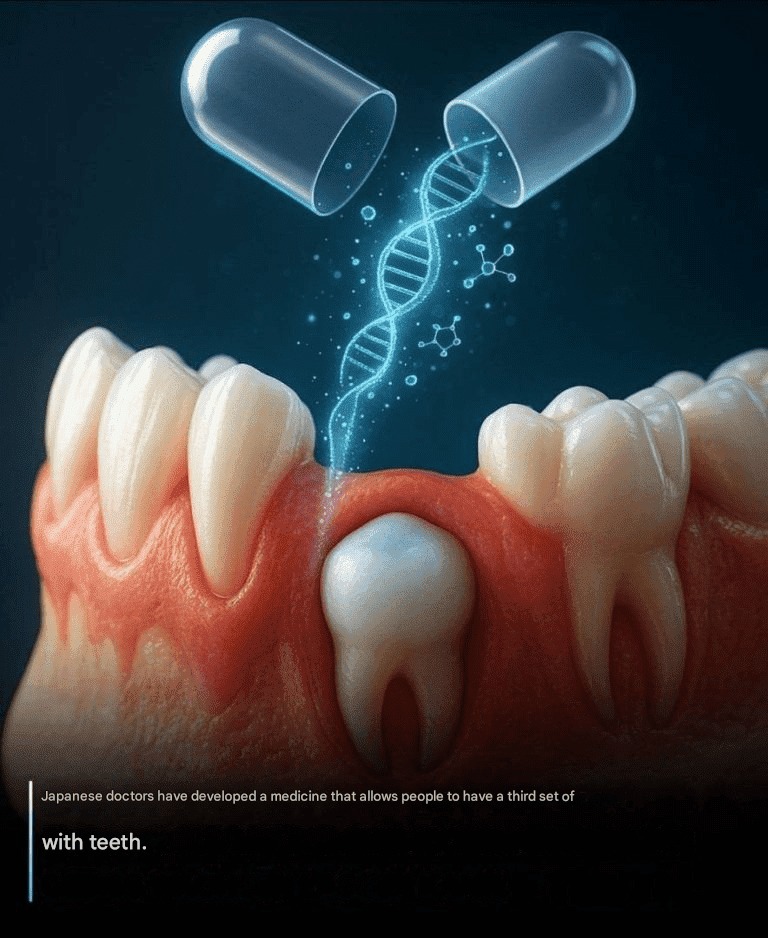
For centuries, losing a tooth meant it was gone forever. People relied on dentures, bridges, or dental implants to replace missing teeth. While these treatments can restore appearance and function, they are still artificial solutions. However, recent scientific breakthroughs suggest that humans may soon have the ability to regrow their own natural teeth. This revolutionary idea, once considered science fiction, is now moving closer to reality thanks to advances in regenerative medicine and genetic research.
Researchers have discovered that the human body already has the biological potential to grow more teeth. During early development, humans have special tooth buds that eventually form baby teeth and later permanent teeth. After permanent teeth emerge, this process usually stops. But scientists have been studying the genetic mechanisms that control tooth development and believe it may be possible to reactivate them.
One of the most promising discoveries involves a protein that naturally prevents extra teeth from forming. Scientists found that by blocking this protein, the body may be able to stimulate the growth of a new tooth. In laboratory experiments with mice and ferrets, researchers successfully triggered the growth of new teeth by using antibodies that neutralize this protein. The results showed that animals were able to grow fully developed teeth in the gaps where teeth had been missing.
This research has created excitement among dental scientists because the same biological pathways also exist in humans. If the treatment works in people, it could provide a completely natural replacement for lost teeth. Instead of undergoing surgery for implants or wearing removable dentures, patients might simply receive an injection or medication that stimulates the body to grow a new tooth.
Another important aspect of this research is the use of stem cells. Stem cells are special cells that can develop into many different types of tissues in the body. Scientists believe that stem cells located in the gums could be activated to form new tooth structures. By carefully guiding these cells, researchers may be able to regenerate not only the tooth itself but also the surrounding structures such as roots, nerves, and supporting bone.
The potential benefits of tooth regeneration are enormous. Dental implants, while effective, can be expensive and require surgical procedures. Dentures may be uncomfortable and need frequent adjustments. A treatment that allows people to regrow their own teeth would be more natural and could reduce long-term dental costs. It would also help millions of people worldwide who suffer from tooth loss due to injury, aging, or disease.
Scientists are already planning early human clinical trials to test the safety and effectiveness of these treatments. If successful, the therapy could become available within the next decade. Researchers are particularly hopeful that the treatment may first help children who suffer from congenital tooth loss, a condition where some permanent teeth never develop. Eventually, the same approach could be expanded to adults who have lost teeth later in life.
However, there are still several challenges to overcome. Scientists must ensure that newly grown teeth develop in the correct position and grow to the proper size. They also need to confirm that the treatment is safe and does not cause unwanted side effects, such as the growth of extra teeth in the wrong places. Careful testing and clinical studies will be necessary before the therapy becomes widely available.
Despite these challenges, experts believe that tooth regeneration represents one of the most exciting developments in modern dentistry. The field of regenerative medicine is advancing rapidly, and many researchers believe the ability to regrow body tissues will transform healthcare in the coming decades.
The idea that humans could naturally replace lost teeth may soon move from science fiction to everyday reality. If ongoing research continues to produce positive results, future visits to the dentist could look very different. Instead of artificial replacements, dentists may one day help patients activate the body’s own healing power to grow brand-new teeth.
In the future, losing a tooth might no longer be a permanent problem. With the help of cutting-edge science and medical innovation, the human body may regain its natural ability to regenerate teeth—bringing a brighter and healthier smile to millions of people around the world.
