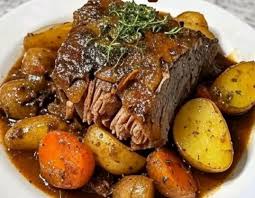
There are few dishes as comforting and deeply satisfying as a classic pot roast. It’s the kind of meal that feels like home—warm, slow-cooked, tender, and full of flavors that come together effortlessly in one pot. This version stays true to tradition while adding just enough thoughtful touches to make it stand out. We’ll build layers of flavor slowly—browning the meat, caramelizing the onions, and letting the vegetables absorb all those savory juices. It’s the kind of recipe that fills your kitchen with aromas so cozy it feels like a hug.
Why This Pot Roast Is Special
This recipe focuses on creating unmatched tenderness and richness. Using a well-marbled chuck roast ensures the meat becomes incredibly soft as it braises, and the slow cooking turns carrots and potatoes into buttery, flavor-soaked bites. Fresh herbs, garlic, and a touch of Worcestershire deepen the flavor, giving the broth a silky, savory finish. The key is patience—this is slow food meant to be enjoyed slowly.
Ingredients
For the Pot Roast:
-
3 to 4 lb beef chuck roast
-
2 tbsp olive oil
-
1 large onion, sliced
-
4 garlic cloves, minced
-
4 carrots, peeled and cut into thick chunks
-
4 russet potatoes, peeled and cut into large chunks
-
2 cups beef broth
-
1 cup water
-
2 tbsp tomato paste
-
1 tbsp Worcestershire sauce
-
1 tsp dried thyme or 2 sprigs fresh
-
1 tsp dried rosemary or 1 sprig fresh
-
2 bay leaves
-
Salt & pepper to taste
Step-by-Step Instructions
1. Season and Sear the Roast
Start by generously seasoning the roast with salt and freshly cracked black pepper on all sides. Don’t be shy—this seasoning will help create the savory crust that gives pot roast its iconic flavor.
Heat the olive oil in a heavy Dutch oven or deep cast iron pot over medium-high heat. When the oil is shimmering, carefully place the roast into the pot. Sear each side until deep brown, about 4–5 minutes per side. Browning isn’t just for color—it develops a rich, caramelized flavor base that defines the entire dish.
Remove the roast and set it aside.
2. Build the Flavor Base
In the same pot, add the sliced onions. Sauté them slowly, letting them soften and pick up the browned bits on the bottom. After about 5 minutes, stir in the garlic and cook just until fragrant—about 1 minute.
Add tomato paste and stir for another minute. This helps intensify the broth’s richness.
3. Add Liquid and Herbs
Pour in the beef broth and water, scraping the bottom with a wooden spoon to lift all the flavor. Add Worcestershire sauce, thyme, rosemary, and bay leaves. Stir and bring to a light simmer.
Return the roast to the pot, nestling it into the broth. The liquid should come halfway up the meat—not fully submerge it. This ensures proper braising rather than boiling.
4. Slow Cook to Perfection
Cover the pot with a lid and lower heat to maintain a gentle simmer. Alternatively, place the pot in a 300°F (150°C) oven.
Let the roast cook for 2 hours.
After 2 hours, add the carrots and potatoes around the roast. Cook for another 1 to 1.5 hours, or until the meat is fall-apart tender and the vegetables are soft.
5. Final Touches
Remove the bay leaves and herb stems. Taste the broth and adjust with salt and pepper as needed.
For a thicker gravy, remove the roast and vegetables, then simmer the liquid uncovered for 10 minutes, or stir in a teaspoon of cornstarch mixed with cold water.
Slice or shred the meat into large pieces, allowing it to absorb the juices again.
Serving Suggestions
Serve your pot roast family-style in a large serving dish with the vegetables arranged around it. Spoon rich ladlefuls of the broth over everything. Warm dinner rolls or cornbread make perfect companions for dipping into the sauce. And if you want to add a touch of brightness, sprinkle fresh chopped parsley on top before serving.
Storage & Reheating
Leftovers taste even better the next day. Store in the refrigerator up to 4 days, or freeze for up to 3 months. Reheat gently on the stove to keep everything tender.
Final Thoughts
This Classic Pot Roast with Carrots and Potatoes is more than just a meal—it’s tradition, comfort, and shared moments all tied together in one pot. It’s the kind of dish that brings people to the table and invites them to slow down. Whether you make it for Sunday dinner, a holiday gathering, or just because you want something warm and nourishing, it will always feel like home.
