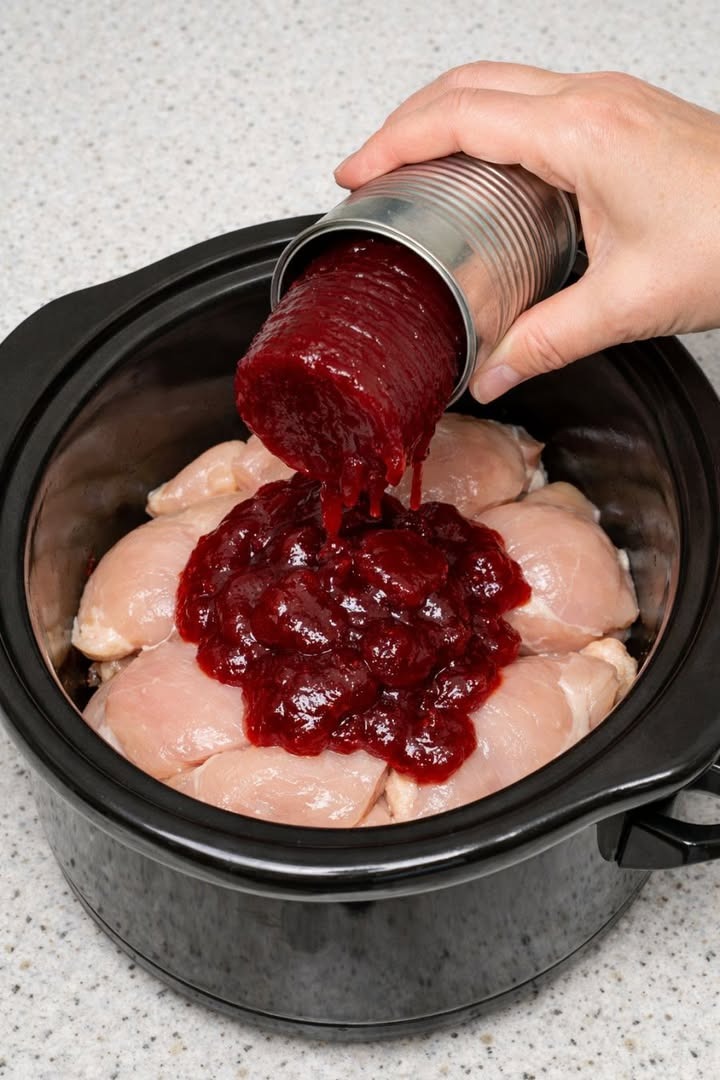
Dump Canned Cranberry Sauce on Top of Chicken Breasts – A Surprisingly Delicious Easy Dinner

If you are looking for a simple yet flavorful dinner that requires minimal effort, this cranberry chicken recipe might become one of your favorites. It’s the kind of meal that feels a little fancy but is incredibly easy to prepare. By simply dumping canned cranberry sauce over chicken breasts and baking it in the oven, you create a sweet, tangy, and savory dish that tastes like it took hours to make.

This recipe is perfect for busy weeknights, family dinners, or even casual holiday meals. The cranberry sauce melts into a rich glaze as it cooks, infusing the chicken with a balance of sweetness and gentle acidity. The result is tender, juicy chicken coated in a glossy sauce that pairs beautifully with rice, roasted vegetables, or mashed potatoes.

Another reason people love this dish is its simplicity. With only a handful of pantry ingredients and almost no prep time, you can have dinner in the oven within minutes. Even beginner cooks can master this recipe easily, making it ideal for anyone who wants a stress-free meal that still tastes special.

The natural sweetness of cranberry sauce complements the mild flavor of chicken breasts, while optional ingredients like onion soup mix or garlic add extra depth and richness. As the chicken bakes, the sauce thickens and caramelizes slightly, creating a comforting aroma that fills your kitchen.

Whether you are cooking for your family, hosting guests, or simply want a cozy homemade dinner, this cranberry chicken recipe proves that sometimes the easiest recipes are the most satisfying.


Why This Recipe Works So Well

This dish is popular because it uses simple ingredients that transform into something truly delicious. The cranberry sauce acts as both a marinade and a glaze. As the chicken cooks, the sauce breaks down and mixes with the natural juices of the meat.

The result is tender chicken with a perfectly balanced sauce that is sweet, slightly tart, and savory at the same time. The acidity from the cranberries also helps keep the chicken moist while baking.

Another advantage is how versatile the recipe is. You can easily customize it by adding spices, herbs, or sauces depending on your taste preferences.


Ingredients

  • 4 boneless, skinless chicken breasts

  • 1 can (14 oz) whole or jellied cranberry sauce

  • 1 packet onion soup mix

  • 1 tablespoon olive oil

  • 2 cloves garlic, minced (optional)

  • ½ teaspoon black pepper

  • ½ teaspoon paprika

  • 1 tablespoon honey or brown sugar (optional for extra sweetness)

  • 1 tablespoon soy sauce (optional for deeper flavor)

  • Fresh parsley for garnish


Instructions

1. Preheat the Oven

Preheat your oven to 375°F (190°C). Lightly grease a baking dish with olive oil or cooking spray to prevent the chicken from sticking.

2. Prepare the Chicken

Place the chicken breasts in the baking dish in a single layer. Pat them dry with paper towels. This helps the sauce stick better and improves the texture while baking.

Season the chicken lightly with black pepper and paprika.

3. Prepare the Cranberry Sauce Mixture

In a medium bowl, combine the canned cranberry sauce and onion soup mix. Stir well until the mixture becomes smooth.

If you want extra flavor, add minced garlic, soy sauce, or honey at this stage. These ingredients are optional but add a deeper savory-sweet balance.

4. Dump the Sauce Over the Chicken

Pour the cranberry mixture evenly over the chicken breasts. Use a spoon or spatula to spread it so the chicken is fully coated.

This is the easiest step and the reason the recipe is often called a “dump-and-bake” meal.

5. Bake the Chicken

Place the dish in the oven and bake for 30–40 minutes, depending on the thickness of the chicken breasts.

Halfway through cooking, spoon some of the sauce from the dish over the top of the chicken to keep it moist and flavorful.

6. Check for Doneness

The chicken is ready when the internal temperature reaches 165°F (74°C) and the meat is tender and juicy.

The sauce should be bubbling and slightly thickened.

7. Garnish and Serve

Remove the dish from the oven and let it rest for about 5 minutes before serving.

Sprinkle chopped fresh parsley on top for color and freshness.


Serving Suggestions

This cranberry chicken pairs well with many side dishes. Some delicious options include:

  • Steamed white rice

  • Garlic mashed potatoes

  • Roasted carrots or green beans

  • Buttered noodles

  • Quinoa or wild rice

The sweet cranberry glaze works especially well with neutral sides that absorb the sauce.


Tips for the Best Cranberry Chicken

Use whole cranberry sauce if possible.
Whole berries add a better texture and a richer flavor compared to the smooth jellied version.

Don’t overcook the chicken.
Chicken breasts can dry out if baked too long, so check the internal temperature carefully.

Add vegetables to the baking dish.
Carrots, onions, or sweet potatoes can cook alongside the chicken and absorb the delicious sauce.

Make it in the slow cooker.
You can also cook this dish in a slow cooker on low for 4–5 hours for an even more tender result.


Variations

Cranberry BBQ Chicken

Mix cranberry sauce with your favorite barbecue sauce for a smoky-sweet glaze.

Cranberry Orange Chicken

Add orange juice and orange zest to the sauce for a bright citrus flavor.

Cranberry Mustard Chicken

Stir in Dijon mustard for a tangy twist that balances the sweetness.


Storage and Leftovers

Leftover cranberry chicken stores very well. Place it in an airtight container and refrigerate for up to 3–4 days.

To reheat, warm it gently in the microwave or in a covered dish in the oven at 325°F (160°C) until heated through.

You can also shred the leftover chicken and use it in sandwiches, wraps, or salads.


Final Thoughts

This dump-and-bake cranberry chicken recipe proves that delicious meals don’t need complicated ingredients or hours in the kitchen. With just a can of cranberry sauce and a few simple pantry staples, you can transform plain chicken breasts into a flavorful, comforting dinner.


Psychology Says These Signs Reveal When a Friend Is Distancing Themselves From You

Friendships are among the most meaningful relationships in our lives. They offer support, joy, and a sense of belonging. However, like any relationship, friendships can change over time. Sometimes a friend may slowly begin to distance themselves, and the shift can be subtle enough that you may not notice it right away. Psychology suggests that people often show certain behavioral patterns when they are emotionally withdrawing from a friendship. Recognizing these signs early can help you understand what’s happening and decide how to respond.

1. Communication Becomes Infrequent

One of the earliest signs that a friend may be distancing themselves is a noticeable drop in communication. Messages that were once answered quickly may now take hours or days to receive a response. Conversations that used to flow easily might feel forced or short. Psychologists explain that when people emotionally detach from someone, they often reduce contact as a natural way to create space.

2. They Seem Less Interested in Your Life

A strong friendship usually includes genuine curiosity about each other’s lives. If your friend used to ask about your day, your goals, or your feelings but suddenly stops showing interest, it could indicate emotional distance. People who are disengaging from a relationship often stop investing energy in learning about the other person.

3. Plans Are Frequently Cancelled

Another common sign is when your friend repeatedly cancels plans or avoids making them altogether. While occasional schedule conflicts are normal, consistent cancellations may suggest that spending time together is no longer a priority. Psychology research suggests that when people begin withdrawing from a relationship, they often limit face-to-face interactions.

4. Conversations Feel Surface-Level

You may notice that conversations with your friend no longer carry the same depth. Instead of discussing personal thoughts or meaningful experiences, discussions remain casual or brief. Emotional distance often shows up as a reluctance to engage in deeper conversations that once strengthened the bond.

5. They Are Less Supportive During Difficult Times

Friendships are often tested during moments of stress or hardship. If your friend used to be supportive but now seems unavailable or uninterested when you are struggling, this could be a signal of distancing. Emotional investment typically decreases when someone begins pulling away from a relationship.

6. Their Body Language Changes

Psychology emphasizes that body language can reveal hidden emotions. If you meet your friend in person, you might notice subtle changes such as reduced eye contact, distracted behavior, or closed body posture. These signals can reflect discomfort or a desire to maintain emotional distance.

7. They Prioritize Others Over You

It’s natural for friends to have multiple relationships, but if your friend consistently prioritizes others while neglecting time with you, it may suggest a shift in the friendship. When someone begins to distance themselves, they may gradually redirect their energy toward new social circles or interests.

8. They Stop Sharing Personal Information

In close friendships, people often share personal experiences, feelings, and challenges. If your friend suddenly becomes private and stops opening up, it may indicate that they no longer feel the same emotional closeness. Psychologists note that reduced self-disclosure is a common sign of weakening relationships.

9. You Feel the Emotional Gap

Sometimes the strongest signal comes from your own intuition. Humans are highly sensitive to changes in social dynamics. If you feel a growing emotional gap between you and your friend, there may be subtle cues influencing that perception. While intuition is not always perfect, it can reflect patterns your mind has already noticed.

How to Respond When You Notice These Signs

Recognizing these behaviors does not always mean the friendship is ending. People sometimes withdraw because they are dealing with personal stress, mental health challenges, or life changes. Before assuming the worst, consider approaching the situation with empathy and open communication.

Start by having a calm and honest conversation. Express your feelings without blaming or accusing. For example, you might say that you’ve noticed you haven’t been talking as much and that you value the friendship. This approach allows your friend to share what they may be experiencing.

It’s also important to respect boundaries. If your friend needs space, giving them time can sometimes strengthen the relationship in the long run. Healthy friendships evolve, and temporary distance does not always mean permanent separation.

Final Thoughts

Friendships naturally change as people grow and their lives evolve. Recognizing the psychological signs of distancing can help you understand the dynamics of your relationships and respond thoughtfully. Rather than reacting with frustration or fear, approaching the situation with empathy, communication, and self-respect can help you navigate the uncertainty.

Ti svegli con il cuscino bagnato? Scopri perché sbavi mentre dormi

Molte persone si svegliano al mattino e trovano il cuscino leggermente bagnato. Questo fenomeno, comunemente chiamato sbavare durante il sonno, può sembrare imbarazzante o insolito, ma in realtà è molto più comune di quanto si pensi. La saliva svolge un ruolo fondamentale nel nostro organismo: aiuta la digestione, mantiene la bocca umida e protegge i denti dai batteri. Tuttavia, durante la notte, il controllo dei muscoli del viso e della bocca cambia, e questo può causare la fuoriuscita di saliva.

In questo articolo scoprirai perché succede, quando è normale e cosa puoi fare per ridurre questo fenomeno. 🌙

1. Posizione in cui dormi

Uno dei motivi più comuni per cui si sbava mentre si dorme è semplicemente la posizione del corpo. Quando dormiamo su un fianco o a pancia in giù, la gravità fa sì che la saliva scorra verso l’esterno della bocca invece di essere deglutita.

Durante il giorno, infatti, il nostro cervello controlla continuamente la deglutizione. Di notte, però, il corpo entra in uno stato di rilassamento profondo e questi riflessi diventano meno attivi.

Cosa puoi fare:

  • Provare a dormire sulla schiena

  • Usare un cuscino ergonomico che mantenga la testa in posizione corretta

  • Evitare posizioni troppo inclinate del viso

Questi piccoli cambiamenti possono già ridurre molto il problema.

2. Congestione nasale

Quando il naso è chiuso, tendiamo a respirare attraverso la bocca durante il sonno. Questo aumenta la probabilità che la saliva fuoriesca.

La congestione nasale può essere causata da:

  • raffreddore 🤧

  • allergie stagionali

  • sinusite

  • deviazione del setto nasale

Quando la respirazione avviene dalla bocca, i muscoli della mandibola restano più rilassati e la saliva può uscire facilmente.

Possibili soluzioni:

  • lavaggi nasali con soluzione salina

  • umidificatore nella stanza

  • trattare eventuali allergie

3. Produzione eccessiva di saliva

In alcuni casi il corpo produce più saliva del normale, condizione chiamata ipersalivazione. Questo può succedere per diversi motivi.

Tra le cause più comuni ci sono:

  • problemi digestivi

  • reflusso gastrico

  • infezioni della bocca o delle gengive

  • alcuni farmaci

Quando la produzione di saliva aumenta, il corpo potrebbe non riuscire a deglutirla tutta durante il sonno.

Se il problema è frequente o improvviso, potrebbe essere utile consultare un medico o un dentista per capire la causa.

4. Disturbi del sonno

In alcuni casi, sbavare mentre si dorme può essere collegato a disturbi del sonno, come l’apnea notturna. Questa condizione causa pause temporanee nella respirazione durante il sonno e spesso porta a respirare con la bocca aperta.

I segnali più comuni includono:

  • russare forte 😴

  • sensazione di stanchezza al risveglio

  • mal di testa mattutino

  • sonno agitato

Se questi sintomi sono presenti insieme alla salivazione notturna, potrebbe essere utile parlarne con uno specialista del sonno.

5. Effetto dei farmaci

Alcuni farmaci possono aumentare la produzione di saliva oppure rilassare eccessivamente i muscoli della bocca. Tra questi ci sono:

  • alcuni antidepressivi

  • sedativi

  • farmaci neurologici

Se hai iniziato un nuovo trattamento e hai notato questo cambiamento, potresti discuterne con il tuo medico per valutare eventuali alternative.

6. Quando preoccuparsi

Nella maggior parte dei casi, sbavare mentre si dorme non è pericoloso. È semplicemente una risposta naturale del corpo durante il riposo.

Tuttavia, potrebbe essere utile fare un controllo medico se il problema è accompagnato da:

  • difficoltà a deglutire

  • dolore alla mascella

  • russamento molto forte

  • salivazione eccessiva anche durante il giorno

Questi segnali potrebbero indicare condizioni che meritano una valutazione professionale.

7. Consigli pratici per ridurre la sbavatura notturna

Se vuoi ridurre questo fenomeno, puoi provare alcune semplici abitudini quotidiane:

✔ Dormire con la testa leggermente sollevata
✔ Evitare pasti molto pesanti prima di andare a letto
✔ Mantenere una buona igiene orale 🪥
✔ Bere abbastanza acqua durante il giorno
✔ Ridurre alcol e sedativi prima del sonno

Anche migliorare la qualità del sonno può aiutare il corpo a mantenere un migliore controllo dei riflessi durante la notte.

Conclusione

Svegliarsi con il cuscino bagnato può sembrare strano o fastidioso, ma nella maggior parte dei casi è semplicemente il risultato di fattori normali come la posizione del sonno, la respirazione dalla bocca o il rilassamento muscolare.

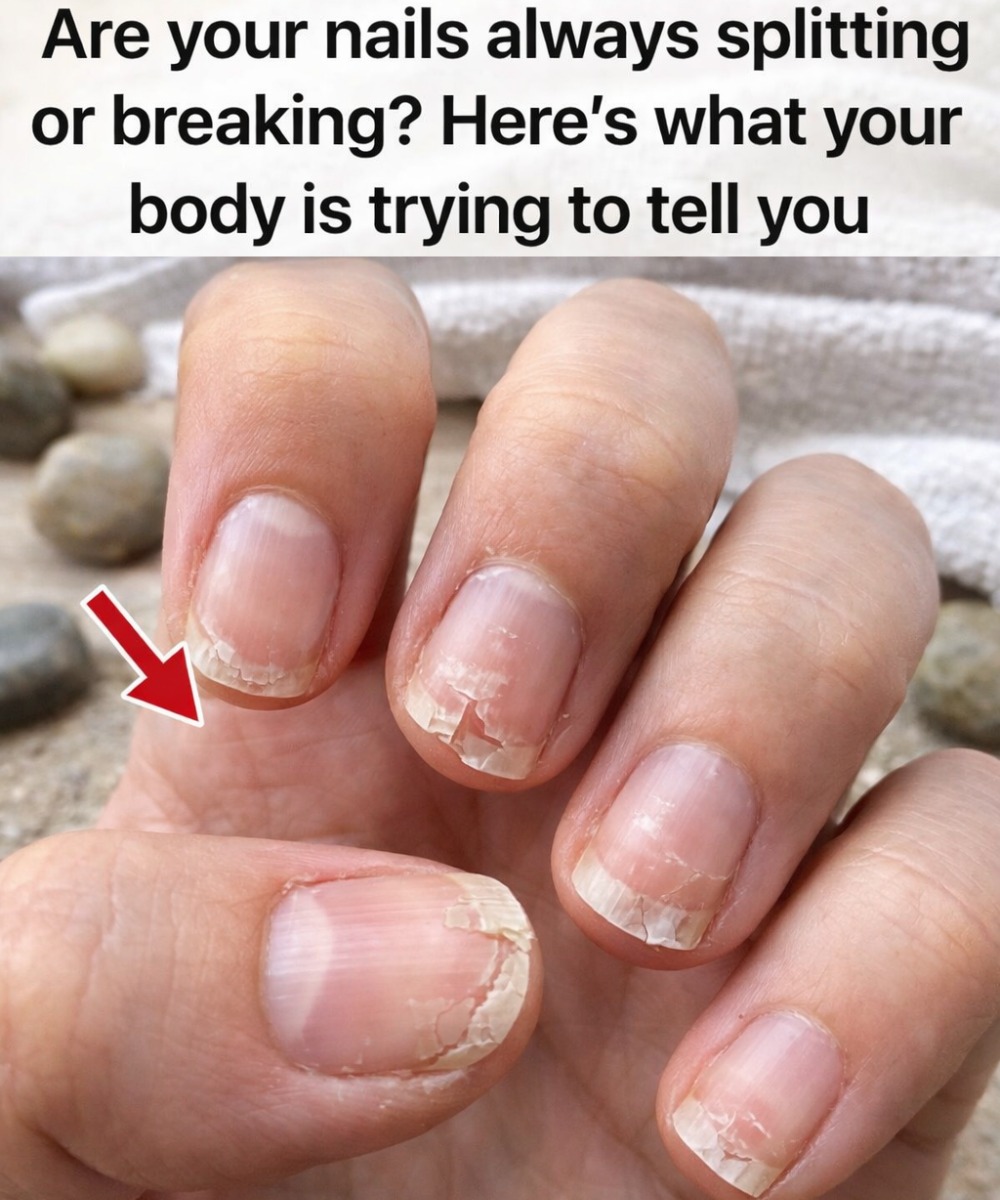
Brittle Nails? 10 Hidden Causes Your Body Is Desperately Trying to Tell You About – And How to Fix Them Fast

Brittle nails are more than just a cosmetic issue. When your nails crack, split, peel, or break easily, your body may be sending important signals about your health. Healthy nails should be smooth, strong, and slightly flexible. When they become weak or fragile, it often points to underlying problems such as nutritional deficiencies, dehydration, lifestyle habits, or even medical conditions.

Many people try to fix brittle nails using nail polish or strengthening treatments, but these solutions only address the surface of the problem. To truly improve nail health, it’s important to understand the root causes. Here are ten hidden reasons why your nails may be brittle—and what you can do to restore their strength quickly.

1. Lack of Biotin (Vitamin B7)

Biotin is one of the most important vitamins for nail strength. A deficiency in this vitamin can cause nails to become thin, fragile, and prone to splitting.

How to fix it:
Increase foods rich in biotin such as eggs, almonds, sweet potatoes, bananas, and whole grains. Many people also benefit from a daily biotin supplement after consulting with a healthcare professional.

2. Iron Deficiency

Iron deficiency is a common cause of weak nails. When your body lacks iron, your nails may become brittle or even develop a spoon-like shape known as Koilonychia.

How to fix it:
Eat iron-rich foods such as spinach, red meat, lentils, beans, and pumpkin seeds. Pair iron sources with vitamin C foods like oranges or bell peppers to improve absorption.

3. Dehydration

Just like your skin and hair, nails require proper hydration. When your body lacks enough water, nails lose their natural flexibility and become dry and brittle.

How to fix it:
Drink enough water throughout the day and moisturize your hands and nails regularly using natural oils such as coconut oil or olive oil.

4. Frequent Exposure to Water and Chemicals

Constant hand washing, dishwashing, and exposure to cleaning chemicals can strip moisture from your nails, causing them to weaken over time.

How to fix it:
Wear gloves when cleaning or washing dishes. Apply a nourishing hand cream or cuticle oil daily to restore moisture.

5. Protein Deficiency

Nails are made primarily of keratin, a protein. If your diet lacks sufficient protein, your body may struggle to produce strong nails.

How to fix it:
Include protein-rich foods in your meals such as chicken, fish, eggs, beans, tofu, and dairy products.

6. Thyroid Problems

Hormonal imbalances can also affect nail health. Conditions such as Hypothyroidism can cause dry, brittle nails along with fatigue, weight gain, and cold sensitivity.

How to fix it:
If brittle nails are combined with other symptoms, consult a healthcare professional for proper testing and treatment.

7. Aging

As people age, nails naturally become drier and more fragile. Reduced oil production and slower nail growth contribute to this change.

How to fix it:
Regularly moisturize nails and maintain a balanced diet rich in vitamins and minerals to support healthy nail growth.

8. Nail Trauma and Over-Manicuring

Frequent manicures, aggressive filing, and using harsh nail polish removers can weaken the nail structure.

How to fix it:
Give your nails regular breaks from polish and artificial nails. Use gentle nail care tools and avoid excessive buffing or filing.

9. Vitamin Deficiencies

Deficiencies in several vitamins—including Vitamin A, Vitamin C, and Vitamin D—can affect nail strength and growth.

How to fix it:
Eat a colorful, nutrient-dense diet that includes fruits, vegetables, nuts, seeds, and healthy fats.

10. Fungal Nail Infections

Sometimes brittle nails are caused by fungal infections such as Onychomycosis, which can cause thickening, discoloration, and crumbling.

How to fix it:
Keep nails clean and dry. In more serious cases, antifungal treatments prescribed by a doctor may be necessary.

Simple Daily Habits to Strengthen Nails

Beyond addressing the root causes, a few simple habits can dramatically improve nail health:

• Keep nails trimmed and filed to prevent splitting
• Use moisturizing hand creams regularly
• Avoid biting your nails
• Eat a balanced diet rich in vitamins and minerals
• Limit exposure to harsh chemicals
• Massage natural oils into your nails and cuticles

These small daily steps can make a big difference over time.

Final Thoughts

Your nails can reveal a surprising amount about your overall health. Brittle nails often act as early warning signs that your body may be missing key nutrients or experiencing internal imbalances. By paying attention to these signals and making small lifestyle adjustments, you can restore nail strength and improve your overall well-being.

Every Night for 3 Days: The Simple Homemade Drink That Helped Flatten My Belly Naturally

For many people, stubborn belly fat is one of the most frustrating problems when trying to feel healthier and more confident. Busy schedules, irregular eating habits, and lack of sleep can all contribute to bloating and excess fat around the stomach. While there is no magical drink that instantly melts fat, some natural homemade drinks can support digestion, reduce bloating, and help your body feel lighter.

Recently, I tried a simple homemade drink every night for three days, and the results were surprisingly refreshing. My stomach felt less bloated, my digestion improved, and my belly appeared flatter. The best part is that the ingredients are affordable, natural, and easy to find in almost every kitchen.

Why Nighttime Drinks Can Help

Drinking the right combination of natural ingredients at night can support the body’s overnight recovery process. During sleep, the body repairs cells, balances hormones, and processes food consumed throughout the day. A light, natural drink can assist digestion, reduce water retention, and promote a calmer stomach before bed.

This drink focuses on ingredients known for supporting metabolism, reducing inflammation, and improving digestion.

Ingredients You’ll Need

To prepare this drink, you only need a few simple ingredients:

  • 1 glass of warm water

  • 1 tablespoon fresh lemon juice

  • ½ teaspoon grated ginger

  • 1 teaspoon honey (optional)

  • A small pinch of cinnamon

These ingredients are commonly used in traditional wellness drinks and have natural properties that help the body feel lighter and less bloated.

How to Prepare the Drink

Preparing this nighttime drink takes less than five minutes.

  1. Warm one glass of water until it is comfortably warm but not boiling.

  2. Add the fresh lemon juice to the water.

  3. Mix in the grated ginger and the pinch of cinnamon.

  4. Stir well and let it sit for about one minute.

  5. Add honey if you prefer a slightly sweeter taste.

  6. Drink it slowly about 30 minutes before going to bed.

What Happened After 3 Nights

After drinking this mixture each night for three days, I noticed a few subtle but encouraging changes.

Less bloating: My stomach felt calmer and less heavy in the mornings. Many people mistake bloating for fat, but improved digestion can reduce that swollen feeling.

Better digestion: Ginger and warm water helped my stomach feel more comfortable after meals. It seemed easier for my body to process food overnight.

More hydration: Drinking warm water before bed ensured that my body stayed hydrated, which can support metabolism and reduce unnecessary cravings.

A flatter appearance: While the drink did not magically remove body fat, the reduced bloating and improved digestion made my stomach appear flatter.

Why These Ingredients Work

Each ingredient plays a small but helpful role.

Lemon contains vitamin C and may support digestion by stimulating digestive juices.

Ginger is widely known for its anti-inflammatory properties and its ability to soothe the stomach and reduce bloating.

Cinnamon may help regulate blood sugar levels, which can prevent late-night cravings.

Honey provides a natural sweetness and contains antioxidants, although it can be skipped if you prefer fewer calories.

When combined, these ingredients create a warm, soothing drink that helps the body relax and digest food more comfortably.

Important Tips for Best Results

Although this drink can support a flatter stomach feeling, it works best when combined with healthy habits.

Try these tips alongside the drink:

  • Avoid heavy or greasy meals late at night

  • Walk for 10–15 minutes after dinner

  • Drink enough water during the day

  • Sleep at least 7 hours each night

  • Reduce sugary snacks before bed

Even small lifestyle improvements can make a noticeable difference in how your stomach feels.

A Natural Habit Worth Trying

This simple nighttime drink is not a miracle weight-loss solution, but it can be a gentle and natural way to support digestion and reduce bloating. Many people find that small routines like this help them stay mindful about their health.

If you’re looking for an easy wellness habit, trying this drink for three nights could be a good start. It takes only a few minutes to prepare, uses natural ingredients, and may help your body feel lighter and more comfortable.

Sausage Muffins with Bisquick: The Breakfast That Changes Everything

Breakfast is often called the most important meal of the day, yet many people struggle to find something quick, satisfying, and delicious in the morning. Busy schedules, early mornings, and limited time can make it difficult to prepare a hearty meal before heading out the door. That’s where Sausage Muffins with Bisquick come in. These savory, protein-packed muffins are simple to prepare, incredibly flavorful, and perfect for anyone looking for a convenient breakfast option that doesn’t sacrifice taste.

Sausage muffins have become a favorite in many households because they combine everything people love about a classic breakfast—savory sausage, fluffy baked texture, and melted cheese—into a portable muffin form. Made with Bisquick baking mix, these muffins require minimal ingredients and preparation time, making them ideal for busy mornings, meal prep, or even brunch gatherings. Once you try them, you may find they become a permanent addition to your breakfast routine.

One of the biggest reasons people love this recipe is its simplicity. With just a few ingredients and a single mixing bowl, you can create a batch of warm, golden muffins that fill the kitchen with an irresistible aroma. These muffins are also incredibly versatile. You can customize them by adding different cheeses, vegetables, or spices to match your taste preferences.

Beyond convenience, these sausage muffins are also satisfying and filling. The combination of protein from the sausage, richness from the cheese, and the soft, fluffy texture from the baking mix creates a balanced bite that keeps you energized throughout the morning. They are perfect for families, students, or anyone who wants a homemade breakfast without spending too much time cooking.

Another advantage is how well these muffins store and reheat. You can make a large batch at the beginning of the week and enjoy them for several days. They also freeze beautifully, making them a fantastic option for meal prepping. Just warm one up in the microwave or oven, and breakfast is ready in minutes.

These muffins aren’t just for breakfast either. They work wonderfully as a quick snack, lunchbox addition, or even a party appetizer. Their small size and savory flavor make them a crowd-pleaser at gatherings, potlucks, and brunch events.

Now let’s take a look at how to make this easy and delicious breakfast favorite.

Ingredients

  • 1 pound breakfast sausage

  • 2 cups Bisquick baking mix

  • 1 cup shredded cheddar cheese

  • 4 large eggs

  • 1/2 cup milk

Optional additions:

  • 1/4 cup chopped green onions

  • 1/4 teaspoon black pepper

  • 1/2 teaspoon garlic powder

  • 1/4 cup finely diced bell peppers

Instructions

Start by preheating your oven to 375°F (190°C). Lightly grease a standard 12-cup muffin tin or line it with paper muffin liners.

Next, cook the breakfast sausage in a skillet over medium heat. Break it apart with a spoon as it cooks until it is fully browned and no longer pink. Once cooked, remove it from the pan and place it on a plate lined with paper towels to drain any excess grease. Allow it to cool slightly before using it in the mixture.

In a large mixing bowl, combine the Bisquick baking mix and shredded cheddar cheese. Stir them together so the cheese is evenly distributed throughout the dry mixture.

In another bowl, whisk together the eggs and milk until the mixture is smooth and well blended.

Add the cooked sausage to the Bisquick and cheese mixture. If you’re using optional ingredients like green onions, bell peppers, or spices, add them at this stage as well. Stir everything together gently.

Pour the egg and milk mixture into the bowl and mix until all the ingredients are combined. The batter will be thick, which is perfectly normal.

Using a spoon or ice cream scoop, divide the batter evenly among the muffin cups, filling each one about three-quarters full.

Place the muffin tin in the preheated oven and bake for 18–22 minutes, or until the muffins are golden brown on top and a toothpick inserted into the center comes out clean.

Once baked, remove the muffins from the oven and let them cool for about 5 minutes before removing them from the tin. Serve warm and enjoy.

Tips for Perfect Sausage Muffins

For the best flavor, choose a high-quality breakfast sausage. Mild, spicy, or maple-flavored sausage can all work well depending on your preference.

If you prefer a lighter texture, avoid overmixing the batter. Stir just until the ingredients are combined.

You can also experiment with different cheeses such as mozzarella, pepper jack, or Monterey Jack for unique flavor variations.

For a healthier twist, consider adding finely chopped spinach, mushrooms, or zucchini to the batter. These vegetables blend well with the savory flavors and add extra nutrients.

Storage and Reheating

Store leftover sausage muffins in an airtight container in the refrigerator for up to 4 days. To reheat, simply microwave them for about 20–30 seconds or warm them in the oven at 300°F (150°C) for about 10 minutes.

If you want to freeze them, allow the muffins to cool completely, then place them in a freezer-safe bag or container. They can be stored in the freezer for up to 2 months. When ready to eat, thaw overnight in the refrigerator or reheat directly from frozen.

Final Thoughts

Sausage Muffins with Bisquick truly are a breakfast game-changer. They combine simplicity, flavor, and convenience into one easy recipe that anyone can make. Whether you’re feeding a busy family, preparing meals ahead of time, or just looking for something new to try for breakfast, these muffins are a reliable and delicious option.

Psychology Says These Signs Reveal When a Friend Is Distancing Themselves From You

Friendships are among the most meaningful relationships in our lives. They provide comfort, laughter, and emotional support during both joyful and challenging moments. However, sometimes a friendship begins to change in subtle ways. Conversations become shorter, plans happen less often, and the closeness that once felt natural may slowly fade. When this happens, it can be confusing and even painful. Many people wonder whether they are imagining things or if their friend is truly pulling away.

Psychology suggests that distancing in friendships rarely happens overnight. Instead, it often occurs gradually through small behavioral shifts. Recognizing these signs can help you better understand what might be happening in your relationship and allow you to respond thoughtfully rather than emotionally.

One of the most common signs that a friend may be distancing themselves is reduced communication. In strong friendships, communication tends to be frequent and natural. You may send messages, share stories, or check in on each other regularly. When someone starts pulling away, these interactions often become less frequent. Messages may go unanswered for long periods, or replies may become short and less engaging. While everyone gets busy sometimes, a consistent drop in communication can signal emotional distance.

Another noticeable sign is a lack of initiative to make plans. Healthy friendships usually involve effort from both sides. If you find that you are always the one suggesting meetups, calling first, or initiating conversations, it may indicate a shift in the balance of the relationship. When someone begins distancing themselves, they often stop taking the initiative to spend time together.

Psychologists also point to changes in body language and emotional openness as potential signals. When friends feel comfortable with each other, they tend to maintain eye contact, laugh freely, and show genuine interest during conversations. If a friend suddenly appears distracted, avoids eye contact, or seems emotionally closed off, it might suggest that they are creating psychological space between you.

Another subtle indicator is frequent cancellations or vague excuses. Life can certainly get busy, and occasional rescheduling is normal. However, if a friend regularly cancels plans at the last minute or gives unclear reasons for not meeting, it may reflect a lack of desire to maintain the same level of closeness.

A further sign is less sharing of personal information. Close friendships usually involve mutual vulnerability. Friends talk about their feelings, challenges, and achievements. When someone begins to distance themselves, they may stop sharing these personal aspects of their life. Conversations might become more superficial, focusing only on general topics rather than meaningful discussions.

In some cases, you may also notice a shift in priorities. Your friend might suddenly spend more time with other people or invest their energy in different activities. While it is healthy for individuals to grow and form new connections, a dramatic change in priorities combined with reduced interaction can sometimes signal emotional withdrawal.

Another psychological sign is reduced emotional support. Friends typically celebrate your successes and comfort you during difficult times. If a friend seems indifferent to events that once mattered to them—such as your achievements or struggles—it can be an indication that the emotional bond is weakening.

It is also important to recognize changes in tone or attitude. A friend who once joked easily or spoke warmly may become more distant or formal in their responses. Conversations might feel forced rather than natural. This shift in emotional tone can be subtle but significant.

However, psychology also reminds us that distancing does not always mean rejection. People sometimes withdraw due to personal stress, life transitions, or emotional challenges that have little to do with the friendship itself. Work pressure, family issues, or mental health struggles can lead someone to temporarily reduce social interaction.

Because of this, the healthiest response is usually open and respectful communication. Instead of assuming the worst, consider gently asking your friend how they are doing and expressing that you have noticed the change. A supportive conversation can often clarify misunderstandings and even strengthen the relationship.

It is also important to reflect on the dynamics of the friendship. Relationships evolve over time, and sometimes people naturally grow in different directions. This does not necessarily mean that the friendship was meaningless; it simply reflects the natural changes that occur as individuals develop new interests and life paths.

Maintaining self-respect is equally essential. If you consistently feel ignored, unappreciated, or emotionally drained, it may be helpful to step back and focus on relationships that feel balanced and supportive. Healthy friendships involve mutual effort, respect, and care.

In the end, recognizing the psychological signs of distancing can help you navigate friendships with greater awareness. Rather than reacting with hurt or resentment, understanding these signals allows you to approach the situation with empathy and clarity. Whether the friendship rekindles or gradually fades, these experiences often teach valuable lessons about communication, emotional boundaries, and the importance of nurturing meaningful connections.

It Took Everyone Back to the Dinners of Their Childhood: A Comforting Homemade Recipe

There are certain meals that instantly bring back warm memories of family dinners, laughter around the table, and the comforting smell of food cooking slowly in the kitchen. This simple, hearty baked chicken and vegetable dish is one of those recipes. It’s the kind of meal that reminds people of childhood—when dinner meant something homemade, filling, and prepared with care. With tender chicken, soft potatoes, sweet carrots, and a rich, flavorful sauce, this dish creates a feeling of nostalgia with every bite.

What makes this recipe so special is its simplicity. It uses everyday ingredients that most kitchens already have, yet when they come together, they create a meal that feels timeless. Many families remember a version of this dish served by parents or grandparents on busy weeknights or cozy Sunday evenings. The aroma alone can transport you straight back to those childhood dinners where everyone gathered at the table.

This comforting baked chicken dinner is not only delicious but also incredibly easy to prepare. Everything cooks together in one dish, allowing the flavors to blend beautifully while the oven does most of the work. It’s perfect for family meals, gatherings, or anytime you want something warm and satisfying.

Ingredients

To make this nostalgic family dinner, you will need:

4 bone-in chicken thighs (or drumsticks)
4 medium potatoes, peeled and cut into chunks
3 medium carrots, sliced into thick rounds
1 medium onion, chopped
3 cloves garlic, minced
1 cup chicken broth
2 tablespoons olive oil or melted butter
1 teaspoon salt
½ teaspoon black pepper
1 teaspoon paprika
1 teaspoon dried thyme
1 teaspoon dried parsley
½ teaspoon garlic powder
½ teaspoon onion powder

Optional additions:
½ cup green peas or corn
1 tablespoon fresh lemon juice
Fresh parsley for garnish

Preparation

Start by preheating your oven to 375°F (190°C). Lightly grease a large baking dish or roasting pan to prevent sticking.

In a large mixing bowl, combine the chopped potatoes, carrots, and onion. Drizzle the olive oil or melted butter over the vegetables and sprinkle with half of the salt, pepper, paprika, thyme, parsley, garlic powder, and onion powder. Toss everything together until the vegetables are evenly coated with seasoning.

Spread the vegetables evenly across the bottom of the prepared baking dish. These vegetables will act as a flavorful base that absorbs the juices from the chicken as it cooks.

Next, prepare the chicken. Pat the chicken thighs dry with paper towels to help the skin become slightly crisp while baking. Rub the remaining salt, pepper, paprika, thyme, parsley, garlic powder, and onion powder over the chicken pieces.

Place the seasoned chicken on top of the vegetables in the baking dish. The chicken should sit slightly above the vegetables so the heat can circulate evenly around it.

Pour the chicken broth gently into the bottom of the pan, being careful not to wash off the seasoning from the chicken. The broth helps keep the dish moist and creates a light, savory sauce as everything cooks together.

Cooking Instructions

Cover the baking dish loosely with aluminum foil and place it in the preheated oven. Bake for 35 minutes.

After 35 minutes, remove the foil and continue baking for another 25–30 minutes, or until the chicken is fully cooked and the vegetables are tender. During this time, the top of the chicken will develop a beautiful golden color.

If you like a slightly crisp finish, you can switch the oven to broil for the last 3–5 minutes. Just keep an eye on it so the chicken doesn’t burn.

Once cooked, remove the dish from the oven and let it rest for about 5 minutes before serving. This allows the juices to settle and the flavors to deepen.

Serving Suggestions

This dish is wonderful served just as it is, with the chicken resting on top of the soft, flavorful vegetables. Spoon some of the delicious broth from the bottom of the pan over everything before serving.

You can also serve it with:

Warm crusty bread
A simple green salad
Steamed rice or buttered noodles

A sprinkle of fresh parsley or a squeeze of lemon juice right before serving can brighten the flavors even more.

Why This Recipe Feels So Nostalgic

Meals like this remind people of childhood because they are simple, hearty, and full of familiar flavors. There’s nothing complicated about it—just wholesome ingredients cooked slowly until everything becomes tender and delicious.

Many families grew up eating meals similar to this one because they were affordable, filling, and easy to prepare in large portions. Parents could place everything in one dish, let it bake, and still have time to spend with the family.

The smell of roasting chicken, garlic, and herbs filling the house is something that many people remember vividly from their younger years. That comforting aroma is often enough to bring back memories of sitting at the kitchen table, waiting for dinner to be served.

Tips for the Best Flavor

Use bone-in chicken for the most flavor. The bones help keep the meat juicy during cooking.

Cut the vegetables into similar sizes so they cook evenly.

If you want extra flavor, marinate the chicken in the seasonings and a little olive oil for 30 minutes before cooking.

For a richer sauce, add a small pat of butter to the broth before placing the dish in the oven.

Final Thoughts

This baked chicken and vegetable dinner is more than just a recipe—it’s a reminder of how powerful simple food can be. One bite can bring back memories of childhood kitchens, family conversations, and comforting homemade meals.

This Vegetable Restores Vision and Cleanses the Colon and Liver of Fat

Nature provides many simple foods that support the body’s natural cleansing processes. Among them, beetroot stands out as a powerful vegetable often praised for its ability to support eye health, improve digestion, and assist the liver in its natural detoxification functions. While no single food can magically cure diseases, adding nutrient-rich vegetables like beetroot to your daily diet may help your body function at its best.

Beetroot has been used for centuries in traditional diets around the world. Its deep red color comes from natural plant compounds that provide antioxidants, vitamins, and minerals. These nutrients support the body in many ways, including circulation, digestion, and liver health. Because the liver and digestive system play an important role in removing waste from the body, eating foods that support these organs can help the body stay balanced and energized.

Beets are especially rich in vitamin A precursors, antioxidants, fiber, and natural nitrates. These nutrients may help support eye health, maintain healthy blood flow, and assist digestion. The fiber in beets also supports the colon by helping move waste through the digestive system, which may promote a healthier gut.

Below is a simple homemade beetroot drink recipe that many people enjoy as part of a healthy lifestyle.


Beetroot Detox Drink Recipe

Ingredients

  • 1 medium fresh beetroot, peeled and chopped

  • 1 medium carrot, chopped

  • 1 small apple for natural sweetness

  • Juice of ½ lemon

  • 1 cup water

  • Optional: 1 small piece fresh ginger

Preparation

  1. Wash all vegetables and fruit thoroughly.

  2. Peel the beetroot and cut it into small cubes for easier blending.

  3. Chop the carrot and apple into small pieces.

  4. Add the beetroot, carrot, apple, ginger, and water into a blender.

  5. Blend until smooth.

  6. Add the lemon juice and mix again briefly.

  7. If you prefer a smoother texture, strain the mixture using a fine strainer.

How to Use

Drink one glass in the morning on an empty stomach, three to four times per week. Fresh juice is best consumed immediately to preserve nutrients.


Why Beetroot Is Good for the Body

1. Supports Eye Health

Beetroot and carrots contain nutrients that help maintain healthy vision. Carrots are rich in beta-carotene, which the body converts into vitamin A, an essential nutrient for eye health. Vitamin A supports the retina and helps maintain normal vision, especially in low-light conditions.

The antioxidants in beets may also help protect eye cells from oxidative stress. Over time, oxidative damage can contribute to various eye problems. Eating foods rich in antioxidants helps the body protect its tissues naturally.

2. Helps Cleanse the Colon

The digestive system depends on fiber to function properly. Beetroot contains dietary fiber, which helps support healthy digestion by promoting regular bowel movements.

Fiber works like a natural cleanser for the intestines. It adds bulk to stool and helps waste move smoothly through the digestive tract. This process supports colon health and may help prevent constipation.

When the digestive system works efficiently, the body can absorb nutrients more effectively and eliminate waste more easily.

3. Supports Liver Function

The liver is the body’s main detoxification organ. It processes toxins, breaks down fats, and helps maintain balance in the body.

Beetroot contains compounds called betalains, which have antioxidant and anti-inflammatory properties. These compounds may help support the liver’s natural detoxification processes.

Beets also contain betaine, a nutrient that may help support liver cells and assist the body in processing fats. This is why beetroot is often included in natural detox drinks and cleansing diets.

4. Improves Blood Circulation

Beetroot is naturally rich in nitrates, which the body converts into nitric oxide. Nitric oxide helps relax blood vessels, allowing blood to flow more easily through the body.

Better circulation means oxygen and nutrients can reach organs more efficiently. Healthy circulation also supports brain function, heart health, and overall energy levels.

5. Provides Powerful Antioxidants

The deep red color of beetroot comes from natural pigments called betalains. These compounds act as antioxidants that help protect cells from damage caused by free radicals.

Antioxidants are important because they help reduce inflammation and support long-term health. Many nutrition experts recommend including colorful vegetables like beets in the diet to ensure a variety of protective nutrients.


Tips for Maximum Benefits

  • Choose fresh, firm beets with smooth skin.

  • Drink the juice freshly prepared for the best nutritional value.

  • Combine beets with other vegetables like carrots, celery, or cucumber for added nutrients.

  • Eat a balanced diet with plenty of fruits, vegetables, and whole foods.

It is also important to remember that healthy lifestyle habits — including regular exercise, proper hydration, and balanced meals — play a major role in supporting the body’s natural detox systems.


A Gentle Reminder

While beetroot is a nutritious vegetable that can support overall health, it is not a medical cure for vision problems, liver disease, or colon conditions. Anyone with health concerns should always consult a qualified healthcare professional for proper advice.

Nighttime Fat-Burning Drink for a Flat Tummy in 2 Weeks

If you’re searching for a simple and natural way to support your weight-loss journey, a nighttime fat-burning drink can be a helpful addition to your routine. Many people struggle with belly fat, slow metabolism, and bloating, especially after long days of eating and stress. While no single drink can magically melt fat overnight, certain natural ingredients can help boost digestion, reduce bloating, and support metabolism while your body rests.

This gentle nighttime drink combines ingredients known for their digestive and metabolism-supporting properties. Drinking it regularly before bed, along with a balanced diet and regular movement, may help you feel lighter, reduce bloating, and support a flatter tummy over time. The ingredients are simple, affordable, and commonly found in most kitchens.

Why Nighttime Drinks Can Help

During sleep, the body enters a natural repair and recovery phase. Your metabolism continues to work, digesting food, balancing hormones, and regulating energy. Drinking a warm, soothing beverage before bed can support digestion and help your body process food more efficiently.

Some ingredients used in nighttime drinks may help:

• Reduce bloating and water retention
• Support digestion overnight
• Improve metabolism
• Calm the stomach and reduce late-night cravings
• Promote better sleep

This particular drink uses lemon, ginger, cinnamon, and honey—ingredients traditionally used in natural wellness practices.


Nighttime Fat-Burning Drink Recipe

Ingredients

1 cup warm water
1 tablespoon fresh lemon juice
½ teaspoon grated ginger (or ginger powder)
¼ teaspoon cinnamon powder
1 teaspoon raw honey (optional)


Instructions

Step 1: Heat one cup of water until it is warm but not boiling. Extremely hot water may reduce the nutritional value of some ingredients.

Step 2: Add the freshly squeezed lemon juice to the warm water.

Step 3: Stir in the grated ginger or ginger powder.

Step 4: Add the cinnamon powder and mix well.

Step 5: If you prefer a slightly sweet taste, stir in one teaspoon of raw honey.

Step 6: Mix thoroughly and drink slowly about 30–45 minutes before bedtime.


How These Ingredients May Help

Lemon

Lemon is widely known for its refreshing taste and natural detoxifying qualities. It contains vitamin C and antioxidants that may support metabolism and digestion. Lemon water is also commonly used to reduce bloating and help the body eliminate excess fluids.

Ginger

Ginger has been used for centuries in traditional medicine for its digestive benefits. It may help stimulate digestion, reduce stomach discomfort, and support the body’s natural fat-burning processes. Ginger also has warming properties that may slightly increase metabolic activity.

Cinnamon

Cinnamon is known for helping regulate blood sugar levels. Balanced blood sugar may help reduce late-night cravings and support weight management. Cinnamon may also help reduce inflammation and improve metabolic health.

Honey (Optional)

Honey adds a small amount of natural sweetness while also providing trace nutrients and antioxidants. Some wellness traditions believe honey supports liver function overnight, which plays a role in metabolism.


How to Use This Drink for Best Results

Consistency is key when using natural drinks to support wellness. Drinking this beverage every night for two weeks may help reduce bloating and support digestion, which can make your stomach appear flatter.

For better results:

• Drink it 30–45 minutes before bedtime
• Avoid heavy late-night snacks
• Stay hydrated throughout the day
• Eat balanced meals with plenty of vegetables and protein
• Try light evening walks or gentle stretching

These habits work together to support metabolism and digestion.


Additional Tips for a Flatter Tummy

While this drink may support your routine, lifestyle habits play the biggest role in achieving lasting results.

Reduce Processed Foods

Highly processed foods often contain excess sodium and sugar, which may lead to bloating and water retention. Choosing fresh foods can help your body maintain balance.

Improve Sleep Quality

Poor sleep can disrupt hormones that control hunger and fat storage. Aim for 7–8 hours of restful sleep each night.

Stay Active

Regular physical activity helps burn calories, strengthen muscles, and improve metabolism. Even light exercise like walking can make a difference.

Manage Stress

Stress can increase cortisol levels, which may contribute to belly fat. Relaxation techniques such as deep breathing, meditation, or stretching may help.


Important Reminder

This nighttime drink is not a miracle solution for weight loss. A flat tummy comes from consistent healthy habits over time. However, natural drinks like this one can support digestion, reduce bloating, and help your body function at its best.

If you have any medical conditions, digestive concerns, or are taking medication, it’s always wise to consult a healthcare professional before adding new remedies to your routine.


Final Thoughts

A simple nighttime fat-burning drink can be an easy and relaxing addition to your evening routine. With ingredients like lemon, ginger, cinnamon, and honey, this warm beverage supports digestion and may help reduce bloating while you sleep.

When combined with healthy eating, proper hydration, and regular activity, this drink may help you feel lighter and more energized. Over time, these small daily habits can contribute to a healthier lifestyle and a naturally flatter tummy.

Try this soothing drink for two weeks and see how your body responds. Sometimes the simplest kitchen remedies can make a noticeable difference when practiced consistently.