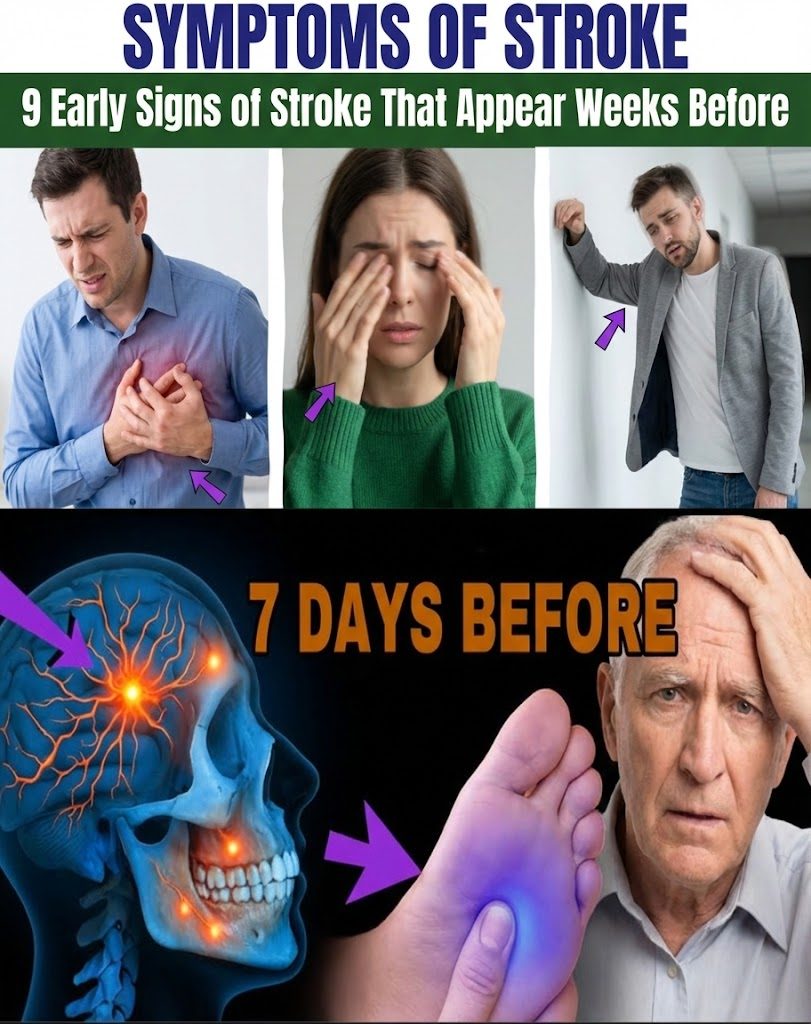
A stroke is a serious medical emergency that occurs when the blood supply to the brain is interrupted or reduced. When this happens, brain cells begin to die within minutes due to a lack of oxygen and nutrients. Because strokes can cause permanent disability or even death, recognizing the early warning signs is extremely important. Many people experience subtle symptoms days or even weeks before a stroke occurs, but these signs are often ignored or mistaken for minor health problems.
🚀 Make Money Online – Up to $50 Per Day!
Understanding these warning signs can help you or someone around you seek medical help quickly. Early treatment can dramatically reduce the risk of severe brain damage and improve recovery outcomes. In this article, we will explore nine early warning signs of stroke that everyone should know.
1. Sudden Numbness or Weakness
One of the most common early signs of a stroke is sudden numbness or weakness, especially on one side of the body. This may affect the face, arm, or leg. Many people notice that one side of their face feels droopy or that they struggle to lift one arm.
For example, if you try to raise both arms and one slowly drifts downward, it could indicate a neurological issue related to reduced blood flow in the brain. This symptom often appears suddenly and should never be ignored.
2. Difficulty Speaking or Understanding Speech
Another key warning sign is trouble speaking or understanding language. A person experiencing a stroke may suddenly have slurred speech or may struggle to find the right words.
Sometimes they may speak clearly but say things that don’t make sense. Others may have difficulty understanding what someone else is saying. These language problems occur because certain parts of the brain responsible for speech and comprehension are affected.
3. Sudden Vision Problems
A stroke can also affect your vision. You might experience blurred vision, double vision, or sudden loss of vision in one or both eyes. Some people describe it as a dark curtain suddenly covering part of their field of vision.
Vision issues related to stroke often happen quickly and may be accompanied by dizziness or confusion. Even temporary vision disturbances should be evaluated by a medical professional.
4. Severe Headache with No Known Cause
A sudden, intense headache that appears without any clear cause can be another warning sign. Some stroke survivors describe it as the worst headache of their life.
This symptom is particularly common in hemorrhagic strokes, which occur when a blood vessel in the brain ruptures. The headache may also be accompanied by nausea, vomiting, or sensitivity to light.
5. Dizziness and Loss of Balance
Feeling dizzy, unsteady, or unable to maintain balance can also signal a potential stroke. People may suddenly struggle to walk straight or feel like the room is spinning.
Because dizziness can have many causes, it’s sometimes dismissed as fatigue or dehydration. However, when it appears suddenly and is accompanied by other neurological symptoms, it could indicate a stroke.
6. Confusion or Trouble Thinking Clearly
Stroke can affect the brain’s ability to process information, leading to sudden confusion. A person may struggle to concentrate, forget simple things, or appear disoriented.
They might have difficulty following conversations, remembering familiar names, or completing simple tasks. If someone suddenly seems mentally confused without a clear explanation, it should be taken seriously.
7. Facial Drooping
Facial drooping is one of the most recognizable symptoms of a stroke. When the muscles on one side of the face become weak, the face may appear uneven.
A simple test is to ask the person to smile. If one side of the face droops or doesn’t move properly, it could be a sign of a stroke. This happens because the nerves controlling facial muscles are affected by reduced blood flow to the brain.
8. Sudden Fatigue or Weakness
While fatigue can occur for many reasons, sudden and unusual exhaustion may be an early warning sign of stroke, particularly in women.
Some people report feeling extremely tired for no apparent reason days before experiencing a stroke. This type of fatigue may come with other symptoms such as headaches, dizziness, or confusion.
9. Numbness or Tingling in the Body
Unexplained tingling sensations in the face, arms, or legs can also occur before a stroke. This sensation may feel similar to when a limb “falls asleep,” but it happens suddenly and without a clear cause.
Persistent or recurring tingling should always be evaluated by a healthcare professional, especially if it appears on only one side of the body.
Remember the FAST Method
Health experts often recommend remembering the FAST method to recognize stroke symptoms quickly:
-
F – Face: Ask the person to smile. Does one side droop?
-
A – Arms: Ask them to raise both arms. Does one arm drift downward?
-
S – Speech: Is their speech slurred or strange?
-
T – Time: If you notice any of these signs, call emergency services immediately.
Acting quickly can save a life and reduce long-term complications.
Final Thoughts
A stroke can happen suddenly, but the body often provides warning signals before a major event occurs. Recognizing these nine early warning signs—such as numbness, confusion, speech problems, vision changes, and severe headaches—can make a life-saving difference.
If you or someone around you experiences these symptoms, do not wait to see if they disappear. Immediate medical attention is essential because treatment is most effective when given as early as possible.
