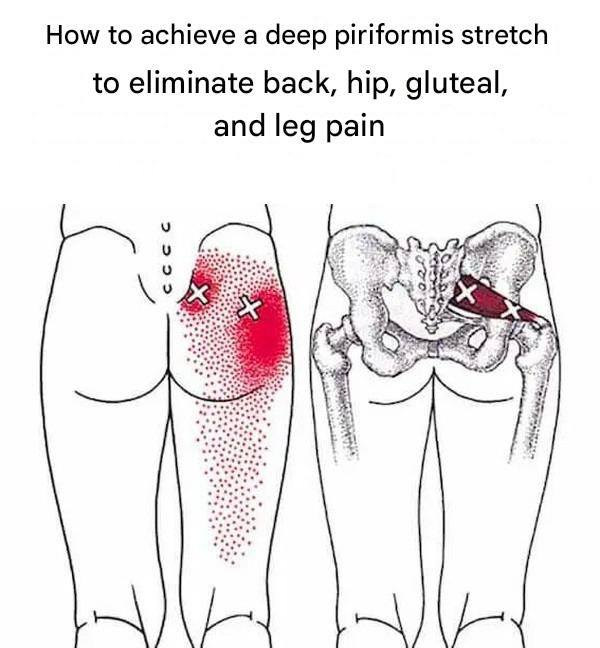
How to Achieve a Deep Piriformis Stretch to Eliminate Back, Hip, Gluteal, and Leg Pain
🚀 Make Money Online – Up to $50 Per Day!
If you struggle with persistent lower back, hip, gluteal, or leg pain, the culprit might be a small but powerful muscle deep in your pelvis: the piriformis. When tight or inflamed, this muscle can irritate the sciatic nerve, leading to discomfort that radiates from the buttock down the leg—a condition often referred to as piriformis syndrome.
The good news? A deep, targeted piriformis stretch can dramatically reduce tension, improve mobility, and relieve pain when done correctly and consistently.
Understanding the Piriformis Muscle
4
The piriformis is a small, flat muscle located deep in the buttock behind the gluteus maximus. It runs from the sacrum (base of the spine) to the top of the femur (thigh bone). Its primary function is to help rotate the hip outward and stabilize the pelvis during movement.
The sciatic nerve runs either underneath or, in some people, directly through the piriformis muscle. When the piriformis becomes tight or spasms due to prolonged sitting, poor posture, overtraining, or injury, it can compress the sciatic nerve. This leads to:
Lower back pain
Deep buttock pain
Hip stiffness
Tingling or numbness down the leg
Shooting pain resembling sciatica
Stretching this muscle properly can reduce pressure on the nerve and restore comfortable movement.
The Deep Piriformis Stretch (Step-by-Step)
1. The Supine Figure-4 Stretch (Beginner-Friendly)
4
This is one of the safest and most effective ways to deeply stretch the piriformis.
How to Do It:
Lie flat on your back with both knees bent and feet flat on the floor.
Cross your right ankle over your left knee, forming a “4” shape.
Reach through and grab the back of your left thigh.
Gently pull the left thigh toward your chest.
Keep your head and shoulders relaxed.
Hold for 30–60 seconds.
Switch sides.
Key Tips:
Keep your spine neutral.
Avoid pulling too aggressively.
You should feel a deep stretch in the buttock—not sharp pain.
Repeat 2–3 times per side.
2. Seated Deep Piriformis Stretch
4
Perfect if you sit for long hours (especially relevant if you work at a desk most of the day).
Steps:
Sit upright in a chair.
Place your right ankle over your left knee.
Keep your back straight.
Gently lean forward from your hips.
Stop when you feel a deep stretch in your glute.
Hold for 30–45 seconds.
Switch sides.
This stretch is excellent for relieving tension caused by prolonged sitting.
3. Advanced Pigeon Pose (Deepest Stretch)
4
If you want a very deep stretch, this yoga pose is highly effective.
How to Perform:
Start in a plank position.
Bring your right knee forward toward your right hand.
Place your shin across your mat (as parallel as comfortable).
Extend your left leg straight behind you.
Keep hips square to the floor.
Lower your torso forward for a deeper stretch.
Hold for 45–90 seconds.
Repeat on the other side.
⚠ If you feel knee pain, stop immediately. Modify by placing a cushion under the hip.
How Often Should You Stretch?
For best results:
Stretch 1–2 times daily.
Hold each stretch at least 30 seconds.
Breathe slowly and deeply.
Stay consistent for at least 2–3 weeks.
Most people feel noticeable improvement within 7–10 days when stretching daily.
Additional Tips to Eliminate Pain
1. Use Heat Before Stretching
Applying a warm compress for 10–15 minutes helps relax the muscle and increases flexibility.
2. Strengthen the Glutes
Weak glute muscles force the piriformis to overwork. Add:
Glute bridges
Clamshells
Side leg raises
3. Avoid Prolonged Sitting
Stand up every 45–60 minutes and move around.
4. Improve Posture
Slouching increases pelvic stress and tightens hip muscles.
When to Be Careful
Avoid aggressive stretching if you have:
Recent hip surgery
Herniated disc
Severe sciatica with weakness
Unexplained numbness
If pain worsens or lasts more than 4–6 weeks, consult a healthcare professional.
Final Thoughts
The piriformis may be small, but when tight, it can cause widespread discomfort from your lower back down to your leg. The key to relief is gentle, consistent, deep stretching combined with strengthening and posture correction.
If you commit to daily stretching and reduce long periods of sitting, you can dramatically improve flexibility, decrease nerve irritation, and eliminate chronic back, hip, and gluteal pain.
