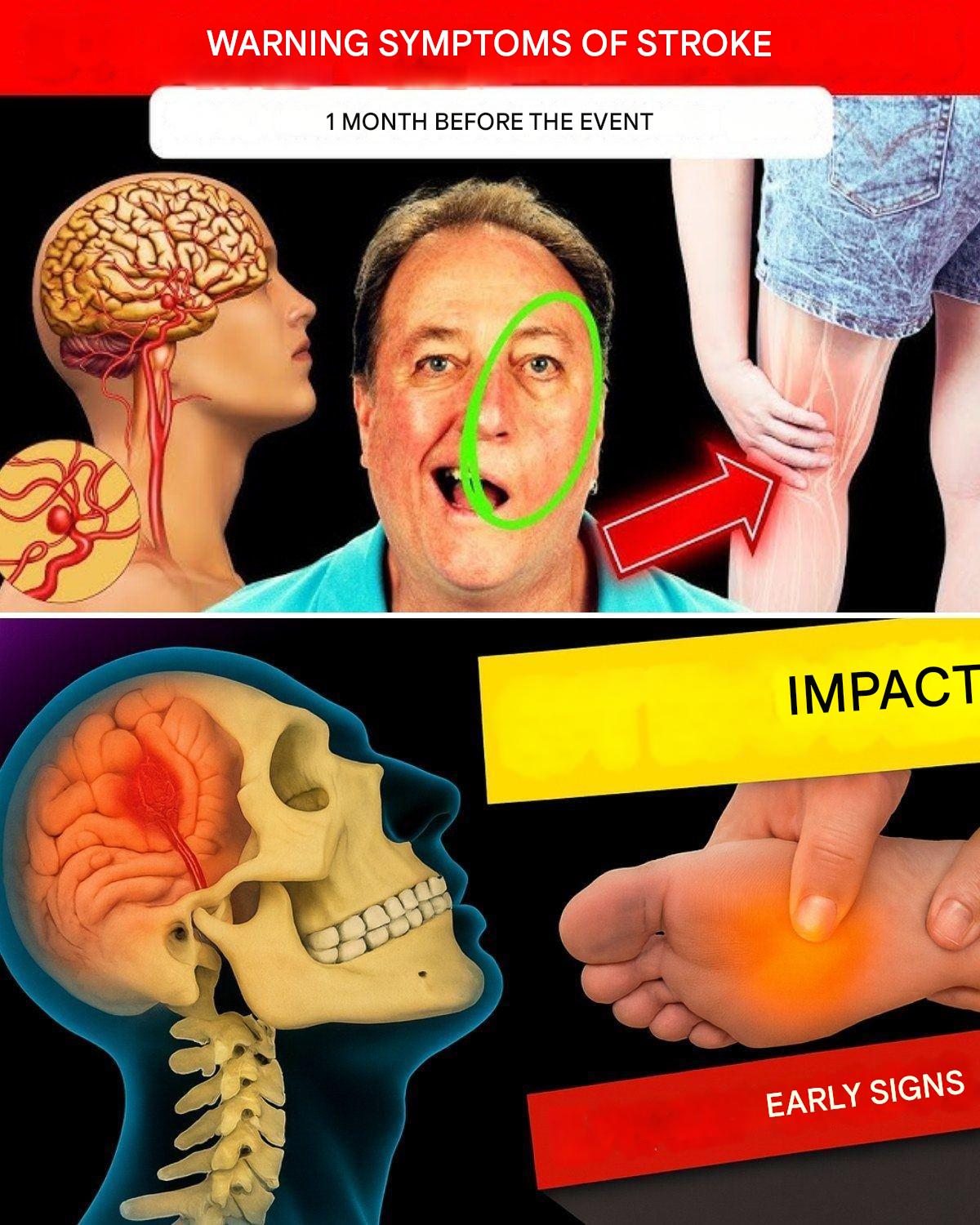
A stroke is one of the leading causes of death and long-term disability worldwide. It occurs when blood flow to part of the brain is blocked or when a blood vessel in the brain bursts. While strokes often seem sudden, the body frequently sends subtle warning signals weeks before the event. Recognizing these signs early and taking preventive measures can significantly reduce the risk.
Below are eight warning signs that may appear up to a month before a stroke, followed by nine practical tips to help prevent it.
8 Warning Signs of a Stroke Weeks Before It Happens
1. Sudden or Recurring Headaches
Frequent or unusual headaches—especially if they are severe or different from your typical headaches—can be an early warning sign. These headaches may indicate reduced blood flow or small leaks in brain vessels.
2. Temporary Numbness or Weakness
Feeling numbness or weakness in the face, arm, or leg—particularly on one side of the body—is one of the most common early stroke signals. These symptoms may come and go, making them easy to ignore.
3. Blurred or Double Vision
Changes in vision, such as blurred sight, double vision, or temporary loss of vision in one eye, may occur when blood flow to the brain’s visual processing areas is disrupted.
4. Sudden Dizziness or Loss of Balance
Frequent dizziness, difficulty walking, or problems maintaining balance could indicate problems with blood supply to areas of the brain responsible for coordination.
5. Difficulty Speaking
If you suddenly struggle to form words, slur your speech, or have trouble understanding others, it may be a warning sign. These episodes can last minutes or hours before disappearing.
6. Extreme Fatigue
Unusual, unexplained fatigue—especially if it comes on suddenly—may signal underlying vascular problems. Many stroke survivors report feeling extremely tired weeks before their stroke.
7. Facial Drooping
Temporary drooping or weakness on one side of the face may occur briefly before returning to normal. This is a classic stroke symptom and should never be ignored.
8. Mini-Strokes (Transient Ischemic Attacks)
A mini-stroke, medically called a Transient Ischemic Attack, is a temporary blockage of blood flow to the brain. Symptoms resemble a stroke but disappear within minutes or hours. However, a TIA is a major warning sign that a full Stroke could happen soon.
9 Effective Tips to Prevent a Stroke
Preventing a stroke often involves improving heart and blood vessel health. Here are nine powerful lifestyle strategies.
1. Control Blood Pressure
High blood pressure is the biggest risk factor for stroke. Regular monitoring and keeping blood pressure within healthy ranges can dramatically lower your risk.
2. Eat a Heart-Healthy Diet
Focus on whole foods such as fruits, vegetables, whole grains, and lean proteins. Reducing salt, processed foods, and saturated fats helps maintain healthy blood vessels.
3. Exercise Regularly
Physical activity improves circulation, lowers cholesterol, and reduces blood pressure. Even 30 minutes of brisk walking five days a week can significantly lower stroke risk.
4. Maintain a Healthy Weight
Being overweight increases the likelihood of high blood pressure, diabetes, and heart disease—all of which raise stroke risk.
5. Manage Diabetes
People with Type 2 Diabetes have a higher risk of stroke. Controlling blood sugar levels through diet, exercise, and medication is essential.
6. Quit Smoking
Smoking damages blood vessels and increases clot formation. Quitting smoking can cut stroke risk nearly in half within a few years.
7. Limit Alcohol Consumption
Excessive drinking raises blood pressure and increases stroke risk. If you drink alcohol, do so in moderation.
8. Manage Stress
Chronic stress can contribute to high blood pressure and unhealthy habits. Relaxation techniques such as meditation, deep breathing, and yoga can help.
9. Get Regular Medical Checkups
Routine health screenings can detect risk factors like high cholesterol, high blood pressure, or irregular heart rhythms before they cause serious problems.
When to Seek Immediate Medical Help
If you or someone else suddenly experiences face drooping, arm weakness, or speech difficulty, seek emergency medical care immediately. Doctors often use the FAST rule:
-
F – Face drooping
-
A – Arm weakness
-
S – Speech difficulty
-
T – Time to call emergency services
Quick treatment can save brain cells and prevent permanent damage.
Final Thoughts
A stroke rarely occurs without warning. Paying attention to your body’s signals—such as temporary numbness, vision changes, or sudden dizziness—can help detect potential problems early. By adopting healthy habits like exercising regularly, eating nutritious foods, managing stress, and monitoring blood pressure, you can significantly reduce your risk.
