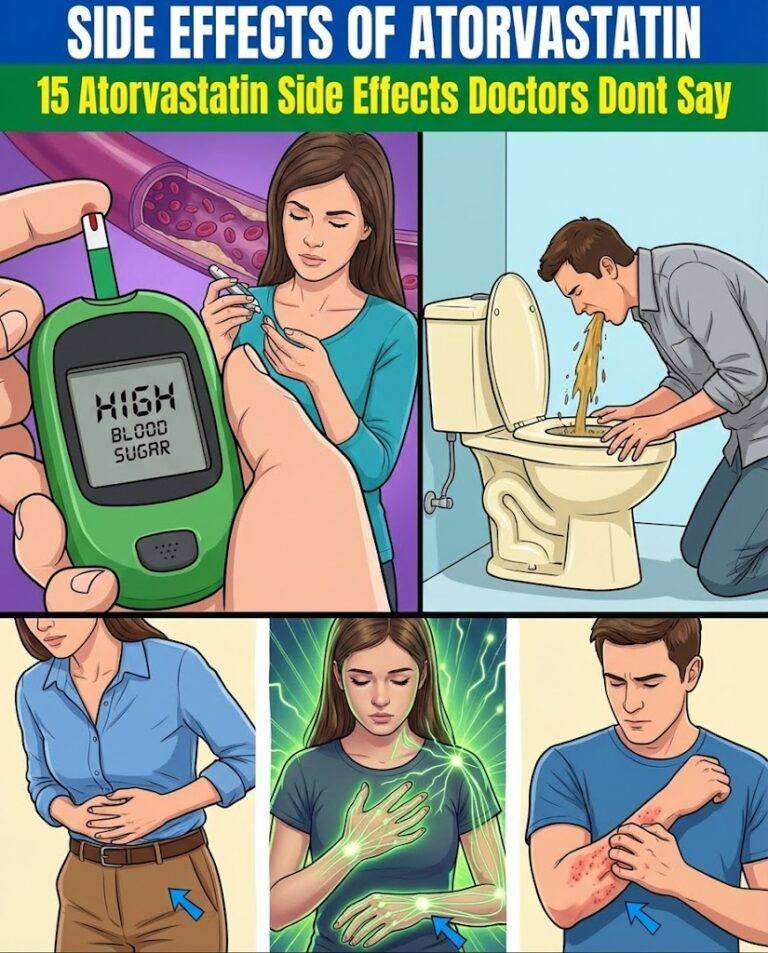
Atorvastatin—commonly known by its brand name Lipitor—is one of the most prescribed cholesterol-lowering medications in the world. It plays a powerful role in reducing LDL (“bad”) cholesterol and lowering the risk of heart attack and stroke. For many people, it’s truly life-saving.
But like all medications, atorvastatin can come with side effects—some common, some subtle, and some rarely discussed during short clinic visits. Most people tolerate it well, but being informed helps you recognize what’s normal, what’s manageable, and when to talk to your doctor.
Here are 15 lesser-known side effects worth understanding.
1. Muscle Weakness (Not Just Pain)
Muscle aches are well known, but some people experience muscle weakness without pain, especially in the thighs or upper arms. This can show up as difficulty climbing stairs or lifting objects.
2. Persistent Fatigue
Some patients report feeling unusually tired or drained, even after adequate rest. This fatigue may be mild but persistent and is sometimes mistaken for aging or stress.
3. Brain Fog or Memory Lapses
A small number of users notice short-term memory issues, confusion, or trouble concentrating. These effects are usually reversible once the medication is adjusted or stopped.
4. Sleep Disturbances
Vivid dreams, insomnia, or restless sleep have been reported. While not common, these changes can affect overall quality of life.
5. Digestive Discomfort
Beyond nausea, atorvastatin may cause bloating, gas, constipation, or diarrhea. These symptoms are often mild but annoying if they persist.
6. Elevated Blood Sugar
Statins, including atorvastatin, may slightly increase blood sugar levels, particularly in people already at risk for type 2 diabetes.
7. Reduced Exercise Tolerance
Some individuals find they tire more quickly during workouts or recover more slowly after physical activity, even without muscle pain.
8. Joint Stiffness or Achiness
Joint discomfort—especially in the knees, hips, or hands—can occur and is sometimes confused with arthritis.
9. Mild Liver Enzyme Changes
Atorvastatin can raise liver enzymes without causing symptoms. This is why periodic blood tests are recommended, especially early in treatment.
10. Headaches
Recurring or dull headaches have been reported, particularly during the first few weeks of therapy.
11. Skin Reactions
Some users notice itching, rashes, or increased skin sensitivity, especially to sunlight.
12. Hormonal Subtle Shifts
Because cholesterol is a building block for hormones, some people report changes in libido or mood, though this isn’t well understood and varies widely.
13. Tingling or Numbness
Rarely, people experience pins-and-needles sensations in the hands or feet, which may relate to nerve sensitivity.
14. Increased Risk of Muscle Breakdown (Very Rare)
A serious condition called rhabdomyolysis is extremely uncommon but important to recognize. Symptoms include severe muscle pain, dark urine, and extreme weakness. This requires immediate medical attention.
15. Interaction with Certain Foods and Medications
Grapefruit, some antibiotics, antifungals, and other medications can increase atorvastatin levels in the body, raising the risk of side effects.
What This Doesn’t Mean
These side effects do not mean atorvastatin is unsafe. Millions of people take it without major issues, and its benefits often far outweigh the risks—especially for those with heart disease or high cardiovascular risk.
What You Can Do
-
Don’t stop the medication suddenly without medical advice
-
Report new or unusual symptoms
-
Ask about dose adjustments or alternative statins if side effects bother you
-
Maintain good hydration, balanced nutrition, and regular movement
-
Keep up with routine blood tests
The Bottom Line
Atorvastatin is a powerful ally for heart health—but informed patients make the best partners in care. Knowing these potential side effects helps you advocate for yourself, ask better questions, and work with your doctor to find the safest, most comfortable plan for your body.
