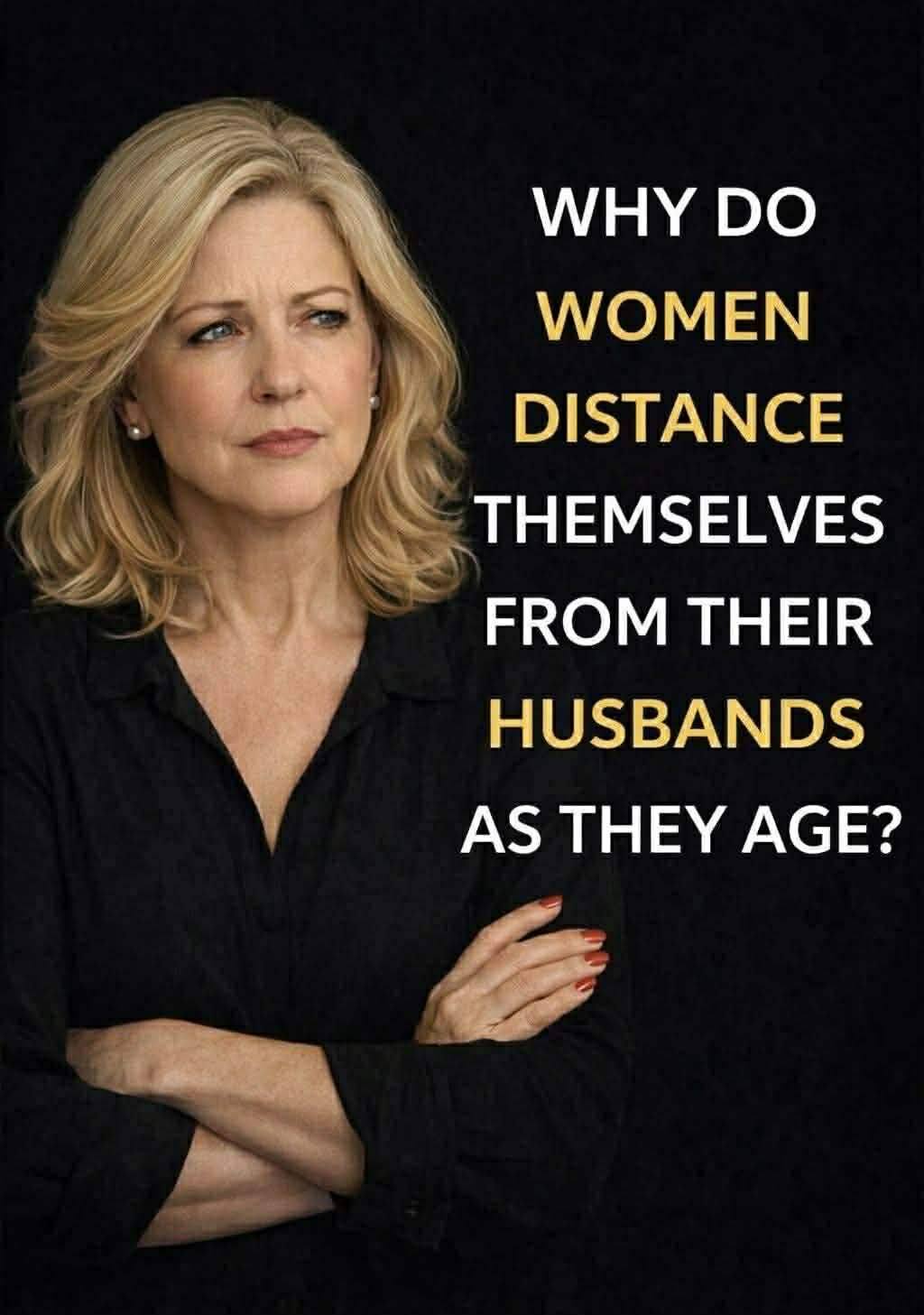
The question of why some women distance themselves from their husbands as they age is complex and deeply human. It isn’t a universal truth—many couples grow closer over time—but in some relationships, emotional or physical distance can develop. Understanding this shift requires looking at emotional needs, life stages, communication patterns, and personal growth.
🚀 Make Money Online – Up to $50 Per Day!
Changing Identity Over Time
As people age, they evolve. A woman who once centered much of her identity around being a partner, mother, or caregiver may begin to rediscover herself. This is especially common once children grow up or responsibilities change. With more time to reflect, she may ask deeper questions: Who am I beyond my roles? What do I want now?
If her husband has not evolved in a similar way—or if their relationship has remained static—this can create a feeling of disconnection. It’s not necessarily about rejecting the husband, but about seeking personal fulfillment that may not have been possible earlier in life.
Emotional Needs Shift
In early years, relationships often focus on building a life—career, children, finances. Emotional needs may take a backseat. As time passes, emotional intimacy becomes more important. Many women begin to crave deeper connection, meaningful conversation, and emotional support.
If those needs are not met, distance can grow. It may not happen suddenly; rather, it’s a gradual withdrawal when attempts to connect feel ignored or misunderstood. Over time, silence replaces effort.
Communication Patterns
Long-term relationships sometimes fall into repetitive communication habits. If a woman feels unheard, dismissed, or criticized over the years, she may stop expressing herself altogether. This isn’t always a conscious decision—it can be a protective response.
Instead of arguing or trying to explain, she might choose distance as a way to maintain peace. Unfortunately, this quiet withdrawal can be mistaken for indifference, when it’s often rooted in unresolved emotional pain.
Physical and Hormonal Changes
Aging also brings biological changes. Hormonal shifts—especially during menopause—can affect mood, energy levels, and physical intimacy. These changes may lead to decreased interest in physical closeness, which can sometimes be misinterpreted as emotional rejection.
However, it’s important to understand that physical changes alone don’t cause distance; rather, how couples adapt to these changes together determines whether they grow closer or apart.
Accumulated Resentment
Small issues that go unresolved can build up over decades. Unequal responsibilities, lack of appreciation, unmet expectations—these can slowly turn into resentment.
In many cases, women may have spent years prioritizing others’ needs over their own. When they finally start focusing on themselves, they may also begin to pull away from dynamics that felt one-sided or draining. Distance, in this context, becomes a form of self-preservation.
Desire for Peace and Independence
With age often comes a desire for simplicity and peace. Some women no longer wish to engage in conflict or emotional labor. If the relationship has been a source of stress, distancing can feel like relief.
At the same time, independence becomes more appealing. After years of shared responsibilities, having personal space, hobbies, and autonomy can be deeply fulfilling. This doesn’t always mean the love is gone—it may simply mean the relationship needs to adapt to a new phase.
Lack of Appreciation
Feeling valued is essential at any age. If appreciation fades over time, emotional distance can follow. Routine can make partners take each other for granted. Compliments, gratitude, and small gestures may become rare.
When a woman feels invisible or unappreciated, she may gradually withdraw—not out of anger, but out of emotional exhaustion.
Different Aging Paths
Sometimes, partners grow in different directions. One may seek growth, learning, or new experiences, while the other prefers routine. These differences can create a gap in shared interests and conversations.
If efforts to bridge that gap fail, distance may develop naturally. It’s not always about conflict—it can simply be a quiet drifting apart.
Not Always About Losing Love
It’s important to emphasize that distance doesn’t always mean love has disappeared. In many cases, feelings still exist, but they are buried under unmet needs, habits, or life changes.
With awareness and effort, couples can reconnect. Open communication, empathy, and willingness to grow together can transform distance into a new kind of closeness.
Final Thoughts
When women distance themselves from their husbands as they age, it’s rarely due to a single reason. It’s usually a combination of emotional, psychological, and life-stage factors. Rather than viewing it as rejection, it can be helpful to see it as a signal—something in the relationship needs attention, understanding, or change.
