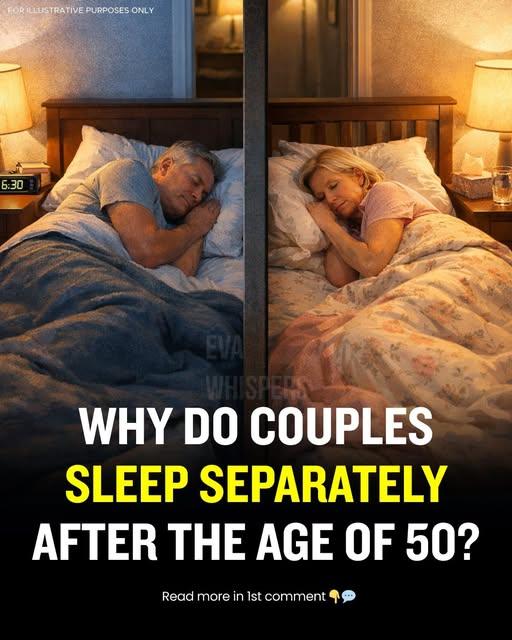
Couples sleeping separately after the age of 50 is more common than many people realize, and it’s usually less about relationship trouble and more about comfort, health, and changing lifestyles. While popular culture sometimes frames separate sleeping arrangements as a sign of emotional distance, in reality, many couples find that it actually improves both their sleep quality and their relationship.
One of the biggest reasons is physical comfort. As people age, their bodies become more sensitive to disruptions. A partner who snores, tosses and turns, or gets up frequently during the night can significantly disturb the other person’s sleep. Conditions like sleep apnea, restless leg syndrome, or chronic pain tend to become more common with age, making uninterrupted sleep harder to achieve when sharing a bed. Instead of enduring restless nights, couples may decide that separate sleeping spaces allow both partners to wake up feeling more rested and healthier.
Health-related changes also play a major role. Hormonal shifts—particularly during menopause—can lead to night sweats, insomnia, and fluctuating body temperatures. These changes can make sharing a bed uncomfortable. Similarly, older adults may have different sleep schedules. One partner might prefer going to bed early, while the other stays up late. Separate sleeping arrangements allow each person to follow their natural rhythm without compromise.
Another important factor is sleep quality and its connection to overall well-being. Good sleep becomes increasingly valuable with age because it directly impacts memory, mood, immune function, and cardiovascular health. Couples may prioritize restful sleep over tradition, recognizing that being well-rested helps them show up better for each other during the day. In this sense, sleeping apart can actually strengthen a relationship rather than weaken it.
Emotional dynamics also evolve over time. After decades together, many couples feel secure enough in their bond that they no longer associate physical closeness at night with emotional intimacy. They may express love and connection in other ways—through shared meals, conversations, or spending quality time together during the day. Separate sleeping spaces don’t necessarily mean less affection; instead, they can reflect a mature understanding of each other’s needs.
Personal space is another factor that becomes more valued with age. After years of shared responsibilities—raising children, managing careers, and running a household—some individuals begin to appreciate having a space of their own. A separate bedroom can serve as a personal retreat, offering a sense of independence while still maintaining a committed relationship. This balance between togetherness and individuality can be refreshing and fulfilling.
Cultural perceptions around this topic are also shifting. In the past, sleeping separately might have been stigmatized or seen as unusual. Today, there is growing awareness that there is no single “correct” way for couples to organize their lives. What matters most is what works for both partners. Many couples openly discuss their needs and make practical decisions without worrying about social expectations.
It’s also worth noting that sleeping separately doesn’t mean couples never share a bed. Some adopt flexible arrangements—sleeping apart on weekdays for better rest, and together on weekends or special occasions. Others maintain intimacy by spending time together before going to their separate rooms. These hybrid approaches allow couples to enjoy the benefits of both closeness and independence.
Communication is key in making this arrangement successful. Couples who openly discuss their reasons—whether it’s snoring, sleep schedules, or personal comfort—are more likely to view the decision as a mutual solution rather than a rejection. When both partners feel heard and respected, separate sleeping becomes a practical adjustment rather than an emotional issue.
In conclusion, couples over 50 often choose to sleep separately for reasons rooted in health, comfort, and lifestyle changes rather than a lack of love or connection. Better sleep, improved well-being, and respect for individual needs all contribute to this decision. Far from harming relationships, separate sleeping arrangements can actually support long-term happiness by ensuring both partners feel rested, comfortable, and understood.
