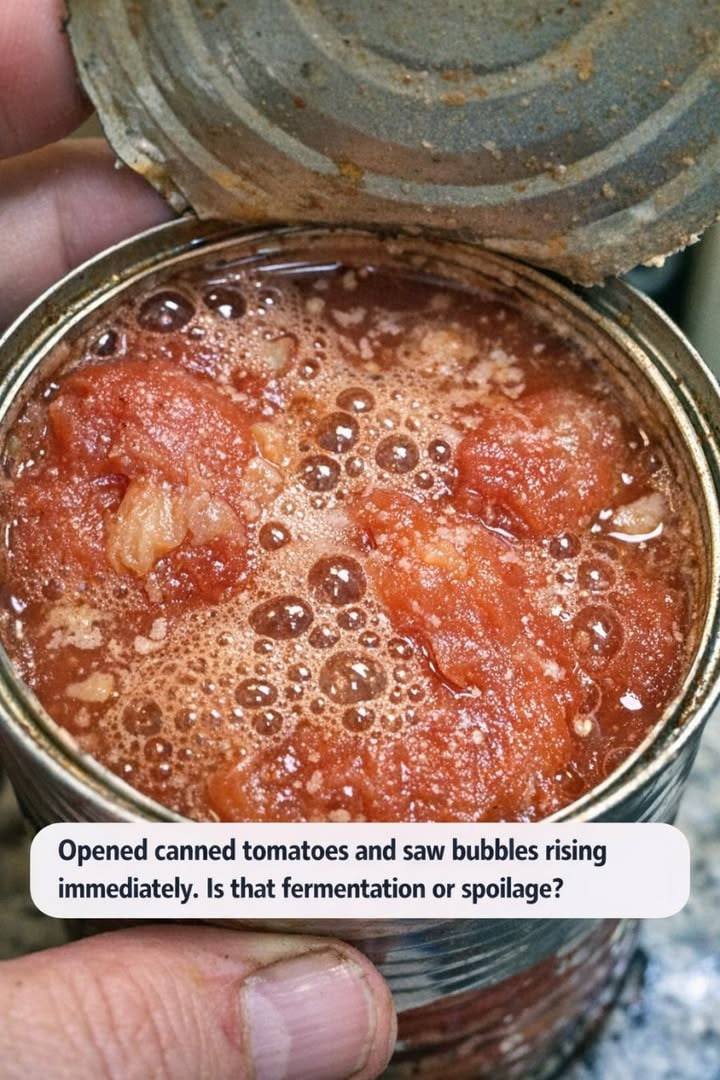
If you open a can of tomatoes and immediately see bubbles rising, it’s a sign you should pause before using them. While bubbling can be related to fermentation, in canned foods it more often points toward spoilage or contamination, especially if the product wasn’t meant to be fermented.
🚀 Make Money Online – Up to $50 Per Day!
Let’s break it down clearly so you know what’s safe—and what’s not.
Why Are There Bubbles in Canned Tomatoes?
When you open a can and see bubbles forming right away, it usually means gas has built up inside. This gas can come from:
1. Microbial Activity (Spoilage)
The most common reason is that bacteria or yeast have started breaking down the tomatoes, producing gases like carbon dioxide. This happens when:
- The can wasn’t properly sealed
- There was contamination during processing
- The can was damaged or stored improperly
👉 In this case, bubbling is a warning sign of spoilage, not something safe to consume.
2. Fermentation (Less Common in Canned Goods)
Fermentation is a natural process where beneficial microbes convert sugars into acids or alcohol, producing gas.
However, canned tomatoes are not designed to ferment inside the can. Unlike homemade pickles or kimchi:
- Commercial canned foods are sterilized
- The environment inside should be microbe-free
👉 So if fermentation is happening, it means the seal likely failed and harmful microbes may also be present.
3. Pressure Release (Harmless but Rare)
Sometimes, temperature changes can cause slight pressure differences inside the can. When opened, you might see a few bubbles.
But here’s the key difference:
- Harmless bubbles are brief and minimal
- They don’t continue rising or fizzing
Warning Signs of Spoiled Canned Tomatoes
If bubbling is accompanied by any of these, do not use the tomatoes:
- Bulging or dented can
- A hissing sound when opened
- Sour, rotten, or “off” smell
- Foam or excessive fizzing
- Discoloration (very dark or unusual shades)
- Mold (rare but possible after opening)
These signs could indicate contamination by dangerous bacteria such as Clostridium botulinum, which causes Botulism—a rare but serious illness.
👉 Important: Botulism toxins can be present without obvious smell or taste, so when in doubt, throw it out.
So, Is It Fermentation or Spoilage?
Here’s the honest answer:
- In canned tomatoes, bubbling almost always means spoilage, not safe fermentation
- Even if it looks like fermentation, it’s not controlled or safe
- You should not taste or try to cook it “to be safe”
What Should You Do?
If you notice immediate bubbling:
✔️ Do not eat it
✔️ Do not taste it
✔️ Dispose of it safely (preferably sealed in a bag)
✔️ Wash your hands after handling
Safe Homemade Tomato Recipe (Fresh Alternative)
Instead of risking questionable canned tomatoes, here’s a simple fresh tomato sauce recipe you can trust.
Ingredients:
- 6 fresh ripe tomatoes
- 3 cloves garlic (minced)
- 2 tablespoons olive oil
- 1 small onion (finely chopped)
- Salt to taste
- ½ teaspoon black pepper
- Fresh basil (optional)
Instructions:
- Blanch the tomatoes
Boil for 1 minute, then transfer to cold water. Peel skins easily. - Chop and cook
Dice tomatoes and set aside. - Sauté aromatics
Heat olive oil in a pan, add onion and garlic. Cook until fragrant. - Add tomatoes
Stir in chopped tomatoes, salt, and pepper. - Simmer
Cook on low heat for 20–30 minutes until thickened. - Finish
Add basil for freshness and blend if you prefer a smooth sauce.
Final Takeaway
Bubbles in canned tomatoes are not something to ignore. While fermentation might sound harmless, in this context it’s usually a sign that something has gone wrong inside the can.
