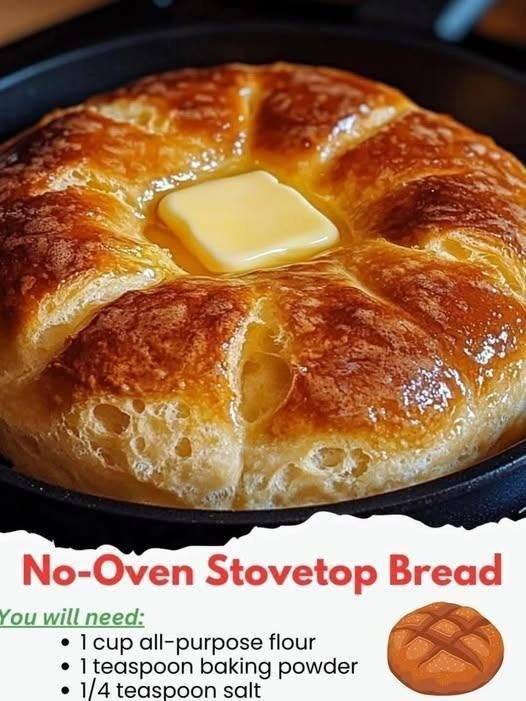
No-Oven Stovetop Bread – Soft, Fluffy, and Perfect Every Time
If you’ve ever wanted to bake fresh, warm bread but don’t have an oven, this no-oven stovetop bread recipe will change the way you think about homemade loaves. Made right on your stovetop, this bread is soft, airy, and golden with a slightly crisp crust — perfect for sandwiches, butter spreads, or dipping into soups. It’s simple, foolproof, and ideal for anyone who loves fresh bread but wants to skip the oven.
Why Make Stovetop Bread?
Baking bread on the stove is a centuries-old technique used long before electric ovens became common. The beauty of this recipe is its accessibility — you can make bakery-style bread using just a heavy pot, skillet, or tawa (flat pan). It’s perfect for students, campers, or anyone living in a small kitchen. You don’t even need fancy equipment or ingredients — just a little patience and a good pan with a lid.
Ingredients You’ll Need
Here’s what you need for one large round loaf or two smaller loaves:
-
2 ½ cups (320 g) all-purpose flour – You can use whole wheat flour or a 50/50 mix for a heartier texture.
-
1 teaspoon salt – Balances the flavor and strengthens the dough.
-
1 tablespoon sugar – Helps activate the yeast and adds a touch of sweetness.
-
1 tablespoon oil or melted butter – Makes the crumb soft and moist.
-
1 teaspoon instant yeast (or 1 ½ teaspoons active dry yeast) – For leavening and fluffy texture.
-
¾ cup (180 ml) warm water – Lukewarm, not hot, to activate the yeast properly.
-
Optional: herbs, garlic powder, or sesame seeds for extra flavor.
Step-by-Step Method
Step 1: Activate the Yeast (if using active dry yeast)
If you’re using instant yeast, you can skip this step. For active dry yeast, dissolve it in warm water with the sugar and let it sit for 10 minutes until it becomes frothy. This ensures the yeast is alive and ready to work its magic.
Step 2: Mix the Dough
In a large mixing bowl, combine the flour and salt. Add the yeast mixture (or water and instant yeast) and oil. Stir until the dough begins to come together. Use your hands to knead the dough inside the bowl for a minute or two.
Transfer it to a lightly floured surface and knead for about 8–10 minutes until smooth and elastic. The dough should be soft but not sticky — add a tablespoon of flour if it feels too wet.
Step 3: First Rise
Place the dough in a lightly greased bowl and cover it with a damp cloth or plastic wrap. Let it rise in a warm place for 1 to 1½ hours, or until doubled in size.
This rising process develops flavor and structure. In cooler climates, you can keep the bowl near the stove or in a switched-off oven with the light on to speed up fermentation.
Step 4: Shape the Dough
Once risen, punch down the dough gently to release air bubbles. Shape it into a smooth ball or oval loaf. If using a skillet or pot, make sure the dough fits comfortably inside with space to expand as it cooks.
You can also divide the dough into smaller rolls or mini loaves — perfect for individual servings.
Step 5: Second Rise
Place the shaped dough onto a piece of parchment paper or directly into a greased pan. Cover it again and let it rest for 30 minutes, or until slightly puffed. This short rise gives the bread its final volume and softness.
Step 6: Prepare Your Stovetop Setup
You can cook stovetop bread in a heavy-bottomed pot, non-stick pan, or cast-iron skillet. The key is even heat and a tight-fitting lid to trap steam — that’s what makes the bread fluffy inside and crisp outside.
Set the pan on low heat and let it preheat for about 5 minutes before placing the dough inside.
Step 7: Cook the Bread
Gently transfer the risen dough to the pan. Cover immediately with the lid. Cook on low heat for about 15–20 minutes on one side.
After 20 minutes, carefully flip the bread using a spatula or tongs. Cook the other side for another 15–20 minutes until golden brown.
Tip: Avoid opening the lid frequently — the trapped steam is essential for proper baking.
If you want an extra-crisp crust, you can briefly toast each side uncovered for 2–3 minutes at the end.
Step 8: Check for Doneness
Tap the top of the bread; it should sound hollow, which means it’s fully cooked. You can also insert a skewer in the center — it should come out clean and dry.
Once done, transfer the bread to a wire rack and let it cool for at least 15 minutes before slicing.
Texture and Taste
The result? A loaf that’s soft, fluffy, and slightly chewy inside with a beautifully golden crust. The stovetop method actually keeps the bread more moist than oven baking because the steam stays trapped inside the pan.
When you cut into it, the aroma of fresh bread fills the air — warm, comforting, and nostalgic. It pairs wonderfully with butter, jam, curry, or soup.
Variations to Try
You can customize your stovetop bread easily:
-
Garlic and Herb Bread: Add 1 teaspoon garlic powder and 1 tablespoon mixed herbs to the flour.
-
Cheese Bread: Mix shredded cheese into the dough or sprinkle it on top before cooking.
-
Whole Wheat Version: Replace half or all of the flour with whole wheat flour (add a bit more water as it absorbs more).
-
Stuffed Flat Bread: Fill with mashed potatoes, sautéed onions, or cheese for a hearty twist.
Storage Tips
Let the bread cool completely before storing. Wrap it in a clean cloth and keep it in an airtight container at room temperature for up to 2 days. For longer storage, refrigerate for up to a week or freeze for up to a month.
To reheat, simply warm on a pan or in the microwave for 20–30 seconds.
Troubleshooting
-
Bread too dense? The yeast may not have activated properly, or the dough wasn’t kneaded enough.
-
Burning on the bottom? Reduce the heat — stovetop bread requires gentle, steady cooking.
-
Dough too sticky? Add flour a little at a time during kneading until it’s manageable.
Final Thoughts
Making no-oven stovetop bread is both an art and a joy. There’s something deeply satisfying about creating a beautiful loaf using only your stovetop and a few pantry staples. It’s a practical solution for anyone without an oven — and the taste rivals any bakery’s fresh bread.
Once you try it, you’ll realize that fresh, warm, homemade bread doesn’t require fancy tools — just patience, love, and a simple pan. Serve it warm with butter melting into the crust, and you’ll know why stovetop bread has become a timeless favorite around the world.
