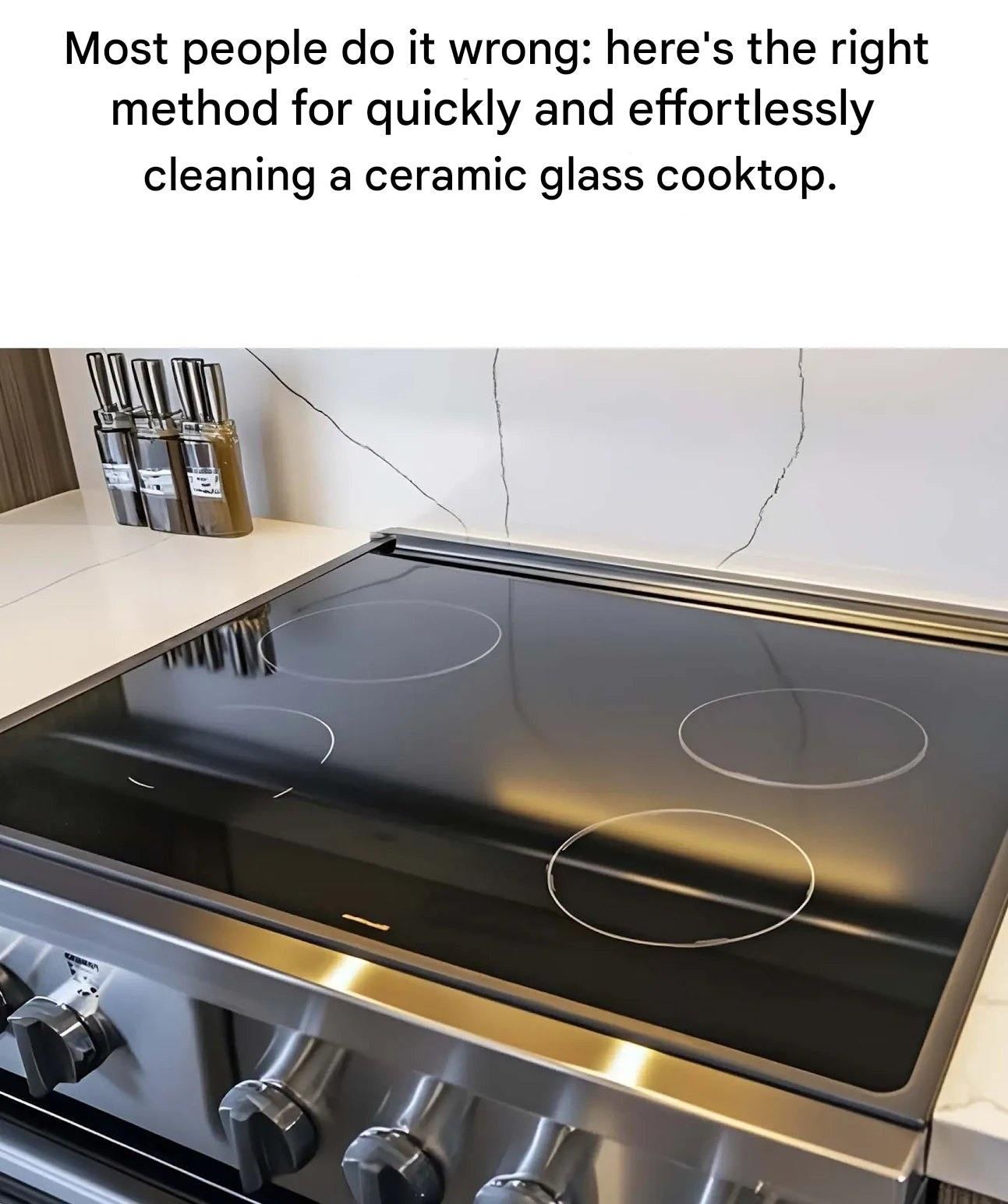
Unlike traditional metal burners, ceramic glass cooktops have a delicate, polished surface. Abrasive scrubbers, harsh chemicals, or improper cleaning tools can leave permanent scratches or dull the finish. Food spills—especially sugary substances, sauces, and oils—can bake onto the hot surface and become difficult to remove.
The safest cleaning approach uses soft tools, mild cleaners, and a step-by-step technique that loosens residue instead of scraping it aggressively.
The Gentle Sparkle Method: A Unique Cleaning Recipe
Think of this process as a kitchen “recipe” designed specifically for ceramic glass surfaces.
Ingredients (Cleaning Supplies)
-
1 tablespoon baking soda
-
1 tablespoon white vinegar
-
1 teaspoon mild dish soap
-
1 cup warm water
-
2 soft microfiber cloths
-
1 non-abrasive sponge
-
Optional: plastic scraper designed for glass cooktops
Step 1: Let the Cooktop Cool Completely
Before cleaning, make sure the cooktop is completely cool. Cleaning a hot surface can cause streaks, damage the glass, or even cause burns.
Waiting for the cooktop to cool also prevents the cleaning solution from evaporating too quickly, which ensures better stain removal.
Step 2: Create the Cleaning Solution
Mix the following in a small bowl:
-
1 cup warm water
-
1 teaspoon mild dish soap
-
1 tablespoon white vinegar
This solution cuts through grease while remaining gentle on the glass surface. The vinegar helps dissolve mineral deposits and food residue without requiring harsh scrubbing.
Step 3: Apply the Solution
Dip a microfiber cloth into the solution and gently wipe the entire cooktop surface.
Focus on:
-
grease spots
-
dried food spills
-
fingerprints and smudges
Avoid scrubbing aggressively. The goal here is to soften residue so it becomes easier to remove later.
Let the solution sit on stubborn stains for about 3–5 minutes.
Step 4: The Baking Soda Lift
Sprinkle a light layer of baking soda over stubborn spots.
Baking soda works as a mild natural cleaner that lifts grime without scratching delicate glass surfaces.
Next:
-
Dampen a microfiber cloth with warm water.
-
Lay it over the baking soda spots.
-
Let it sit for about 10 minutes.
This creates a gentle soaking effect that loosens burnt-on residue.
Step 5: Wipe with a Soft Sponge
After soaking, use a non-abrasive sponge to gently wipe the area in circular motions.
Most burnt residue should lift off easily.
If anything remains stuck, lightly use a plastic cooktop scraper held at a 45-degree angle. Never use metal knives or sharp tools.
Step 6: Rinse and Polish
Now rinse the cooktop with a clean microfiber cloth dipped in warm water.
This removes leftover soap and baking soda particles.
Dry the surface using another microfiber cloth to prevent water spots.
For extra shine, lightly buff the cooktop using small circular motions.
Tips to Prevent Scratches
Keeping a ceramic glass cooktop scratch-free requires good daily habits.
Avoid Abrasive Materials
Never use:
-
steel wool
-
rough scouring pads
-
powdered abrasive cleaners
These materials can permanently damage the glass.
Use Flat-Bottom Cookware
Pots with rough or warped bottoms can scratch the surface when moved.
Always lift cookware instead of sliding it across the cooktop.
Clean Spills Quickly
Sugary spills like caramel, syrup, or sauces can harden and bond with the glass surface when heated. Cleaning spills quickly prevents stubborn buildup.
Avoid Excess Weight
Heavy cookware dropped onto the cooktop can cause cracks or chips.
Handling Tough Burnt Stains
If burnt stains remain after normal cleaning, try this stronger yet safe method:
-
Mix baking soda and a few drops of water to create a thick paste.
-
Apply the paste directly to the stain.
-
Cover with a warm damp cloth.
-
Leave it for 15 minutes.
-
Wipe gently with a soft sponge.
This technique softens hardened residue without scratching the surface.
Natural Shine Booster
For an extra polished finish, use this simple homemade shine spray:
Ingredients
-
1/2 cup white vinegar
-
1/2 cup distilled water
-
5 drops lemon essential oil (optional)
Spray lightly on the cooktop and buff with a microfiber cloth. This removes streaks and leaves a glossy finish.
Cleaning Frequency
For the best results:
-
Daily: Wipe the cooktop after cooking.
-
Weekly: Perform a deeper cleaning using the baking soda method.
-
Monthly: Polish the surface to restore shine.
Regular cleaning prevents stubborn buildup and extends the life of your cooktop.
Final Thoughts
Cleaning a ceramic glass cooktop doesn’t require expensive cleaners or harsh scrubbing. With a gentle combination of warm water, dish soap, vinegar, and baking soda, you can remove grease and burnt residue while protecting the delicate glass surface.
