Orchids are among the most elegant and rewarding houseplants you can grow. Their graceful stems and delicate flowers can transform any indoor space into a small tropical paradise. However, many orchid owners struggle to keep their plants blooming regularly. If your orchid has stopped producing flowers or blooms only occasionally, the secret often lies in proper fertilization. With the right natural fertilizer and care routine, you can encourage your orchid to bloom profusely and for a long time.
Why Orchids Need Fertilizer
In nature, orchids grow on trees and absorb nutrients from rainwater, decaying organic matter, and air. When grown indoors in pots, they rely entirely on the nutrients we provide. Most orchid potting mixes—such as bark, moss, or coconut husk—contain very few nutrients. Without fertilization, the plant may survive but will not produce strong stems or abundant flowers.
Fertilizing orchids helps them develop healthy roots, strong leaves, and the energy needed to create multiple blooms. A well-fed orchid will also flower longer and more frequently throughout the year.
A Simple Natural Fertilizer for Orchids
One of the best and easiest homemade fertilizers for orchids uses ingredients that many people already have in their kitchen. This gentle fertilizer provides essential minerals that orchids need for growth and flowering.
Ingredients
-
1 banana peel
-
1 liter of water
-
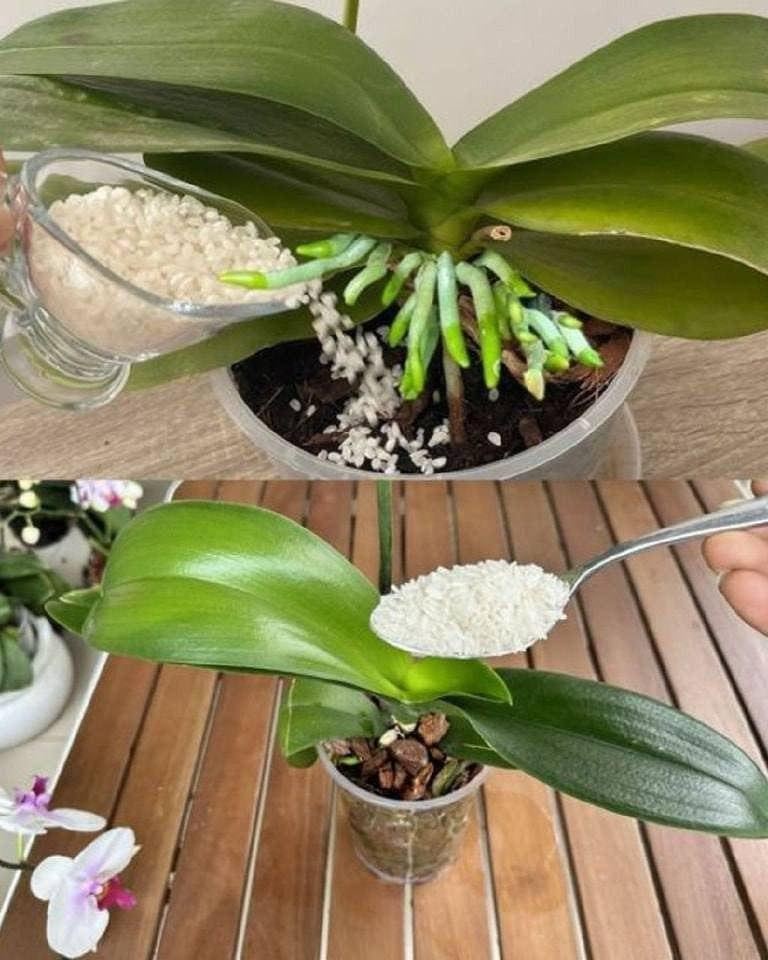
1 teaspoon rice water (optional)
Banana peel is rich in potassium and phosphorus, two nutrients that are especially important for flower production. Rice water contains trace minerals and helps nourish the roots.
How to Prepare the Fertilizer
Start by washing the banana peel to remove any dirt or residue. Cut it into small pieces so the nutrients can release more easily. Place the pieces into a container and pour one liter of water over them.
Let the mixture sit for 24 hours. During this time, the water absorbs nutrients from the banana peel. After soaking, strain the liquid to remove the peel pieces. If you have rice water available—the water left after rinsing rice—add one teaspoon to the mixture.
Your natural orchid fertilizer is now ready to use.
How to Apply It
Water your orchid with this solution once every two weeks. Pour the fertilizer slowly over the potting mix until it begins to drain from the bottom of the pot. This ensures the roots absorb the nutrients evenly.
It is best to fertilize orchids in the morning. This allows the plant to absorb nutrients during the day while preventing excessive moisture from sitting overnight.
Avoid fertilizing a completely dry orchid. Lightly water the plant with plain water first, then apply the fertilizer. This protects the roots from stress.
Additional Orchid Care Tips for More Blooms
Fertilizing is important, but orchids also require the right growing conditions to bloom beautifully.
1. Provide Bright, Indirect Light
Orchids love light but not direct, harsh sunlight. A bright window with filtered light is ideal. Too little light is one of the main reasons orchids fail to bloom.
2. Maintain Proper Watering
Overwatering is a common mistake. Orchids prefer slightly dry conditions between waterings. Typically, watering once a week is sufficient, though this can vary depending on temperature and humidity.
3. Ensure Good Air Circulation
Orchid roots need air to stay healthy. Always use a well-draining potting mix designed specifically for orchids. Good airflow prevents root rot and supports strong growth.
4. Keep a Stable Temperature
Most orchids thrive in temperatures between 18°C and 27°C (65°F to 80°F). A slight drop in nighttime temperature can encourage the plant to produce flower spikes.
5. Trim Old Flower Stems
Once flowers fade, trim the stem above a node if it is still green. This can encourage a new flower spike to grow from the same stem.
Signs Your Orchid Is Happy
When your orchid receives proper care and fertilization, you will start to notice several positive changes. The leaves will appear firm and vibrant green. The roots will look thick and healthy, often with green or silver coloring. Eventually, a new flower spike will emerge from the base of the plant or along the stem.
With time, the spike will grow taller and produce multiple buds. These buds will open gradually, revealing beautiful flowers that can last for weeks or even months.
A Consistent Routine Is the Secret
The most important factor in growing blooming orchids is consistency. Feeding your orchid with a gentle natural fertilizer every two weeks, providing the right amount of light, and avoiding overwatering will create the perfect environment for long-lasting flowers.
