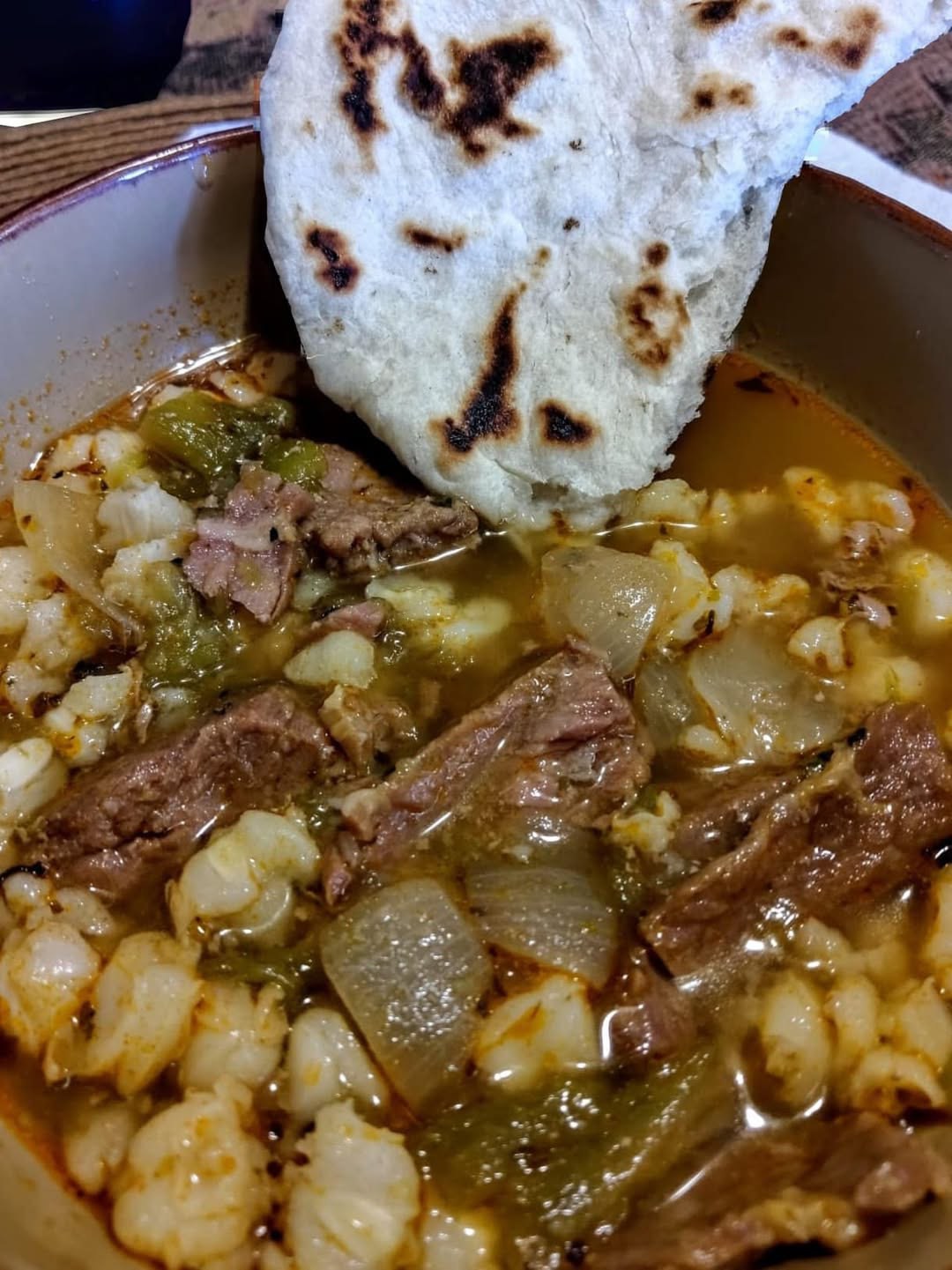
Pozole is one of Mexico’s most beloved dishes, deeply rooted in family gatherings, celebrations, and holidays. While pork pozole is the most common version, pozole de res made with tender steak is especially popular for Christmas in many regions, where its deep red broth, warm spices, and comforting aroma fill the house on cold December evenings. This Pozole Navideño con Carne de Res is hearty, festive, and perfect for sharing with loved ones after a long day of celebration.
Ingredients
For the broth and meat:
-
2 ½ pounds beef steak, cut into large chunks (chuck steak, sirloin, or beef shank work well)
-
1 large onion, halved
-
6 cloves garlic
-
2 bay leaves
-
1 tablespoon salt (plus more to taste)
-
12 cups water
-
3 cans (15 oz each) white hominy, drained and rinsed
For the red chile sauce:
-
6 dried guajillo chiles, stemmed and seeded
-
3 dried ancho chiles, stemmed and seeded
-
2 dried pasilla chiles (optional, for depth)
-
2 cloves garlic
-
½ teaspoon ground cumin
-
½ teaspoon dried oregano (preferably Mexican oregano)
-
¼ teaspoon ground cloves (a subtle Christmas touch)
-
¼ teaspoon ground cinnamon
-
1 teaspoon salt
-
2 cups warm soaking liquid from the chiles
For garnish (essential):
-
Shredded cabbage or lettuce
-
Thinly sliced radishes
-
Chopped white onion
-
Fresh cilantro
-
Dried Mexican oregano
-
Lime wedges
-
Crushed red chile flakes or chile piquín
-
Warm corn tostadas or tortillas
Instructions
1. Cook the Beef
In a large stockpot or Dutch oven, place the beef chunks, onion halves, garlic cloves, bay leaves, salt, and water. Bring everything to a boil over medium-high heat, skimming off any foam that rises to the surface. Once boiling, reduce the heat to low, cover partially, and simmer for 1½ to 2 hours, or until the beef is fork-tender and deeply flavorful.
This slow simmer is the heart of pozole. As the meat cooks, the broth becomes rich and comforting, setting the foundation for the dish.
2. Prepare the Chile Sauce
While the beef cooks, place the dried chiles in a saucepan and cover them with hot water. Simmer gently for 10–15 minutes, until the chiles soften completely. Remove from heat and let them soak.
Transfer the softened chiles to a blender, along with garlic, cumin, oregano, cloves, cinnamon, salt, and about 2 cups of the soaking liquid. Blend until completely smooth. For a refined, velvety broth, strain the sauce through a fine mesh sieve, pressing with a spoon to extract all the flavor.
The warm spices in this chile sauce—especially the hint of clove and cinnamon—give this pozole its Christmas character without overpowering the traditional taste.
3. Combine and Simmer
Once the beef is tender, remove the onion, garlic, and bay leaves from the pot and discard them. Add the drained hominy directly into the broth.
Slowly stir in the red chile sauce, mixing well so the broth turns a deep, festive red. Let the pozole simmer uncovered for 30–40 minutes, allowing the flavors to meld. Taste and adjust salt as needed. If the broth becomes too thick, add a little more water or beef broth.
During this final simmer, the hominy absorbs the chile flavor while releasing its own subtle sweetness, creating the classic pozole texture.
4. Serve Christmas-Style
Serve the pozole piping hot in large bowls. Set up a garnish station so everyone can customize their bowl—this is a cherished part of the pozole experience.
Top with shredded cabbage, radishes, onion, cilantro, and a generous squeeze of lime. Sprinkle with oregano and chile flakes for extra warmth. Serve with tostadas or warm tortillas on the side, perfect for dipping into the broth.
Holiday Tips and Variations
-
This pozole tastes even better the next day, making it ideal for Christmas Eve preparation.
-
For extra richness, add a beef marrow bone to the broth during cooking.
-
You can substitute part of the beef with short ribs for deeper flavor.
-
Keep the garnishes colorful and abundant to reflect the festive spirit of the season.
