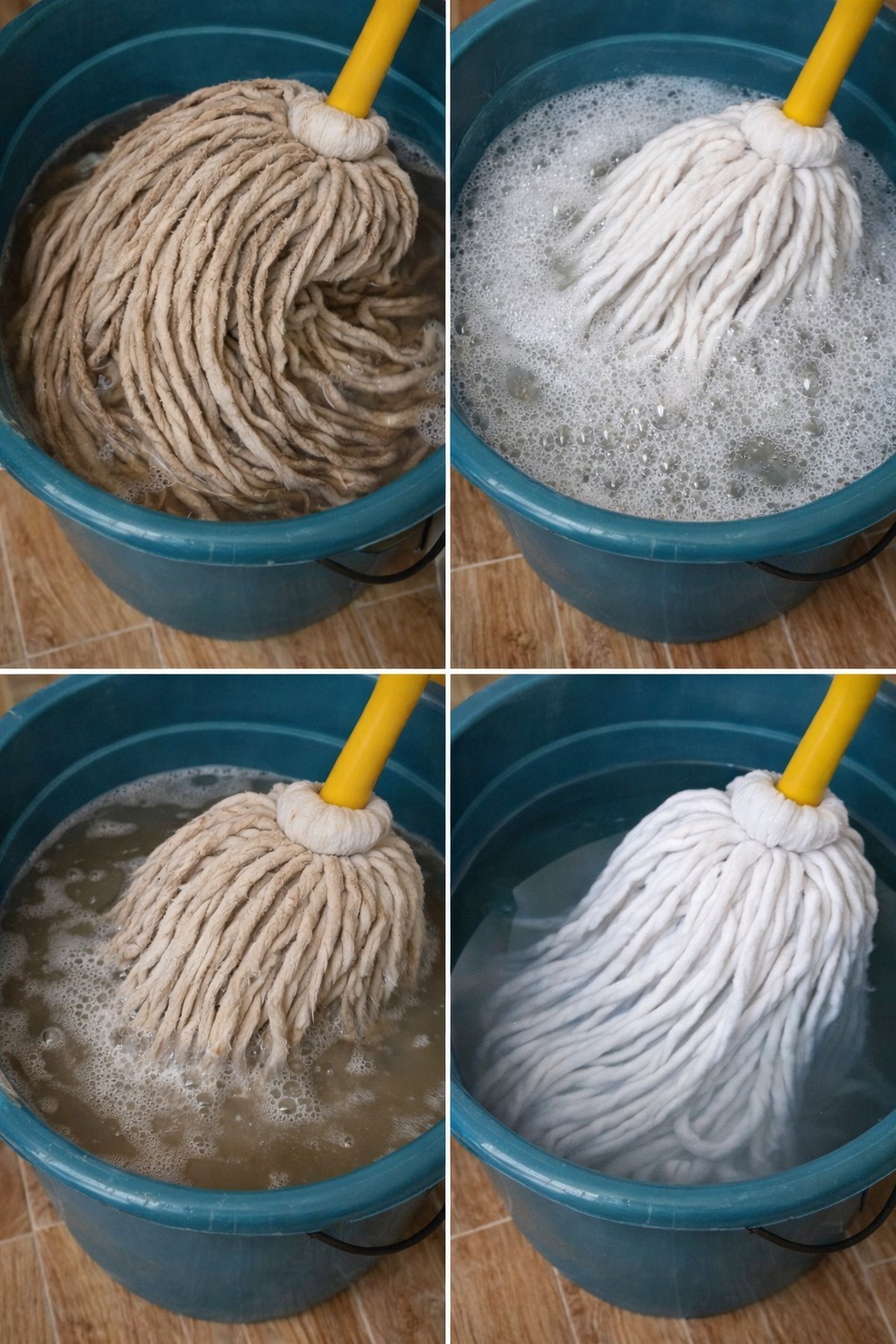
Before you toss that grimy, foul-smelling mop into the trash, stop. You don’t need to buy a new one. What looks permanently dirty can actually be restored in minutes with one powerful, inexpensive ingredient you probably already have in your kitchen: white vinegar.
🚀 Make Money Online – Up to $50 Per Day!
For generations, households around the world have relied on the natural cleaning power of White Vinegar. It cuts through grime, neutralizes odors, breaks down mineral buildup, and kills many types of bacteria — all without harsh chemicals. When your mop starts to smell sour or leaves streaks instead of shine, it’s usually due to trapped bacteria and detergent residue. Vinegar solves both problems at once.
Let’s walk through the full step-by-step method to make your mop look and smell like new again.
Why Mops Get So Dirty So Fast
A mop absorbs everything: muddy footprints, cooking grease, spilled drinks, pet accidents, dust, and bacteria. Each time you dip it back into the bucket, some of that grime stays trapped deep inside the fibers.
Over time, this leads to:
-
Musty or sour odor
-
Sticky residue on floors
-
Gray or brown discoloration
-
Stiff or crusty strands
-
Spreading dirt instead of cleaning
Many people assume the mop is ruined at this stage. But in reality, it just needs deep sanitizing.
The One-Ingredient Miracle Solution
You’ll Need:
-
1 cup hot water (very warm, not boiling)
-
1–2 tablespoons white vinegar
-
A bucket or deep basin
That’s it.
Step-by-Step Mop Revival Method
Step 1: Shake Out Loose Dirt
Take your mop outside and shake or tap it firmly to remove loose debris, dust, and hair.
Step 2: Rinse With Hot Water
Run the mop under hot water to remove surface dirt and soften hardened residue.
Step 3: Vinegar Soak
Fill a bucket with hot water and add 1–2 tablespoons of white vinegar. Swirl gently to mix.
Submerge the mop completely and let it soak for 20–30 minutes. If it’s extremely dirty, leave it for up to one hour.
The vinegar works by:
-
Breaking down detergent buildup
-
Dissolving mineral deposits from hard water
-
Neutralizing bad smells
-
Loosening deep grime
Step 4: Agitate and Squeeze
After soaking, press and knead the mop fibers with your hands (wear gloves if preferred). You’ll likely see dirty water release from deep inside the strands.
Step 5: Final Rinse
Rinse thoroughly under hot running water until the water runs clear and there’s no vinegar smell left.
Step 6: Dry Completely
Hang the mop head in a well-ventilated area to air dry completely. Never store a damp mop — that’s how bacteria grow.
For Extra-Dirty Mops (Deep Reset Method)
If your mop hasn’t been cleaned in months, combine:
-
1 tablespoon white vinegar
-
1 teaspoon baking soda
-
1 liter hot water
The fizzing reaction helps lift heavy buildup. Soak for 30 minutes, then rinse well.
How Often Should You Clean Your Mop?
For best hygiene:
-
Light home use: Clean every 1–2 weeks
-
Heavy traffic homes: Clean weekly
-
After spills or pet accidents: Clean immediately
A clean mop means cleaner floors. A dirty mop spreads bacteria.
Bonus Tip: Washing Machine Method
If your mop head is removable and machine-safe:
-
Place it in the washing machine alone.
-
Add ½ cup white vinegar (no detergent).
-
Wash on hot cycle.
-
Air dry fully.
This works especially well for microfiber mop heads.
Why Vinegar Works So Well
White vinegar contains acetic acid, which:
-
Dissolves grease
-
Kills odor-causing bacteria
-
Breaks down soap scum
-
Softens mineral buildup
It’s natural, affordable, and safe for most mop materials.
Important Safety Notes
-
Never mix vinegar with bleach.
-
Always rinse thoroughly before reuse.
-
Air dry completely to prevent mold growth.
-
Test on delicate mop materials first.
How to Keep Your Mop Cleaner Longer
-
Rinse thoroughly after every use
-
Wring it out completely
-
Hang it to dry (never leave in the bucket)
-
Replace mop heads every 6–12 months if heavily used
The Result
After this simple vinegar treatment, your mop will:
-
Smell fresh
-
Feel softer
-
Look brighter
-
Clean more effectively
All without buying a new one.
Sometimes the simplest household ingredients are the most powerful. Before you spend money replacing cleaning tools, try this easy method. One small drop of white vinegar can bring even the dirtiest mop back to life.
