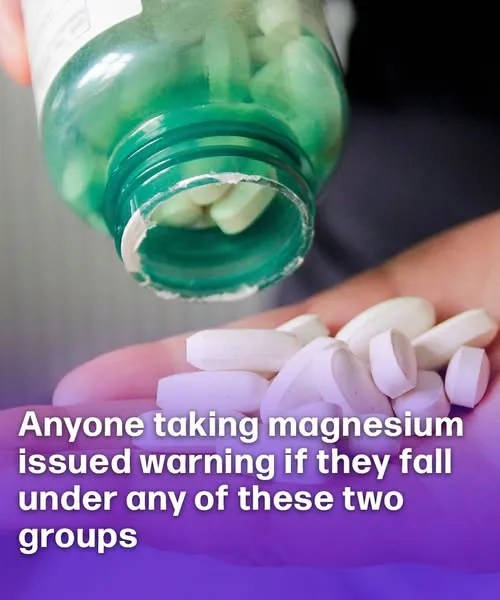
Magnesium is often praised as a “miracle mineral.” It supports muscle function, nerve signaling, blood sugar control, heart rhythm, bone health, and even sleep quality. Because of these benefits, magnesium supplements have become extremely popular, especially among people dealing with stress, muscle cramps, fatigue, or poor sleep.
🚀 Make Money Online – Up to $50 Per Day!
However, health experts are now issuing a renewed warning: magnesium supplements are not safe for everyone. While magnesium from food is generally harmless, supplemental magnesium—especially in high doses—can pose serious risks for certain individuals. Doctors are urging caution, particularly for two high-risk groups who may unknowingly put their health in danger.
Why Magnesium Supplements Are So Popular
Magnesium deficiency is relatively common due to modern diets low in whole grains, leafy greens, nuts, and seeds. Supplements are marketed as solutions for:
-
Muscle cramps and spasms
-
Anxiety and stress
-
Insomnia
-
Constipation
-
Migraines
-
Heart health support
Because magnesium is available over the counter and often labeled as “natural,” many people assume it is completely safe. Unfortunately, this assumption can be misleading.
The Difference Between Dietary Magnesium and Supplements
Magnesium obtained from food is absorbed slowly and regulated efficiently by the body. Excess magnesium from food is usually excreted without issue.
Supplemental magnesium is different. Pills, powders, and liquids can deliver large doses quickly, overwhelming the body’s ability to regulate levels—especially in people with underlying health conditions.
This can lead to a condition known as hypermagnesemia, or dangerously high magnesium levels in the blood.
High-Risk Group #1: People with Kidney Disease
Health experts agree that people with kidney problems face the greatest risk when taking magnesium supplements.
Why the kidneys matter
Your kidneys are responsible for filtering excess magnesium from the blood and excreting it through urine. When kidney function is impaired—even mildly—magnesium can build up to toxic levels.
Potential dangers
In people with kidney disease, magnesium supplements can cause:
-
Nausea and vomiting
-
Severe diarrhea
-
Muscle weakness
-
Low blood pressure
-
Irregular heartbeat
-
Confusion or lethargy
-
In extreme cases, cardiac arrest
Many patients with early-stage kidney disease don’t even realize they have reduced kidney function, making the risk even greater.
Medical guidance: If you have kidney disease, a history of kidney stones, or reduced kidney function, magnesium supplements should only be taken under direct medical supervision.
High-Risk Group #2: People Taking Certain Medications
The second major high-risk group includes individuals who take specific prescription or over-the-counter medications that interact with magnesium.
Common problematic interactions include:
-
Heart medications (such as calcium channel blockers or drugs affecting heart rhythm)
-
Diuretics (which alter mineral balance)
-
Antibiotics (magnesium can reduce absorption)
-
Osteoporosis medications
-
Proton pump inhibitors (PPIs) used for acid reflux
Magnesium can either reduce the effectiveness of these medications or increase the risk of side effects, including dangerously low blood pressure or abnormal heart rhythms.
Older adults are especially vulnerable because they are more likely to be on multiple medications and may already have reduced kidney efficiency.
Signs You May Be Taking Too Much Magnesium
Even healthy individuals can experience side effects if they exceed recommended doses. Warning signs include:
-
Persistent diarrhea
-
Abdominal cramping
-
Nausea
-
Dizziness
-
Fatigue
-
Weak or slow heartbeat
Severe toxicity can cause breathing difficulties and loss of consciousness, though this is rare and usually linked to excessive supplementation or kidney disease.
How Much Magnesium Is Actually Safe?
For most adults, the tolerable upper intake level from supplements is about 350 mg per day, not including magnesium from food. Many supplements exceed this amount, especially powders and “relaxation” blends.
More is not better when it comes to magnesium.
Safer Alternatives to Supplements
Health experts increasingly recommend meeting magnesium needs through diet first, which carries far fewer risks.
Magnesium-rich foods include:
-
Spinach and leafy greens
-
Almonds and cashews
-
Pumpkin seeds
-
Whole grains
-
Legumes
-
Dark chocolate (in moderation)
These foods provide magnesium along with fiber, antioxidants, and other essential nutrients.
When Supplements May Be Appropriate
Magnesium supplements can still be useful in certain situations, such as medically diagnosed deficiency, migraines, or specific digestive conditions—but only when:
-
Dosage is carefully controlled
-
Kidney function is normal
-
A healthcare professional is involved
Final Takeaway
Magnesium is essential for good health, but supplements are not risk-free. Health experts warn that people with kidney disease and those taking certain medications face significantly higher risks from magnesium supplementation.
