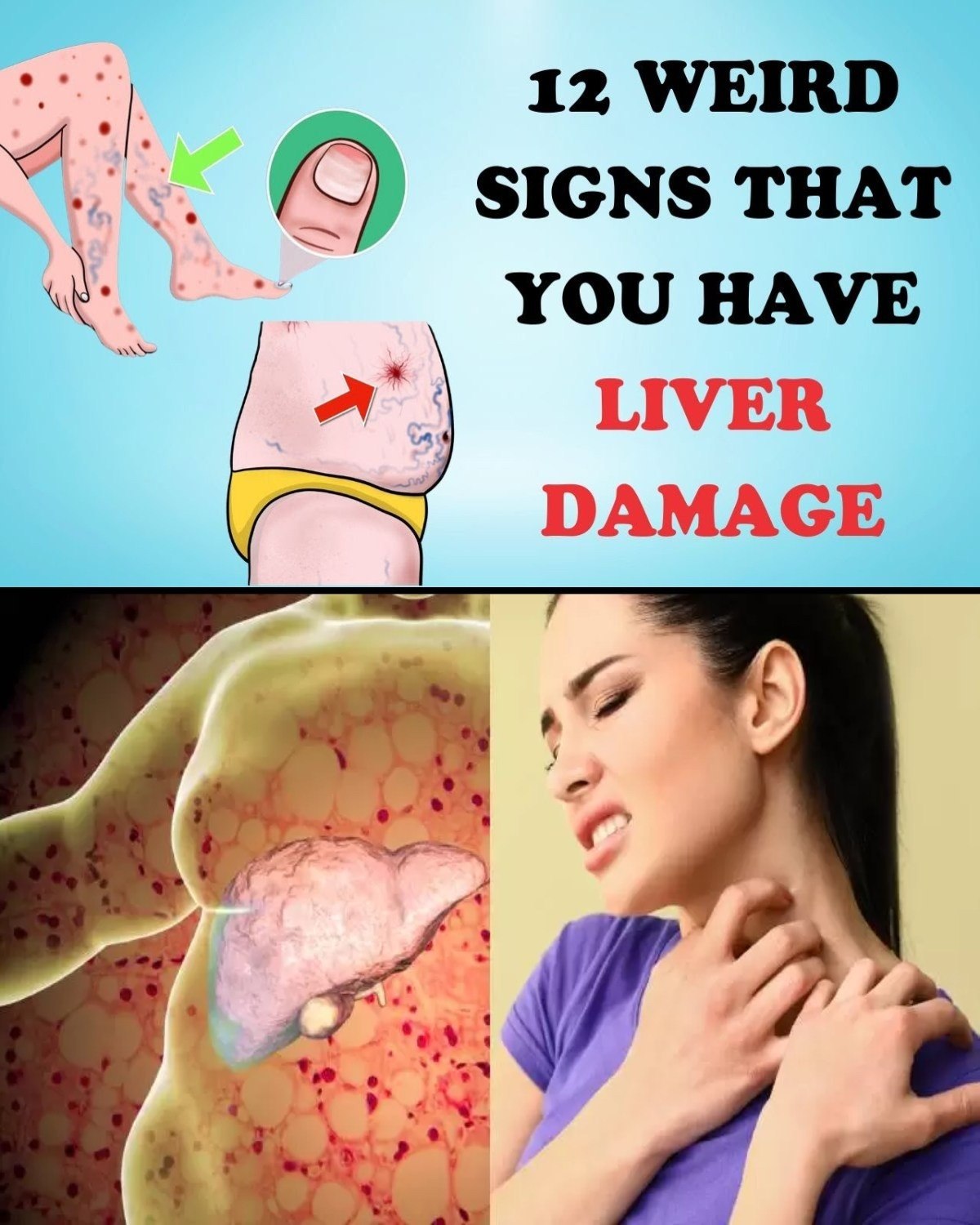
Your liver is one of the hardest-working organs in your body. It filters toxins, processes nutrients, balances hormones, and supports digestion—yet it often suffers in silence. Liver damage doesn’t always cause obvious pain at first. Instead, it may show up through strange, unexpected symptoms that many people ignore or misinterpret. Recognizing these early warning signs can make a crucial difference in protecting your health.
🚀 Make Money Online – Up to $50 Per Day!
Below are 12 weird and often overlooked signs that may indicate liver damage. This guide is for awareness only and does not replace medical advice.
1. Constant Fatigue That Doesn’t Go Away
Feeling tired all the time—even after rest—can be an early sign of liver trouble. When the liver is damaged, toxins build up in the blood instead of being filtered out, leading to chronic fatigue, weakness, and brain fog.
2. Yellowing of the Skin or Eyes (Jaundice)
One of the most well-known but still often ignored signs is a yellow tint to the skin or the whites of the eyes. This happens when bilirubin builds up in the bloodstream because the liver can’t process it properly.
3. Unexplained Itchy Skin
Persistent itching without a rash may seem harmless, but it can be linked to bile salt buildup under the skin—a sign the liver is struggling. This itch often worsens at night and doesn’t improve with creams.
4. Dark Urine and Pale Stool
Healthy urine is light yellow, and stools are brown. Liver damage can cause dark brown or orange urine and pale, clay-colored stools, indicating problems with bile production or flow.
5. Swelling in the Belly or Legs
Fluid buildup in the abdomen (ascites) or swelling in the legs and ankles can occur when the liver fails to regulate fluids and proteins in the blood. This is a serious sign that should never be ignored.
6. Easy Bruising and Bleeding
If you bruise easily or notice frequent nosebleeds or bleeding gums, your liver may not be producing enough clotting proteins. This can happen even in early stages of liver damage.
7. Sudden Loss of Appetite or Nausea
A damaged liver can disrupt digestion and metabolism, leading to nausea, vomiting, or a sudden disinterest in food. Many people mistake this for stress or stomach issues.
8. Unexplained Weight Loss or Gain
Rapid weight loss can result from poor nutrient absorption, while weight gain—especially around the belly—may be due to fluid retention. Both can be linked to liver dysfunction.
9. Bad Breath That Won’t Go Away
A sweet, musty, or foul breath odor—sometimes called fetor hepaticus—can occur in advanced liver problems. It’s caused by toxins like sulfur compounds entering the lungs via the bloodstream.
10. Mental Confusion or Mood Changes
Difficulty concentrating, memory problems, irritability, or confusion may be signs of hepatic encephalopathy, a condition caused by toxin buildup affecting the brain. This can start subtly and worsen over time.
11. Red Palms or Spider-Like Veins
Reddened palms (palmar erythema) and small spider-web-like blood vessels on the skin are linked to hormonal changes caused by liver disease. These signs are unusual but highly telling.
12. Frequent Headaches and Sensitivity to Smells
A struggling liver may fail to detoxify chemicals efficiently, making you more sensitive to smells, chemicals, and perfumes. This overload can also trigger headaches and nausea.
Why These Signs Matter
Liver damage can be caused by many factors, including fatty liver disease, viral hepatitis, alcohol overuse, certain medications, and toxin exposure. The liver has an incredible ability to regenerate—but only if damage is caught early.
Ignoring these strange signals may allow mild liver stress to progress into serious conditions like cirrhosis or liver failure.
How to Support Liver Health Naturally
While medical care is essential, simple lifestyle changes can support liver function:
-
Stay hydrated
-
Eat whole foods rich in vegetables and fiber
-
Limit alcohol and processed sugar
-
Avoid unnecessary medications
-
Maintain a healthy weight
-
Get regular blood tests if at risk
Final Warning
If you recognize several of these signs, do not self-diagnose. Consult a healthcare professional for proper testing and guidance. Early action can save your liver—and your life.
