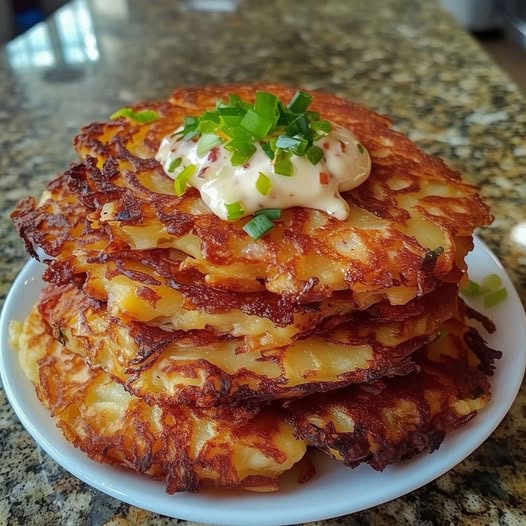
German Potato Pancakes, traditionally known as Kartoffelpuffer or Reibekuchen, are one of Germany’s most beloved comfort foods. Crispy on the outside, tender on the inside, and deeply satisfying, these pancakes have been enjoyed for generations at family tables, Christmas markets, and cozy street stalls. While the ingredients are humble, the technique and care transform simple potatoes into something truly special.
🚀 Make Money Online – Up to $50 Per Day!
This unique recipe stays true to tradition while adding thoughtful details that guarantee perfect texture and flavor every time.
A Brief Cultural Note
originated as a practical dish for rural households, where potatoes were plentiful and inexpensive. Over time, they became a symbol of home cooking and seasonal celebration. In different regions of Germany, they may be served sweet with applesauce or savory with sour cream, smoked salmon, or even stewed meats. What never changes is their irresistible crunch and comforting warmth.
Ingredients (Serves 4)
-
2½ pounds (about 1.2 kg) starchy potatoes (Russet or similar)
-
1 medium yellow onion
-
2 large eggs
-
3 tablespoons all-purpose flour
-
1 teaspoon fine salt
-
½ teaspoon freshly ground black pepper
-
A pinch of nutmeg (optional but traditional)
-
Vegetable oil or clarified butter for frying
Step-by-Step Preparation
1. Preparing the Potatoes
Peel the potatoes and immediately place them in cold water to prevent browning. Once peeled, grate them finely using a box grater or food processor. The finer the grate, the crispier the pancake. Grate the onion the same way and mix it directly with the potatoes—this helps slow oxidation and adds flavor throughout.
2. Removing Excess Moisture (The Secret to Crispiness)
Transfer the grated mixture into a clean kitchen towel or cheesecloth. Twist and squeeze firmly over the sink to remove as much liquid as possible. This step is essential; too much moisture results in soggy pancakes. Don’t rush it—proper squeezing is what separates average pancakes from exceptional ones.
Pour off the liquid but keep the white potato starch that settles at the bottom of the bowl. Add this starch back to the potato mixture for extra binding and crispness.
3. Mixing the Batter
Place the drained potato-onion mixture into a large bowl. Add the eggs, flour, salt, pepper, and nutmeg. Stir gently until just combined. The batter should be thick and slightly sticky, not runny. If it feels too wet, add a teaspoon of flour at a time until it holds together.
Cooking the Potato Pancakes
Heat a heavy skillet (cast iron works beautifully) over medium-high heat. Add enough oil to coat the bottom generously—about ¼ inch deep. The oil should be hot but not smoking.
Scoop about ¼ cup of batter per pancake into the pan and flatten gently with the back of a spoon. Fry for 3–4 minutes per side, or until deeply golden and crisp. Avoid overcrowding the pan, as this lowers the oil temperature and prevents browning.
Transfer cooked pancakes to a paper-towel-lined plate and keep warm while frying the rest.
Serving Suggestions
German Potato Pancakes are wonderfully versatile:
Traditional Sweet Style
-
Serve hot with unsweetened applesauce
-
A light dusting of powdered sugar (optional)
Savory Style
-
Sour cream or crème fraîche
-
Chives or green onions
-
Smoked salmon or cured meats
Hearty Meal Option
-
Alongside bratwurst or sausages
-
With braised red cabbage or cucumber salad
Tips for Perfect
-
Use starchy potatoes for the best crisp exterior.
-
Do not overmix the batter; it should stay light.
-
Maintain oil temperature—too cool equals greasy pancakes.
-
Serve immediately for peak texture and flavor.
Storage and Reheating
While best enjoyed fresh, leftovers can be stored in the refrigerator for up to two days. Reheat in a skillet or oven at 375°F (190°C) until crispy again. Avoid microwaving, as it softens the crust.
Final Thoughts
German Potato Pancakes are proof that simple ingredients can create unforgettable food when treated with care. Each bite carries history, comfort, and warmth—crispy edges giving way to soft, savory centers. Whether you enjoy them sweet or savory, these golden pancakes bring the heart of German home cooking straight to your kitchen.
