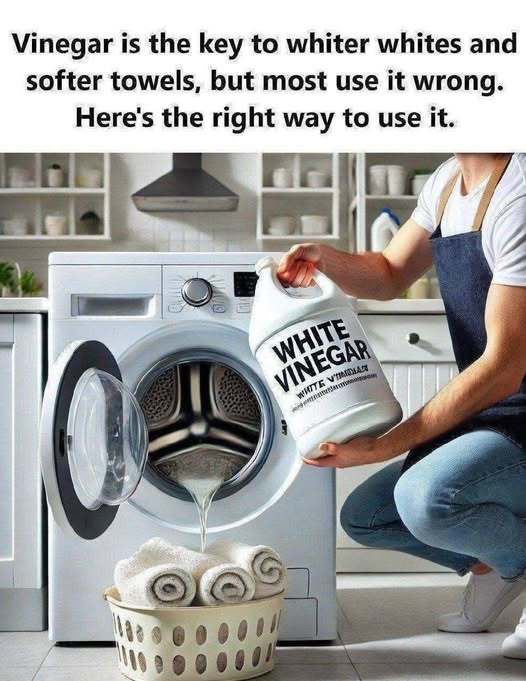
Vinegar is one of the most underrated household essentials sitting in your kitchen right now. While most people think of it only as a salad dressing ingredient, it’s actually a powerful, natural laundry booster. If you’ve ever struggled with dull white clothes or stiff, scratchy towels, the solution may already be in your pantry. The problem? Most people use vinegar the wrong way — and that’s why they don’t see the full benefits.
Here’s the right way to use vinegar for brighter whites and softer towels — safely and effectively.
Why Vinegar Works in Laundry
The secret lies in vinegar’s mild acidity. White distilled vinegar (5% acetic acid) helps break down mineral deposits, dissolve detergent residue, and neutralize odors. Over time, detergent buildup and hard water minerals can cling to fabrics, making whites look gray and towels feel stiff. Vinegar helps strip that residue away, restoring fabric softness and brightness.
But timing and method matter more than people realize.
The Right Type of Vinegar to Use
Always use white distilled vinegar for laundry. Avoid:
-
Apple cider vinegar (can stain)
-
Cleaning vinegar (too strong for fabrics)
-
Flavored or colored vinegars (may leave marks)
White distilled vinegar is clear, affordable, and safe for most washable fabrics.
How to Make Whites Whiter (The Correct Method)
Many people pour vinegar directly onto clothes — that’s a mistake. It should never be poured straight onto fabric, especially concentrated.
Method 1: Add to the Rinse Cycle
-
Wash white clothes as usual with your regular detergent.
-
During the rinse cycle, add ½ to 1 cup of white distilled vinegar to the fabric softener dispenser.
-
Let the machine complete the cycle.
Adding vinegar during the rinse phase allows it to break down detergent residue without interfering with the cleaning power of your detergent.
Method 2: Deep-Soak for Dingy Whites
For heavily grayed whites:
-
Fill a bucket or tub with hot water.
-
Add 1 cup of white distilled vinegar.
-
Soak white garments for 1–2 hours.
-
Wash as usual.
This method helps remove mineral buildup that causes dullness.
How to Make Towels Softer Naturally
If your towels feel stiff even after washing, detergent buildup is likely the cause. Fabric softener actually makes this worse by coating fibers.
Here’s the right way to reset your towels:
Towel Reset Method (Two-Step Process)
Step 1: Vinegar Wash
-
Wash towels in hot water.
-
Add 1 cup of white distilled vinegar directly to the drum (no detergent).
-
Run a full wash cycle.
Step 2: Baking Soda Wash
-
Without drying, run another hot cycle.
-
Add ½ cup of baking soda (no detergent).
-
Complete the wash.
Dry thoroughly. The result? Softer, fluffier towels with restored absorbency.
Common Mistakes to Avoid
-
Mixing Vinegar and Detergent Together
Vinegar can neutralize detergent if added at the same time. Always use it during the rinse cycle. -
Using Too Much Vinegar
More is not better. Excess vinegar can wear down rubber seals over time. Stick to ½–1 cup. -
Using It Every Wash
Once or twice a month is enough for maintenance. -
Pouring Directly on Fabric
Always dilute in water or use the dispenser.
Extra Benefits of Using Vinegar in Laundry
Beyond whitening and softening, vinegar also:
-
Neutralizes odors (great for gym clothes)
-
Helps remove mildew smells
-
Reduces static cling
-
Breaks down soap residue
-
Brightens colors gently
-
Helps prevent lint buildup
It’s especially useful in areas with hard water, where mineral buildup is common.
Is Vinegar Safe for Washing Machines?
Yes — when used properly. Occasional use (once or twice monthly) is safe for both standard and HE machines. Avoid overuse, and never mix with bleach, as that creates harmful fumes.
Can Vinegar Replace Fabric Softener?
Yes — and it’s actually better. Commercial softeners coat fibers, reducing absorbency over time. Vinegar removes buildup instead of masking it.
For regular loads:
-
Add ½ cup vinegar to the fabric softener compartment.
Your clothes will feel softer without synthetic fragrance residue.
When NOT to Use Vinegar
Avoid using vinegar on:
-
Silk
-
Rayon
-
Delicate specialty fabrics
-
Stone-washed denim
-
Elastic-heavy garments
Always check care labels before trying new methods.
Simple Monthly Laundry Maintenance Routine
To keep whites bright and towels soft:
-
Once a month: Run an empty hot wash with 2 cups vinegar to clean the machine.
-
Once every two weeks: Add vinegar to the rinse cycle for whites.
-
Once a month: Reset towels using the two-step method.
This prevents buildup before it becomes a problem.
The Bottom Line
Vinegar is a powerful, natural laundry booster — but only if used correctly. The key is timing (rinse cycle), proper measurement (½–1 cup), and avoiding common mistakes like mixing it directly with detergent.
Instead of spending money on specialty whiteners and fabric softeners, a simple bottle of white distilled vinegar can restore brightness, softness, and freshness naturally.
Used properly, vinegar doesn’t just clean your laundry — it revives it.
If you’ve been pouring it in randomly and hoping for the best, now you know the right way. Try it correctly once, and you may never go back to commercial softeners again.
