A clean home always starts from the ground up. Floors are one of the first things people notice when they walk into a room. Whether you have warm wooden parquet, glossy ceramic tiles, or practical linoleum, keeping them shiny and fresh can feel like a constant challenge. Many commercial cleaners promise miracles, but they often leave behind chemical residues, dull finishes, or overpowering artificial scents.
The good news? There’s a simple, natural trick that works beautifully on all types of floors — and you only need a few basic ingredients you probably already have at home. This method cleans deeply, enhances shine, and leaves your home delicately perfumed without damaging surfaces.
Let’s discover this genius floor-cleaning recipe that works for parquet, tiles, and linoleum alike.
Why Floors Lose Their Shine
Over time, floors lose their natural brilliance due to:
-
Dust and dirt buildup
-
Foot traffic and shoe marks
-
Residue from harsh detergents
-
Moisture and humidity
-
Improper cleaning techniques
Each type of flooring has its own sensitivity. Parquet (wood flooring) can warp with too much water. Tiles can develop a dull film. Linoleum may lose its smooth finish if exposed to aggressive chemicals. That’s why a balanced, gentle solution is key.
The Universal Shine & Perfume Floor Recipe
This natural solution cleans effectively while respecting all floor surfaces.
Ingredients:
-
1 liter of warm water
-
2 tablespoons white vinegar
-
1 tablespoon liquid castile soap or mild dish soap
-
10–15 drops essential oil (lavender, lemon, eucalyptus, or orange)
-
1 tablespoon olive oil (for extra shine, especially for parquet)
Why These Ingredients Work
White Vinegar
Vinegar is a natural disinfectant and degreaser. It removes grime, eliminates odors, and dissolves residue without leaving streaks.
Mild Soap
Soap lifts dirt and helps break down grease without being too aggressive.
Essential Oils
Essential oils naturally perfume your home and can add antibacterial properties. Lemon brightens, lavender relaxes, eucalyptus refreshes.
Olive Oil
This is the secret weapon for shine. A tiny amount nourishes wooden floors and enhances gloss without leaving a slippery surface.
How to Use the Trick Properly
Step 1: Sweep or Vacuum First
Always remove dust and debris before mopping. This prevents scratches and ensures a smooth finish.
Step 2: Mix the Solution
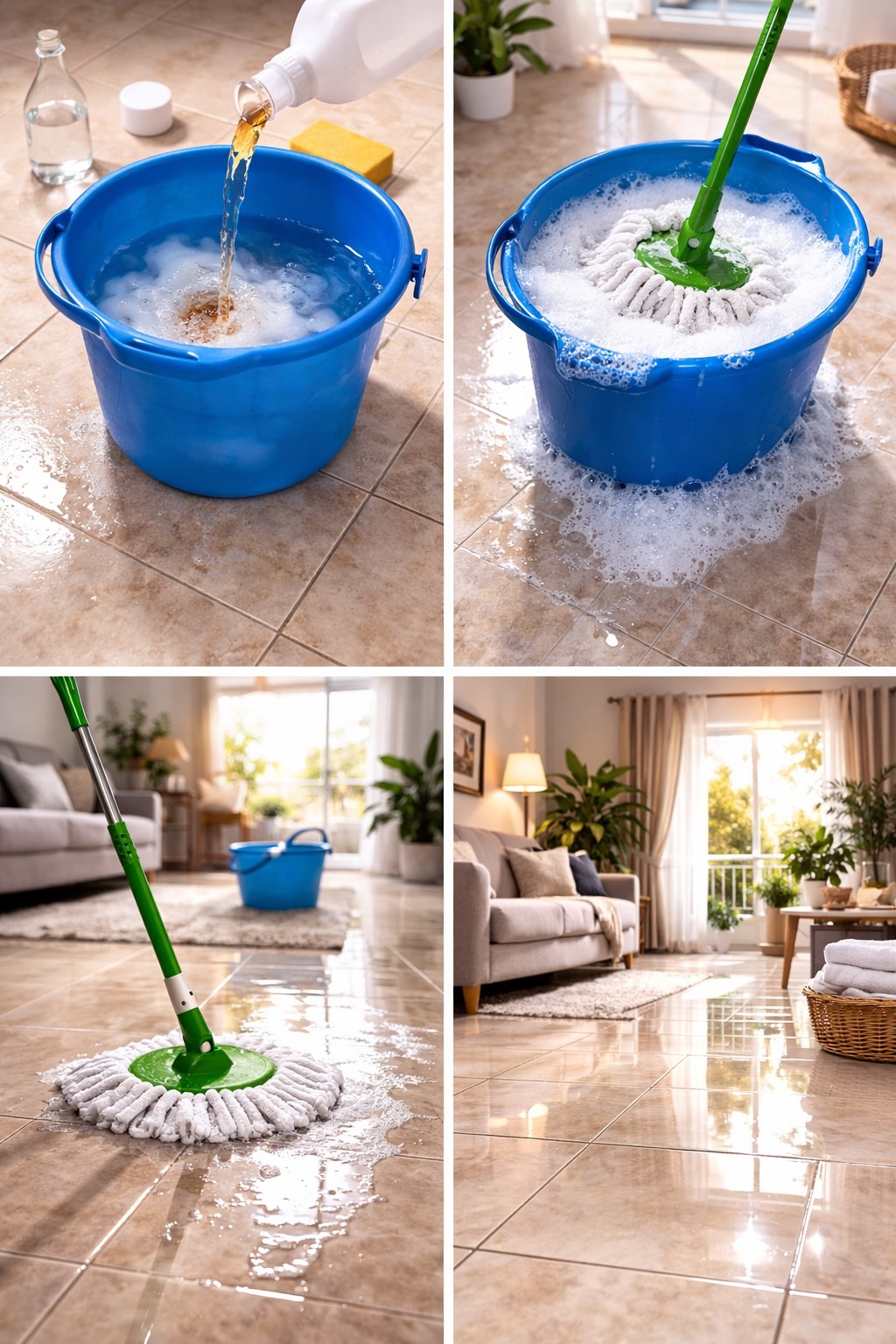
In a bucket, combine warm water, vinegar, soap, essential oil, and olive oil. Stir gently.
Step 3: Use a Microfiber Mop
Dip the mop into the solution and wring it out thoroughly. The mop should be damp — not dripping wet.
Step 4: Mop Gently
Work in small sections. For parquet, follow the direction of the wood grain. For tiles and linoleum, use circular motions for even cleaning.
Step 5: Air Dry
There’s no need to rinse. Let the floor air dry naturally. Within minutes, you’ll see a soft shine appear.
Special Tips for Each Floor Type
Parquet (Wood Floors)
-
Use less vinegar (reduce to 1 tablespoon if desired).
-
Always use a well-wrung mop.
-
Avoid soaking the wood.
The olive oil helps restore the wood’s natural glow without damaging its finish.
Tiles
-
Focus on grout lines using a soft brush if needed.
-
Vinegar helps dissolve mineral deposits.
-
Leaves tiles streak-free and shiny.
Linoleum
-
Avoid excessive vinegar (keep measurements exact).
-
Buff lightly with a dry microfiber cloth after drying for extra shine.
The Perfume Effect
One of the best parts of this trick is the fragrance. Unlike synthetic cleaners that leave heavy chemical smells, essential oils create a light, fresh scent that lingers gently in your home.
You can customize the aroma:
-
Lavender for a calming atmosphere
-
Lemon for a bright, clean feeling
-
Orange for warmth and freshness
-
Eucalyptus for a spa-like experience
Your entire home will smell naturally clean — not artificially masked.
Extra Shine Boost Trick
Once a month, after cleaning, you can lightly buff your floors with a dry microfiber cloth. This simple step enhances the natural shine even more, especially for parquet and linoleum.
What to Avoid
To protect your floors, avoid:
-
Bleach (too harsh)
-
Ammonia-based cleaners
-
Excess water on wood
-
Abrasive scrubbers
-
Mixing vinegar with commercial chemical cleaners
Keeping things simple is often the most effective solution.
How Often Should You Use This Method?
-
High-traffic areas: 2–3 times per week
-
Regular maintenance: Once weekly
-
Deep refresh: Add essential oils and buff once per month
This method is safe for regular use when proportions are respected.
Why This Trick Is So Genius
The brilliance of this method lies in its simplicity. Instead of buying different products for different floors, you can rely on one balanced formula. It cleans, shines, disinfects lightly, and perfumes — all at once.
It’s affordable, eco-friendly, and safe for homes with children and pets when used correctly.
Clean floors instantly elevate the entire home. Light reflects better, rooms look brighter, and the atmosphere feels fresher. With this natural trick, your parquet gleams warmly, your tiles sparkle, and your linoleum shines smoothly — all while your home smells wonderfully inviting.
