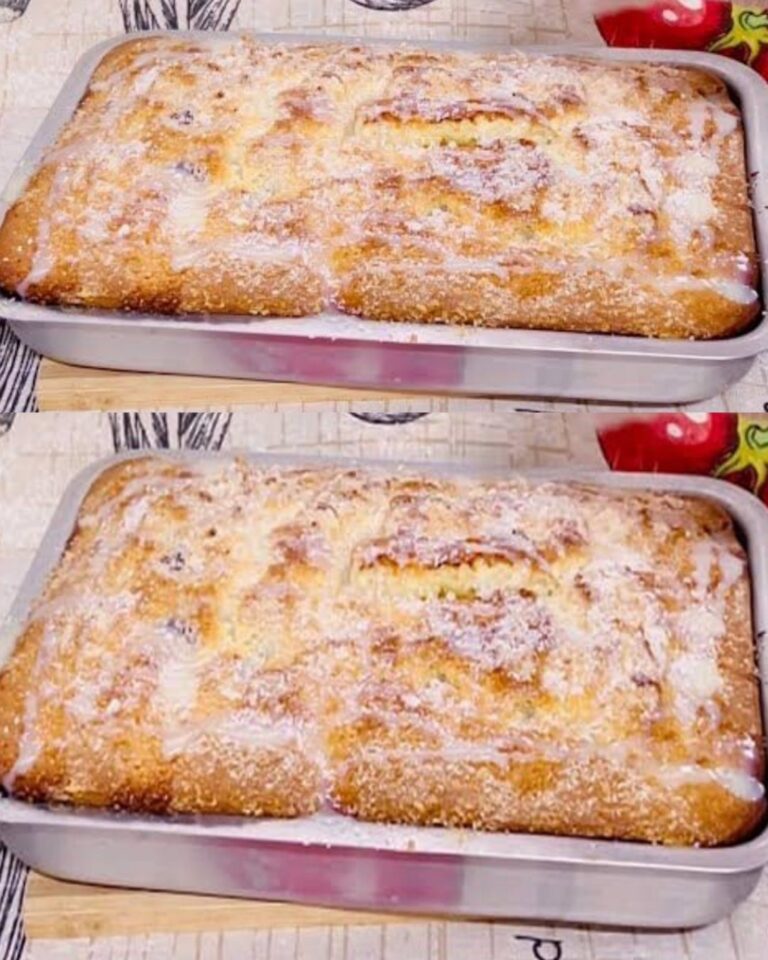
This soft, buttery loaf cake is moist on the inside with a lightly golden crust and a sweet glaze that melts into every bite. It’s perfect for breakfast, afternoon tea, or a simple dessert. The texture is tender yet sturdy enough to slice cleanly, and the glaze adds just the right amount of sweetness.
Ingredients
For the Cake:
2 cups (250g) all-purpose flour
1 cup (200g) granulated sugar
1/2 cup (115g) unsalted butter, softened
1/2 cup (120ml) vegetable oil
3 large eggs, room temperature
1 cup (240g) plain yogurt or sour cream
2 teaspoons vanilla extract
1 tablespoon lemon zest (optional but recommended)
2 tablespoons fresh lemon juice
2 teaspoons baking powder
1/2 teaspoon baking soda
1/2 teaspoon salt
For the Glaze:
1 cup (120g) powdered sugar
2–3 tablespoons lemon juice or milk
1/2 teaspoon vanilla extract
Instructions
Step 1: Prepare the Pan and Oven
Preheat your oven to 350°F (175°C). Grease a 9×5-inch loaf pan thoroughly and line it with parchment paper, leaving some overhang for easy removal. This ensures the cake releases cleanly and keeps the sides beautifully golden.
Step 2: Cream the Butter and Sugar
In a large mixing bowl, beat the softened butter and granulated sugar together until light and fluffy, about 3–4 minutes. This step is important because it incorporates air into the batter, helping the loaf rise and develop a soft crumb.
Step 3: Add Oil and Eggs
Mix in the vegetable oil until combined. Add the eggs one at a time, beating well after each addition. Scrape down the sides of the bowl to ensure everything is evenly mixed. The batter should look smooth and creamy at this stage.
Step 4: Add Flavoring
Stir in the vanilla extract, lemon zest, and lemon juice. The lemon adds brightness and balances the sweetness, but you can reduce or omit it if you prefer a simple vanilla loaf.
Step 5: Combine Dry Ingredients
In a separate bowl, whisk together the flour, baking powder, baking soda, and salt. This ensures the leavening agents are evenly distributed throughout the flour.
Step 6: Alternate Wet and Dry
Add half of the dry ingredients to the butter mixture and mix gently. Then add the yogurt or sour cream and blend until smooth. Finally, add the remaining dry ingredients and mix just until combined. Do not overmix, as this can make the loaf dense instead of tender.
Step 7: Pour and Smooth
Pour the batter into the prepared loaf pan. Smooth the top with a spatula. For a decorative crack down the center (like bakery-style loaves), you can run a buttered knife lightly down the center of the batter.
Step 8: Bake
Bake for 50–60 minutes, or until a toothpick inserted into the center comes out clean or with a few moist crumbs. If the top browns too quickly, loosely cover it with foil during the last 15 minutes of baking.
Step 9: Cool
Allow the cake to cool in the pan for 10–15 minutes, then lift it out using the parchment overhang and transfer to a wire rack to cool completely. Glazing a warm cake will cause the icing to melt too much, so patience here is key.
Make the Glaze
In a small bowl, whisk together powdered sugar, lemon juice (or milk), and vanilla extract. Adjust the consistency by adding more liquid for a thinner glaze or more powdered sugar for a thicker one. The glaze should be pourable but not watery.
Once the loaf is completely cool, drizzle the glaze generously over the top. Let it set for about 20–30 minutes before slicing. Some of the glaze will soak slightly into the crust, creating that beautiful sweet finish.
Serving Suggestions
This loaf is delicious served slightly warm with coffee or tea. It also pairs well with fresh berries and a dollop of whipped cream for dessert. The flavor deepens the next day, making it an excellent make-ahead treat.
Storage Tips
Store the loaf in an airtight container at room temperature for up to 3 days. If you prefer longer storage, refrigerate for up to 5 days, though bring it to room temperature before serving for best texture. You can also freeze the unglazed loaf tightly wrapped for up to 2 months. Thaw overnight and glaze before serving.
Variations
For a richer flavor, substitute half the yogurt with cream cheese.
Add 1/2 cup of blueberries or chocolate chips for extra texture.
For a cinnamon swirl version, layer cinnamon sugar in the middle before baking.
Use orange zest and juice instead of lemon for a softer citrus note.
Baking Tips for Success
Always measure flour correctly by spooning it into the measuring cup and leveling it off.
Use room-temperature eggs and yogurt to prevent curdling.
Avoid overmixing once flour is added.
Let the cake cool completely before glazing to achieve that thick white drizzle effect seen in bakery loaves.
This glazed loaf cake is simple yet elegant — moist, flavorful, and beautifully golden with a delicate sugar crust. Whether you serve it for guests or enjoy it as a quiet homemade indulgence, it’s a reliable recipe you’ll return to again and again.
