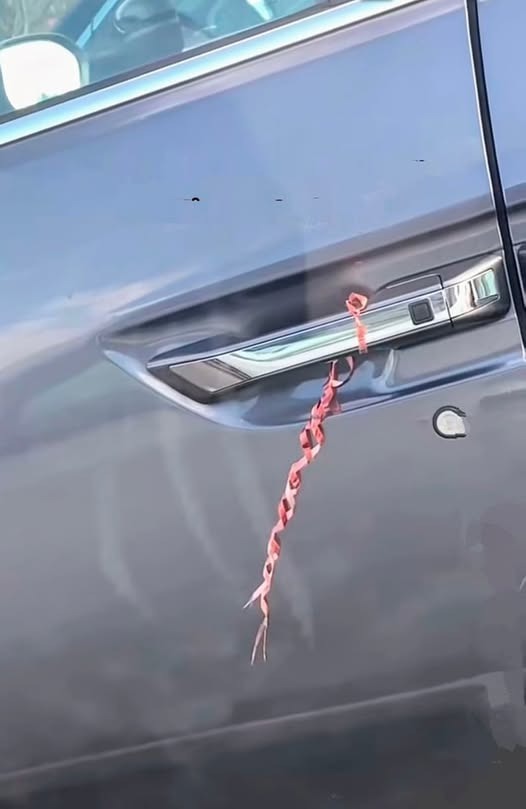
Spotting a piece of wire, string, zip tie, or thin cord tied around a car door handle can instantly trigger concern—and for good reason. Stories circulate online claiming it’s a secret signal used by criminals to mark vehicles or trap unsuspecting drivers. While not every instance points to danger, the sight should never be ignored. Understanding the possible meanings behind a wire on a door handle helps you respond calmly, wisely, and safely.
Why This Situation Raises Alarm
A car door handle is a personal access point. Anything unusual attached to it suggests intentional placement. Unlike random litter, a wire tied neatly around a handle requires effort and proximity, which immediately narrows the possibilities. The key question is whether the object was placed accidentally, maliciously, or as a harmless prank.
Possible Meanings of a Wire on a Door Handle
1. Attempted Distraction Technique
One widely discussed theory is that criminals tie wire or zip ties around door handles to delay the driver. As you fumble to remove it—especially with one hand while holding bags—you may be distracted long enough for someone to approach, intimidate, or attempt theft. While documented cases are rare, distraction crimes are real and rely on surprise and divided attention.
2. Vehicle Marking
Another belief is that vehicles are “marked” to indicate a potential target. In some criminal schemes, subtle markings identify cars that appear unattended, valuable, or vulnerable (such as those parked in isolated areas). However, law enforcement has stated that systematic marking with wires is uncommon. Still, isolated incidents have occurred where vehicles were tagged to observe owner behavior.
3. Prank or Vandalism
Not all explanations are sinister. Teenagers or passersby sometimes use zip ties or wire as pranks or acts of minor vandalism. While annoying and inappropriate, these cases are usually random and lack follow-up criminal intent.
4. Personal Mistake or Leftover Object
Occasionally, a wire could be left behind unintentionally—perhaps from construction, towing, or a previous repair. If the wire looks worn, loose, or unrelated to your handle specifically, this explanation becomes more likely.
What Makes a Situation More Concerning
Certain factors increase the likelihood that the wire should be treated seriously:
-
The wire is new, tight, and deliberately knotted
-
You are parked in a dimly lit or isolated area
-
The object is attached only to your vehicle, not others nearby
-
You notice someone lingering nearby or watching
-
The wire is difficult to remove quickly
Trust your instincts. Discomfort without a clear reason is often your body’s early warning system.
What You Should Do If You Find One
-
Do Not Remove It Immediately
Before touching anything, look around. Check your surroundings for people or movement. If you feel unsafe, get back into a nearby building or populated area. -
Enter Your Car from Another Door
If possible, unlock and enter from the passenger side. This reduces exposure and keeps your focus inside the vehicle. -
Lock the Doors Immediately
Once inside, lock all doors and start the engine. You can remove the wire later when you’re in a safe, secure place. -
Document the Situation
Take a photo of the wire and its placement. This can be helpful if you choose to report it or notice a pattern later. -
Report Suspicious Findings
If the situation feels genuinely threatening—especially if it happens more than once—contact local authorities or building security. Non-emergency lines are appropriate unless someone is actively threatening you.
What Law Enforcement Generally Says
Police departments often caution against panic but emphasize awareness. While many viral posts exaggerate the frequency of such tactics, officers agree that unexpected objects on vehicles should be treated with caution. Criminal methods evolve, and opportunistic crimes rely on surprise rather than elaborate signaling systems.
Prevention Tips
-
Park in well-lit, busy areas whenever possible
-
Walk with keys already in hand
-
Avoid distractions like texting while approaching your car
-
Perform a quick visual scan before unlocking
-
If something feels off, leave and ask for help
The Bottom Line
Seeing a wire tied around your car door handle doesn’t automatically mean danger—but it does mean pause, observe, and protect yourself. Most cases turn out harmless, yet the small chance of risk is reason enough to stay alert. Awareness is not fear; it’s preparedness. By knowing what to look for and how to respond, you turn an unsettling moment into a controlled, confident decision.
