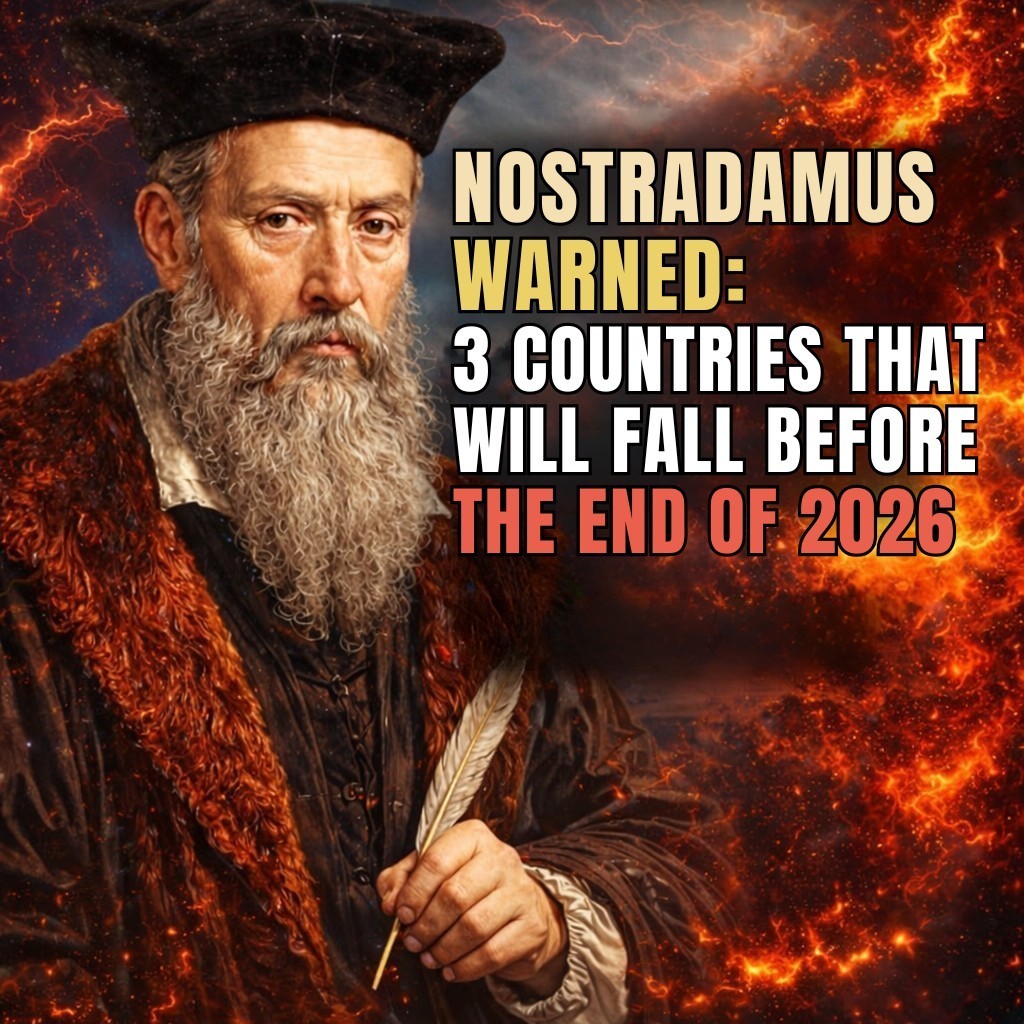
Michel de Nostredame, better known as Nostradamus, remains one of the most mysterious figures in the history of prophecy. Born in 1503 in France, Nostradamus was a physician, astrologer, and writer whose most famous work, Les Prophéties (The Prophecies), was first published in 1555. The book contains hundreds of poetic quatrains—four-line verses—written in a mixture of French, Latin, and other languages. Because these verses are cryptic and symbolic, they have been interpreted in many ways for centuries. Even today, people continue to examine his writings and attempt to connect them with modern events.
Although historians generally view Nostradamus’s predictions with skepticism, many readers still find them intriguing. Below are three interpretations that some commentators associate with possible near-future developments.
1. A Period of Global Conflict
One of the most common interpretations of Nostradamus’s work involves the possibility of a large-scale international conflict. Some readers point to several quatrains that mention wars, powerful alliances, and destructive weapons. The language often includes imagery of fire in the sky, battles between great powers, and devastation across continents.
Supporters of this interpretation believe these passages might refer to a future geopolitical confrontation involving major nations. They sometimes link the idea to rising tensions among world powers, competition over resources, and modern military technology capable of causing immense damage. Phrases describing “great fire from the sky” are occasionally interpreted as symbolic references to missiles or advanced weapons.
However, critics argue that these verses are so vague that they can easily be connected to almost any conflict in history. Similar interpretations were made during World War I, World War II, and the Cold War. As a result, many scholars suggest that the quatrains reflect the turbulent political climate of Nostradamus’s own era rather than specific predictions about the future.
2. Environmental Upheaval and Natural Disasters
Another interpretation focuses on references to floods, extreme heat, earthquakes, and other natural disasters in Nostradamus’s writings. Some modern readers connect these descriptions with contemporary concerns about climate change and environmental instability.
Certain quatrains describe cities threatened by rising waters, unusual weather patterns, or dramatic changes in the natural world. Supporters of this view believe Nostradamus may have symbolically described an era when humanity faces increasing environmental challenges. In recent years, these passages have been linked to stronger storms, heatwaves, wildfires, and rising sea levels.
Yet historians caution that natural disasters have always been part of human history. Nostradamus lived during a period when plagues, crop failures, and extreme weather were common. Therefore, his imagery may simply reflect the fears and experiences of people in the sixteenth century. The flexible nature of the text makes it easy to reinterpret these verses according to modern concerns.
3. Technological Transformation and Social Change
A third interpretation suggests that some of Nostradamus’s quatrains hint at a future marked by rapid technological change and shifts in global power. Certain passages describe communication across great distances, unusual machines, or societies undergoing dramatic transformation.
Modern interpreters sometimes connect these lines with technologies such as artificial intelligence, advanced communication networks, or space exploration. The idea of “voices heard across the world” or messages traveling instantly is sometimes viewed as a poetic description of global digital communication. Similarly, references to new forms of power or knowledge are occasionally interpreted as symbols of scientific breakthroughs.
Others believe these verses may reflect social changes that accompany technological progress—such as shifting political structures, new economic systems, or transformations in the way people live and work.
Still, many scholars emphasize that Nostradamus wrote in symbolic language typical of Renaissance astrology and prophecy. Terms that appear futuristic today may simply have been metaphors or allegories used by writers of his time.
Why Nostradamus Still Fascinates People
The enduring fascination with Nostradamus largely comes from the ambiguous nature of his writing. Because his quatrains are brief, poetic, and filled with symbolism, they allow many different interpretations. This ambiguity lets readers project contemporary events onto the verses, making them seem surprisingly relevant centuries later.
Another reason for his lasting popularity is humanity’s natural curiosity about the future. Predictions—whether scientific forecasts or mystical prophecies—capture the imagination because they promise insight into what lies ahead.
In reality, historians and researchers generally view Nostradamus more as a cultural phenomenon than a genuine prophet. His work reflects the intellectual world of the Renaissance, when astrology, medicine, religion, and astronomy often overlapped.
Conclusion
Nostradamus’s writings continue to inspire debate and speculation nearly five hundred years after they were published. Interpretations involving global conflict, environmental upheaval, and technological transformation are just a few examples of how readers connect his cryptic verses with modern concerns about the near future.
Whether viewed as prophecy, poetry, or historical curiosity, the quatrains of Nostradamus remain a fascinating reminder of how people throughout history have tried to understand—and sometimes predict—the uncertain path ahead.
