New developments in colorectal cancer screening are raising hopes that traditional colonoscopy may not always be necessary in the future. Researchers around the world are working on less invasive methods that can detect early signs of colon cancer with greater comfort and convenience for patients. While colonoscopy remains the gold standard today, emerging technologies could dramatically change how screening is performed in the coming years.
🚀 Make Money Online – Up to $50 Per Day!
Why Colonoscopy Has Been the Standard
For decades, colonoscopy has been the most effective tool for detecting colorectal cancer and precancerous polyps. During the procedure, a flexible tube with a camera is inserted into the colon, allowing doctors to directly examine the intestinal lining and remove suspicious growths.
Despite its effectiveness, many people avoid screening because they find the preparation process unpleasant or feel anxious about the invasive nature of the exam. This reluctance can delay diagnosis and reduce the chances of successful treatment.
Health experts have long searched for alternatives that maintain high accuracy while improving patient comfort.
The Rise of Non-Invasive Screening
One of the most promising advances involves stool-based DNA tests. These tests analyze stool samples for abnormal DNA and blood markers associated with colorectal cancer. Patients can complete the test at home and send the sample to a laboratory for analysis.
Such tests have already improved participation rates in cancer screening programs because they eliminate the need for sedation, invasive instruments, and time-consuming recovery periods.
However, positive results from these tests typically require a follow-up colonoscopy to confirm findings and remove any detected polyps.
Blood Tests May Change Everything
Perhaps the most exciting development is the emergence of blood-based screening tests. Scientists have developed tests capable of identifying fragments of tumor DNA circulating in the bloodstream.
These so-called “liquid biopsies” offer several advantages:
- Simple blood draw
- No bowel preparation
- No sedation
- Minimal discomfort
- Faster screening process
Researchers believe blood tests could encourage millions more people to participate in routine cancer screening, especially those who have delayed or avoided colonoscopy.
Although some blood tests have shown promising accuracy, experts caution that they are still being refined and may not yet match the diagnostic power of colonoscopy in every situation.
Artificial Intelligence Improves Detection
Artificial intelligence (AI) is also transforming colorectal cancer screening.
Advanced AI systems can analyze medical images and identify suspicious lesions that might otherwise be overlooked. Some systems are already being used during colonoscopies to help physicians detect small polyps with greater precision.
Researchers are now exploring AI-assisted analysis of blood samples, stool tests, and imaging scans, potentially allowing earlier and more accurate cancer detection without invasive procedures.
The combination of AI and non-invasive testing could significantly improve screening outcomes while reducing the burden on patients.
Capsule Endoscopy: A Camera You Swallow
Another innovative technology is capsule endoscopy.
Instead of inserting a camera into the colon, patients swallow a small capsule containing a miniature camera. As the capsule travels through the digestive tract, it captures thousands of images that are transmitted to a recording device worn by the patient.
This approach offers a much more comfortable experience than traditional colonoscopy and does not require sedation.
While capsule endoscopy has shown promise, it still has limitations. If abnormalities are detected, a conventional colonoscopy may still be necessary for biopsy or treatment.
Virtual Colonoscopy Gains Attention
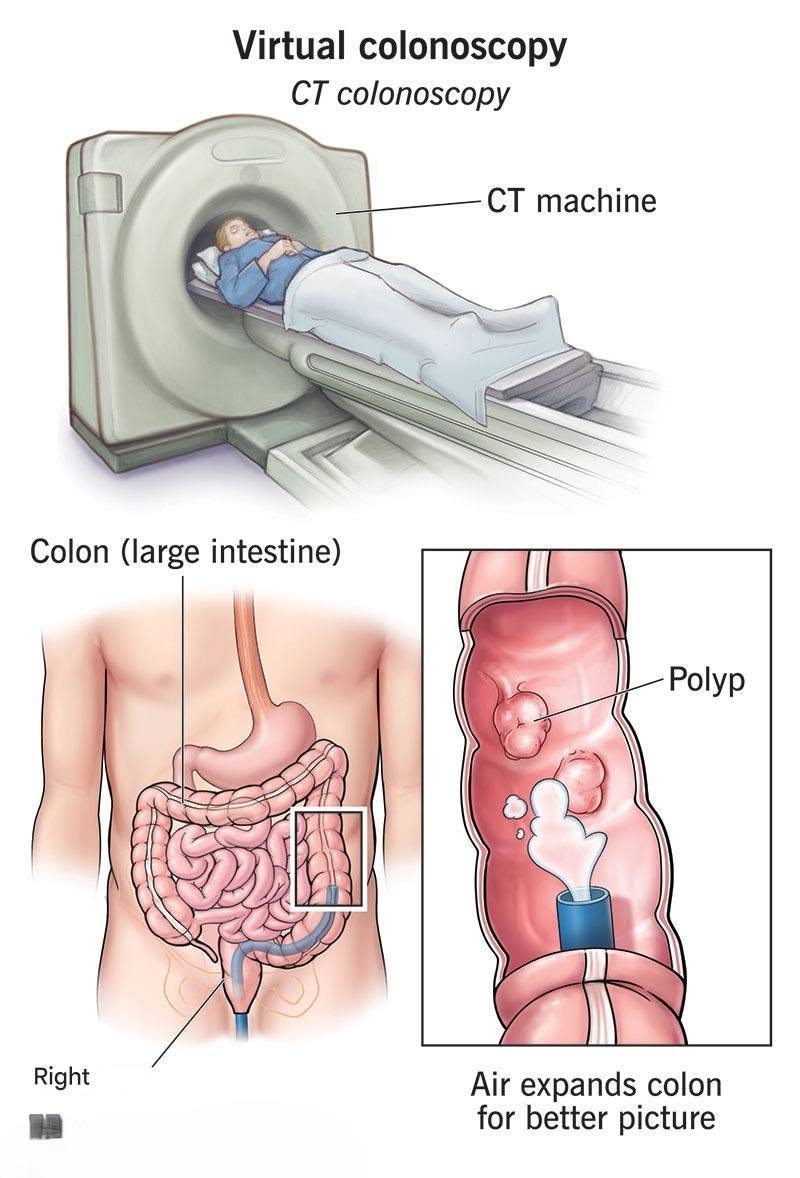
Virtual colonoscopy, also known as CT colonography, uses advanced imaging technology to create detailed three-dimensional pictures of the colon.
The procedure is less invasive than traditional colonoscopy and typically requires no sedation. Patients can return to normal activities almost immediately after the examination.
Virtual colonoscopy can effectively identify larger polyps and cancers. However, like other non-invasive methods, any suspicious findings usually require follow-up evaluation with a standard colonoscopy.
What Experts Say
Medical specialists emphasize that these newer screening options are not intended to replace colonoscopy overnight. Instead, they aim to provide additional choices that may increase screening participation among people who might otherwise avoid testing.
The greatest challenge in colorectal cancer prevention is often not the accuracy of available tests but convincing people to undergo screening in the first place.
If non-invasive methods encourage more individuals to get tested, they could help detect cancers earlier and save countless lives.
The Future of Colon Cancer Screening
The future appears increasingly focused on personalized screening strategies. Rather than relying on a single test for everyone, doctors may eventually select screening methods based on an individual’s age, medical history, genetic risk, and personal preferences.
Blood tests, stool DNA analysis, AI-assisted diagnostics, capsule endoscopy, and virtual colonoscopy are all contributing to a new era of cancer detection. These innovations aim to make screening more accessible, less intimidating, and easier to complete.
For now, traditional colonoscopy remains the most comprehensive method for detecting and removing precancerous polyps. Nevertheless, the rapid progress in medical technology suggests that less invasive options will continue to expand and improve.
As research advances, the day may come when a simple blood sample or swallowable capsule can provide much of the information currently obtained through colonoscopy. If that happens, colorectal cancer screening could become more convenient than ever, encouraging earlier detection and improving outcomes for millions of people worldwide.
