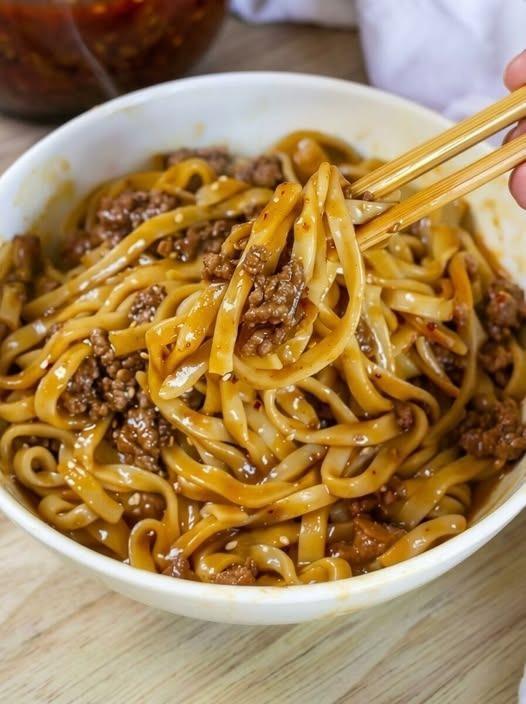
This dish takes the bold, glossy flavors associated with Mongolian-style beef and reimagines them with ground beef and noodles for maximum comfort. Instead of relying on cornstarch-heavy sauces, we build flavor in stages—browning the beef deeply, blooming aromatics in fat, and finishing with a reduced sauce that clings naturally to the noodles. The result is rich, fragrant, and deeply satisfying.
Why Ground Beef?
Ground beef absorbs sauce more efficiently than sliced meat, making every bite flavorful. It also creates small crispy bits when cooked properly, adding texture that contrasts beautifully with tender noodles.
Ingredients (Serves 4)
Noodles & Beef
-
400 g (14 oz) wheat noodles or egg noodles
-
500 g (1 lb) ground beef (80/20 preferred for flavor)
-
2 tbsp neutral oil (sunflower, canola, or peanut)
Aromatics
-
1 medium onion, finely diced
-
5 cloves garlic, minced
-
1 tbsp fresh ginger, grated
-
2 scallions, whites and greens separated
Sauce Base
-
⅓ cup low-sodium soy sauce
-
3 tbsp dark soy sauce (for color and depth)
-
3 tbsp brown sugar (or palm sugar for complexity)
-
2 tbsp oyster sauce
-
½ cup beef broth or water
Spice & Finish
-
1 tsp freshly ground black pepper
-
½–1 tsp dried chili flakes (adjust to taste)
-
1 tsp toasted sesame oil
-
1 tsp rice vinegar
Optional Add-ins
-
Thinly sliced carrots
-
Shredded napa cabbage
-
Snow peas or green beans
Step 1: Prepare the Noodles
Cook the noodles in generously salted water until just al dente. Do not overcook—they will finish in the sauce later. Drain and toss lightly with a teaspoon of oil to prevent sticking. Set aside.
Tip: Slightly undercooked noodles absorb sauce better without becoming mushy.
Step 2: Brown the Beef Properly
Heat a wide skillet or wok over medium-high heat. Add the neutral oil and let it shimmer. Add the ground beef in a single layer and do not stir for 2–3 minutes. This allows deep browning to develop.
Once browned, break the beef apart and continue cooking until most moisture evaporates and crispy bits form. Season lightly with black pepper. Remove excess fat only if excessive—some fat is essential for flavor.
This step is crucial: browning equals flavor.
Step 3: Build the Aromatic Base
Lower heat to medium. Add diced onion directly to the beef. Cook until soft and slightly caramelized, about 4 minutes. Stir in garlic, ginger, and scallion whites. Cook for 30–60 seconds until fragrant but not browned.
At this stage, your kitchen should smell rich and savory, with warmth from the ginger and sweetness from the onion.
Step 4: Create the Mongolian-Style Sauce
In a bowl, mix:
-
Soy sauce
-
Dark soy sauce
-
Brown sugar
-
Oyster sauce
-
Beef broth
Pour the sauce into the pan and stir well, scraping up all browned bits from the bottom. Bring to a gentle simmer and let it reduce for 4–6 minutes. The sauce should thicken slightly and taste balanced—salty, sweet, and deeply savory.
Taste and adjust:
-
Too salty? Add a splash of water.
-
Too sweet? Add rice vinegar.
-
Too mild? Add chili flakes.
Step 5: Combine Noodles and Finish
Add the cooked noodles directly into the pan. Toss continuously to coat every strand with sauce. If using vegetables, add them now and cook just until tender-crisp.
Drizzle in toasted sesame oil and sprinkle in scallion greens. Toss one final time.
The sauce should cling to the noodles without pooling at the bottom.
Step 6: Rest and Serve
Turn off heat and let the noodles rest for 2 minutes. This allows flavors to meld and the sauce to settle into the noodles.
Serve hot, optionally garnished with:
-
Extra scallions
-
Toasted sesame seeds
-
A soft-boiled egg
-
Chili oil for heat lovers
Flavor Profile & What Makes It Unique
-
Sweetness: Comes from brown sugar, balanced—not candy-like
-
Umami: Built from beef browning, soy, and oyster sauce
-
Aromatics: Ginger and garlic are present but not overpowering
-
Texture: Crispy beef bits + silky noodles
Unlike takeout-style Mongolian dishes, this recipe avoids heavy starch thickeners and instead relies on reduction and fat for a natural gloss and deeper flavor.
Storage & Reheating
-
Refrigerate up to 3 days
-
Reheat in a pan with a splash of water or broth
-
Avoid microwaving if possible—it softens the noodles too much
