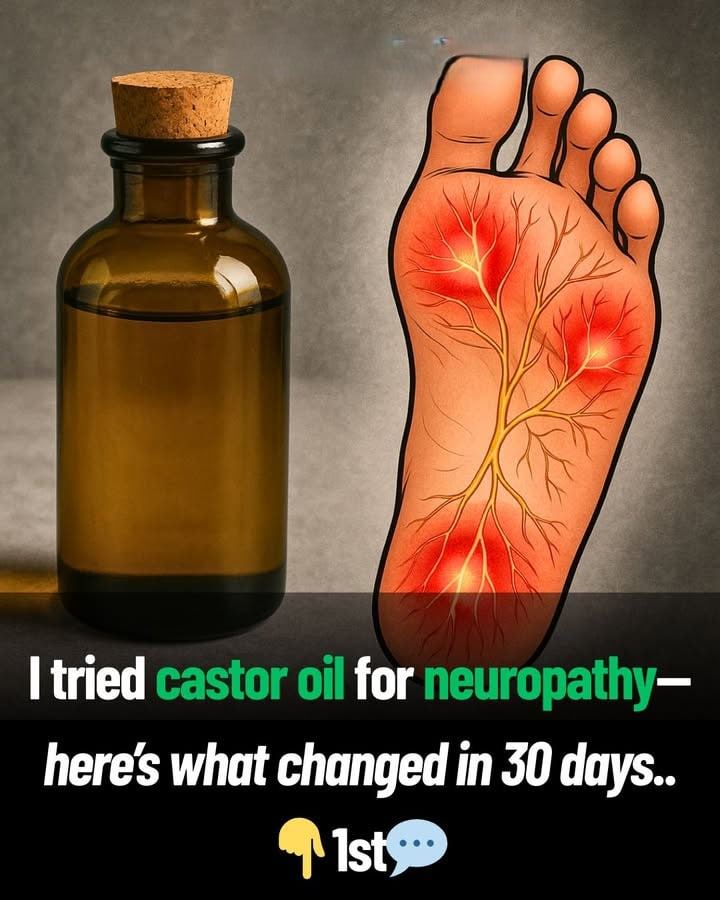
The image suggests a common claim circulating online: that using castor oil can significantly improve symptoms of neuropathy within 30 days. While this idea is appealing—especially for those dealing with chronic nerve discomfort—it’s important to separate hype from evidence and understand what’s really happening.
🚀 Make Money Online – Up to $50 Per Day!
What Is Neuropathy?
Neuropathy refers to damage or dysfunction of the nerves, often affecting the hands and feet. A common form is peripheral neuropathy, which can cause symptoms like burning sensations, tingling, numbness, weakness, or sharp pain. It is frequently associated with conditions such as diabetes, vitamin deficiencies, infections, or even certain medications.
Because neuropathy can be persistent and frustrating, many people look for natural remedies to ease discomfort—this is where castor oil comes into the conversation.
What Is Castor Oil?
Castor oil is a vegetable oil extracted from the seeds of the castor plant. It contains a high concentration of ricinoleic acid, a fatty acid believed to have anti-inflammatory and moisturizing properties. Traditionally, castor oil has been used for skin care, hair growth, and even digestive support.
In the context of nerve pain, the idea is that applying castor oil topically might improve circulation and reduce inflammation, potentially easing discomfort.
The 30-Day Claim: What Might Really Happen?
If someone applies castor oil daily to areas affected by neuropathy—such as the feet—there are a few possible changes they might notice over 30 days:
1. Improved Skin Condition
Castor oil is deeply moisturizing. Many people with neuropathy experience dry, cracked skin, especially in the feet. Regular use can make the skin softer and more hydrated, which may indirectly improve comfort.
2. Mild Pain Relief
The act of massaging castor oil into the skin can stimulate blood flow. This increased circulation might temporarily reduce sensations like tingling or mild pain. However, this effect is usually modest and short-term.
3. Relaxation Benefits
Massage itself—regardless of the oil used—can help relax muscles and reduce stress. Since stress can worsen pain perception, this relaxation effect may make symptoms feel less intense.
What Castor Oil Cannot Do
Despite the positive anecdotes, it’s important to be realistic. Castor oil does not repair damaged nerves. Neuropathy often involves underlying causes such as long-term high blood sugar or nerve degeneration, which require medical treatment and lifestyle changes.
There is currently no strong scientific evidence proving that castor oil can reverse or significantly heal neuropathy. At best, it may provide supportive relief—not a cure.
Safer and More Effective Approaches
If you’re dealing with neuropathy, combining natural care with evidence-based treatments is the best approach:
- Manage underlying conditions: Controlling blood sugar levels is crucial for those with diabetes.
- Nutritional support: Deficiencies in B vitamins, especially B12, can worsen nerve damage.
- Exercise: Gentle movement improves circulation and nerve health.
- Medications: Doctors may prescribe specific drugs to manage nerve pain effectively.
Should You Try Castor Oil?
Using castor oil is generally safe for topical application, provided you’re not allergic. If you want to try it:
- Apply a small amount to the affected area.
- Massage gently for a few minutes.
- Use consistently, preferably at night.
- Monitor your skin for any irritation.
Think of it as a complementary remedy rather than a primary treatment.
Final Thoughts
The idea that castor oil can transform neuropathy in just 30 days is likely exaggerated. However, that doesn’t mean it has no value. Its moisturizing and soothing properties may provide mild comfort and improve overall foot care—especially when combined with massage.
For long-term improvement, the focus should remain on addressing the root cause of neuropathy and following a medically guided plan. Natural remedies like castor oil can play a supportive role, but they work best when paired with proper diagnosis, treatment, and healthy lifestyle habits.
