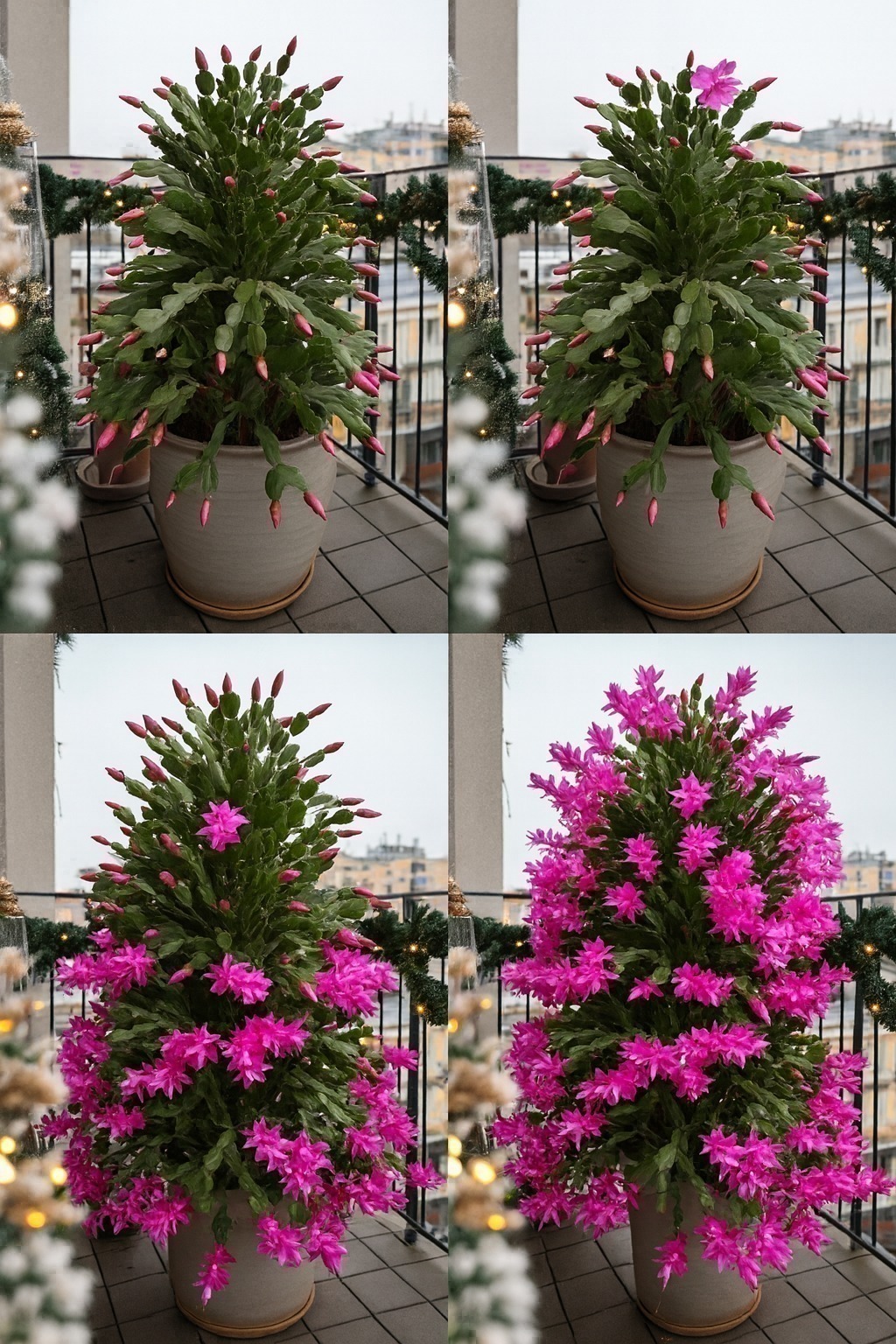
If you’ve ever owned a Christmas cactus, you already know the heartbreak: lush green leaves all year long, but no flowers when the holidays arrive. For years, mine refused to bloom, no matter how much love I gave it. Then, through trial, error, and a little plant science, I discovered a simple but powerful method that now makes my Christmas cactus bloom reliably—and often more than once a year. This isn’t magic or fertilizer hype. It’s about understanding what this plant truly needs and giving it the right signals at the right time.
Let me walk you through the exact method I use, step by step.
Understanding the Christmas Cactus First
The Christmas cactus (Schlumbergera) isn’t a desert cactus. It’s a tropical plant native to Brazilian rainforests, where it grows attached to trees, not buried in sand. This explains why so many people struggle: they treat it like a desert cactus, when it actually prefers humidity, indirect light, and consistent care.
Most importantly, blooming is triggered not by fertilizer, but by environmental cues—specifically darkness, temperature, and rest.
The Biggest Secret: Controlled Darkness
The single most important factor in nonstop blooming is darkness consistency.
About 6–8 weeks before you want blooms (late October is perfect for Christmas flowers), your cactus needs:
-
12–14 hours of complete darkness every night
-
Every single night, without interruption
This is the secret most people miss.
Even one night of light exposure—from lamps, TVs, or overhead lights—can delay blooming by weeks. I place my cactus in a spare room or closet from 7 p.m. to 9 a.m., then move it back to its daytime spot.
If moving the plant daily sounds tedious, you can simply keep it in a room that stays dark at night.
This darkness signals the plant to form buds. Within 3–4 weeks, you’ll see tiny bud nubs forming at the leaf tips. Once buds appear, you can stop the darkness routine.
Cool Temperatures Matter More Than You Think
Along with darkness, temperature plays a huge role.
During the bud-forming phase, I keep my Christmas cactus at:
-
55–65°F (13–18°C) at night
-
Slightly warmer during the day
Avoid placing it near heaters, radiators, or warm appliances. Cool nights mimic its natural environment and push it into bloom mode. Warm, constant temperatures tell it to keep growing leaves instead of flowers.
Once the buds open, normal indoor temperatures are fine.
Watering: Less Is More Before Blooming
Another mistake people make is overwatering.
Before blooming:
-
I water only when the top inch of soil is dry
-
No soggy soil, ever
Slight dryness stresses the plant just enough to encourage flowers. Think of it as a gentle reminder that it’s time to reproduce.
Once buds form, I water a bit more consistently—but still never let it sit in water.
The Soil Mix That Changed Everything
Christmas cactus roots need air as much as water. Regular potting soil is often too dense.
My go-to mix:
-
2 parts potting soil
-
1 part perlite or pumice
-
1 part orchid bark or coarse sand
This loose, airy mix prevents root rot and keeps the plant happy year-round. A happy plant blooms more often.
Light During the Day: Bright but Gentle
Daytime light should be:
-
Bright
-
Indirect
-
Never harsh midday sun
I keep mine near an east-facing window. Too little light = weak growth. Too much direct sun = leaf stress and dropped buds.
Balanced light supports both bud formation and long-lasting flowers.
Feeding at the Right Time (Not All the Time)
Fertilizer helps—but timing is critical.
-
During spring and summer: feed once a month with a balanced houseplant fertilizer diluted to half strength.
-
Stop fertilizing completely in early fall.
This pause tells the plant it’s time to rest and prepare for blooming. Feeding during bud formation often results in leaf growth instead of flowers.
Once blooming finishes, I resume light feeding.
How I Get Multiple Blooms a Year
Here’s the bonus secret: Christmas cacti can bloom more than once annually.
After the main bloom:
-
I remove spent flowers
-
Reduce watering slightly
-
Give it another short rest period (cooler temps + slightly less light)
Many times, I get a second bloom in late winter or early spring.
Common Mistakes That Stop Blooms
Avoid these at all costs:
-
Moving the plant once buds form (causes bud drop)
-
Sudden temperature changes
-
Overwatering
-
Nighttime light exposure
-
Constant fertilizing
Consistency matters more than effort.
Final Thoughts
The secret to nonstop Christmas cactus blooms isn’t expensive fertilizer or luck—it’s controlled darkness, cool nights, gentle stress, and patience. Once you give your plant the signals it understands, it rewards you with weeks of stunning flowers that feel almost magical.
