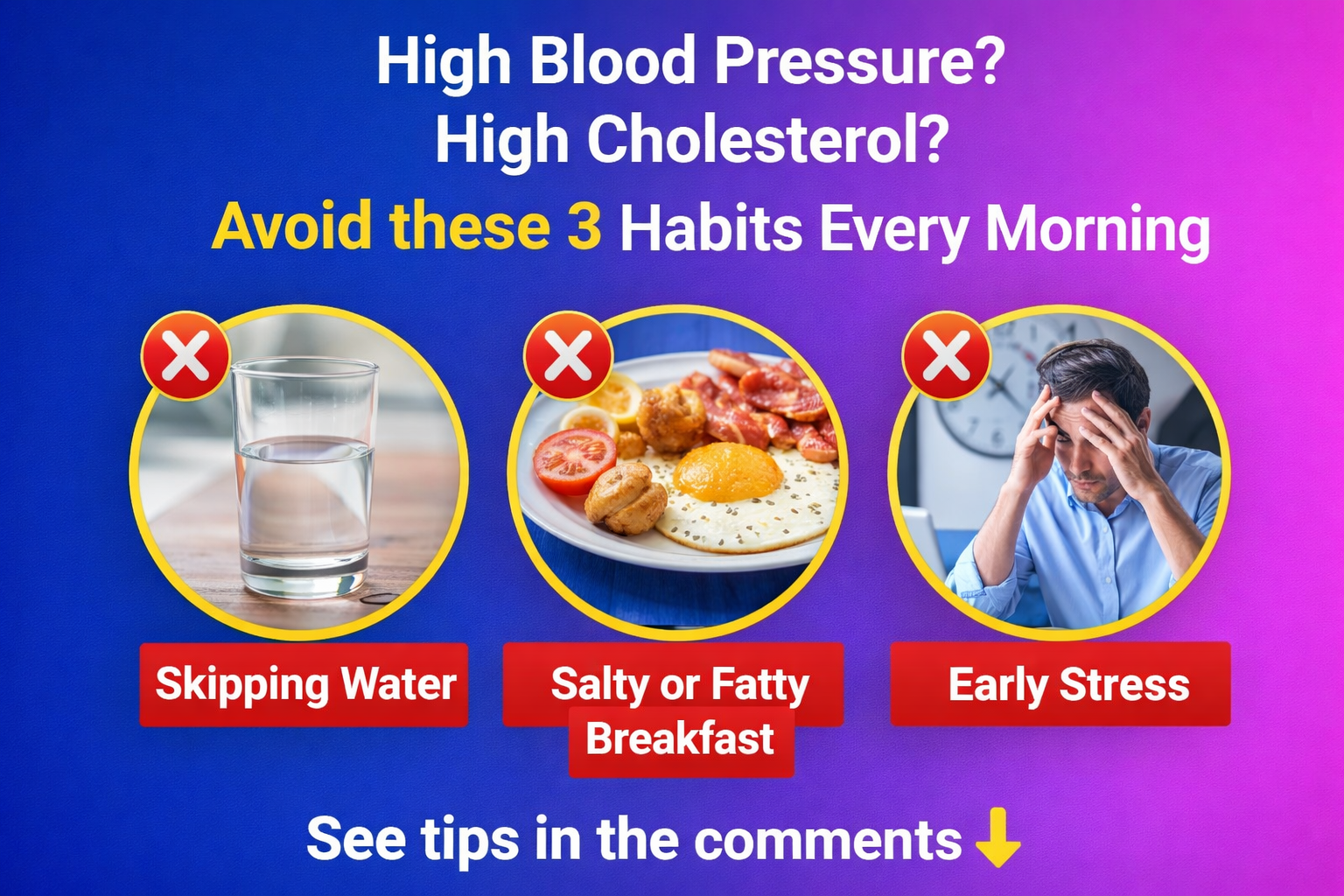
High blood pressure and high cholesterol are two of the most common health concerns worldwide—and when they occur together, they significantly increase the risk of heart disease, stroke, and other serious complications. While medication and regular checkups are important, your daily habits—especially what you do in the morning—can make a powerful difference in managing these conditions.
🚀 Make Money Online – Up to $50 Per Day!
Surprisingly, many people start their day with routines that unknowingly worsen both blood pressure and cholesterol levels. If you want to protect your heart and improve your overall health, here are three important things you should avoid every morning.
1. Skipping Breakfast or Choosing the Wrong Foods
Many people either skip breakfast entirely or grab something quick and unhealthy, like sugary cereals, white bread, or fried snacks. This can negatively impact both your blood pressure and cholesterol levels.
When you skip breakfast, your body may experience a drop in blood sugar, leading to overeating later in the day. This often results in consuming high-fat and high-sodium foods, which can raise cholesterol and blood pressure.
On the other hand, eating processed foods high in sugar and unhealthy fats can increase “bad” LDL cholesterol while lowering “good” HDL cholesterol. These foods also contribute to inflammation and weight gain.
What to do instead:
Start your day with a heart-healthy breakfast. Choose foods rich in fiber, healthy fats, and protein—such as oats, whole grains, fruits, nuts, and yogurt. These help stabilize blood sugar, lower cholesterol, and support healthy blood pressure.
2. Drinking Too Much Caffeine on an Empty Stomach
For many people, the day doesn’t begin without a strong cup of tea or coffee. While moderate caffeine intake can be safe, consuming too much—especially on an empty stomach—can temporarily raise blood pressure and stress levels.
Caffeine stimulates the nervous system, causing your heart rate to increase and your blood vessels to constrict. This can lead to a spike in blood pressure, which is particularly risky for people already dealing with hypertension.
Additionally, sugary coffee drinks or heavily sweetened tea can contribute to higher cholesterol and weight gain over time.
What to do instead:
Limit your caffeine intake, especially first thing in the morning. Try drinking water first to rehydrate your body after sleep. If you enjoy tea or coffee, opt for smaller amounts and avoid adding too much sugar or cream.
3. Starting the Day with Stress and No Movement
Rushing through your morning, checking stressful messages, or jumping straight into work without any physical activity can negatively affect your cardiovascular health.
Stress triggers the release of hormones like cortisol and adrenaline, which can raise blood pressure and contribute to long-term heart problems. A sedentary morning routine further worsens the situation, as lack of movement can slow metabolism and promote unhealthy cholesterol levels.
Over time, chronic stress and inactivity can make it harder for your body to regulate blood pressure and lipid levels.
What to do instead:
Create a calm and active start to your day. Even 10–15 minutes of light exercise—such as walking, stretching, or yoga—can improve circulation and lower blood pressure. Deep breathing or mindfulness practices can also help reduce stress and support heart health.
Final Thoughts
Managing high blood pressure and high cholesterol doesn’t require drastic changes overnight. Small, consistent improvements in your morning routine can have a lasting impact on your heart health.
Avoid skipping breakfast or choosing unhealthy foods, limit caffeine—especially on an empty stomach—and reduce stress while adding some movement to your mornings. These simple steps can help you take control of your health and lower your risk of serious complications.
Remember, your morning sets the tone for the entire day. By making smarter choices when you wake up, you give your body the best chance to stay balanced, energized, and heart-healthy.
