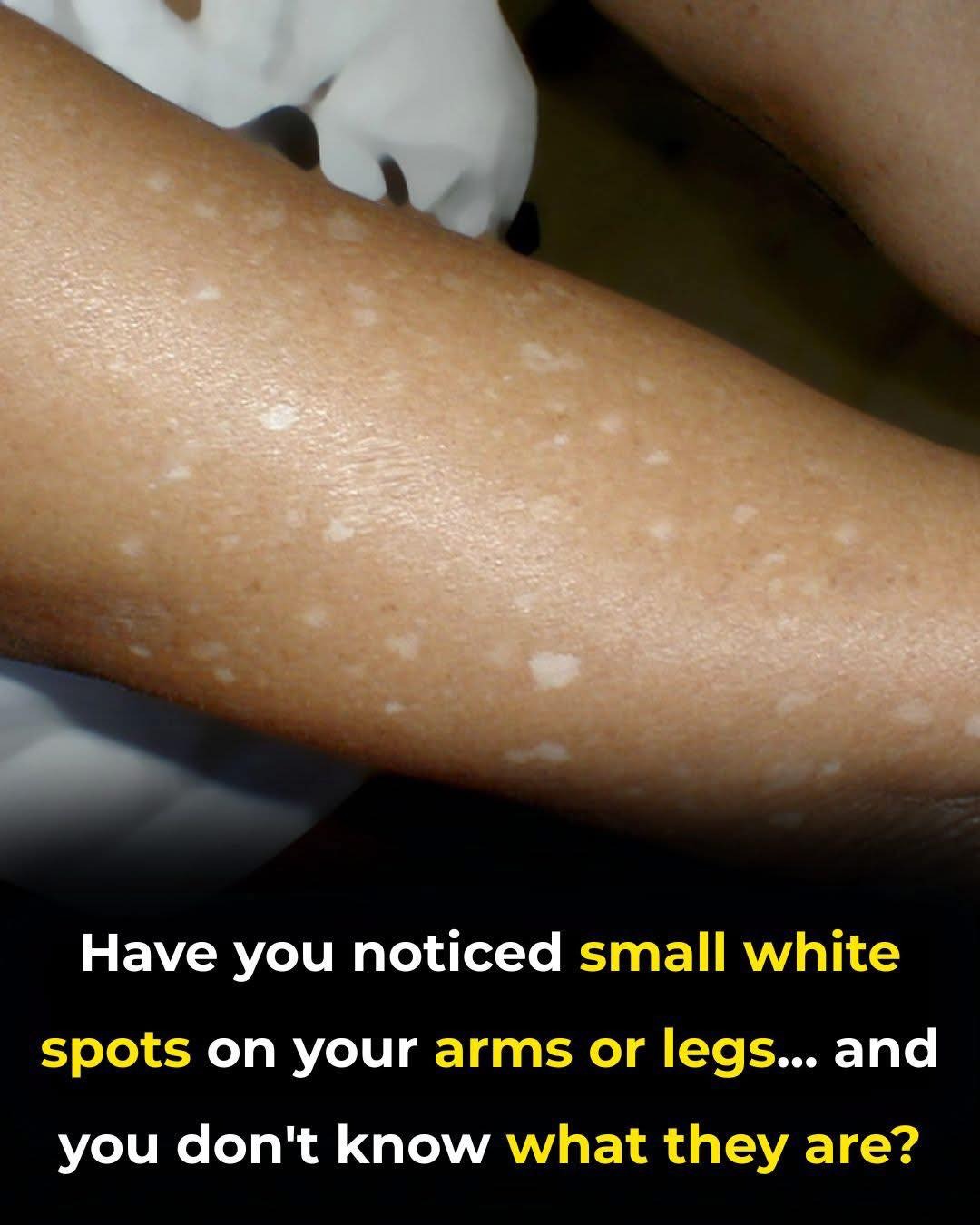
Have you ever looked down at your arms or legs and noticed small white spots that weren’t there before? They can appear suddenly, stand out more in sunlight, and leave you wondering if something is wrong with your skin. Many people experience this at some point in their lives, and while these spots are usually harmless, understanding what they are can bring peace of mind and help you care for your skin more effectively.
What Are These Small White Spots?
Small white spots on the arms or legs are often related to changes in skin pigmentation. Your skin gets its color from a pigment called melanin, which is produced by specialized cells known as melanocytes. When melanin production decreases or becomes uneven in certain areas, lighter patches or spots can appear.
One of the most common causes is Idiopathic Guttate Hypomelanosis (IGH). This condition typically shows up as tiny, round or oval white spots, most often on sun-exposed areas like the forearms, shins, and calves. IGH is more common as people age, but younger individuals can notice it too, especially if they spend a lot of time in the sun.
Sun Exposure and Skin Aging
Long-term sun exposure plays a major role in many skin changes, including white spots. Ultraviolet (UV) rays can gradually damage melanocytes, reducing their ability to produce melanin evenly. Over time, this damage becomes visible as pale spots that don’t tan like the surrounding skin.
This is why these spots are often more noticeable in summer or after sun exposure. As the surrounding skin darkens, the white areas remain light, creating a stronger contrast.
Other Possible Causes
While IGH is common, it’s not the only reason white spots can appear:
-
Post-inflammatory hypopigmentation: After a rash, insect bite, burn, or skin injury heals, the affected area may temporarily lose pigment, leaving a lighter patch.
-
Fungal infections: Certain superficial fungal conditions can interfere with normal pigmentation, often causing light spots that may be slightly scaly.
-
Vitamin and mineral deficiencies: In some cases, low levels of nutrients like vitamin B12, calcium, or vitamin D may be associated with changes in skin pigmentation.
-
Vitiligo: This condition causes more noticeable and expanding white patches due to loss of melanocytes. Unlike small, scattered dots, vitiligo patches are usually larger and more defined.
Are These Spots Dangerous?
In most cases, small white spots on the arms or legs are not dangerous and do not indicate a serious health problem. Conditions like IGH are considered cosmetic rather than medical. They don’t itch, hurt, or turn into skin cancer.
However, any sudden, rapidly spreading, or unusual skin changes should be evaluated by a healthcare professional to rule out underlying conditions.
Can You Get Rid of Them?
There is no guaranteed way to completely eliminate white spots, but several approaches may help improve their appearance:
-
Sun protection: Using sunscreen daily can prevent further contrast between pigmented and non-pigmented skin and reduce new spots from forming.
-
Moisturizing regularly: Healthy, well-hydrated skin often looks more even in tone.
-
Topical treatments: Dermatologists may recommend retinoids, mild steroids, or other creams to encourage cell turnover and pigment balance.
-
Cosmetic procedures: Treatments like microdermabrasion, chemical peels, or laser therapy may help in some cases, under professional guidance.
A Simple Skin-Supporting Routine (Natural Approach)
While not a medical treatment, supporting your skin from the inside and outside can make a visible difference over time:
-
Drink plenty of water daily to maintain skin hydration
-
Eat a balanced diet rich in fruits, vegetables, healthy fats, and proteins
-
Include foods with antioxidants, such as berries, leafy greens, and nuts
-
Protect your skin from harsh sun exposure, especially during peak hours
-
Use gentle skincare products and avoid excessive scrubbing
This “skin care recipe” isn’t about quick fixes but about consistency and prevention. Over time, these habits can help your skin look healthier and more even-toned.
When to See a Doctor
You should consider seeing a dermatologist if:
-
The spots are spreading quickly
-
They are accompanied by itching, pain, or scaling
-
The patches are large or sharply defined
-
You notice pigment loss in other areas like the face or hands
A professional evaluation can provide reassurance and personalized advice.
The Bottom Line
Small white spots on the arms or legs are very common and usually harmless. They are often linked to sun exposure, natural aging, or minor changes in pigmentation. While they can’t always be prevented or erased, proper skin care, sun protection, and healthy lifestyle choices can minimize their appearance and keep your skin looking its best.
Understanding your skin is the first step toward caring for it. Most of the time, these tiny white spots are simply a reminder of how your skin responds to time, sunlight, and life itself.
