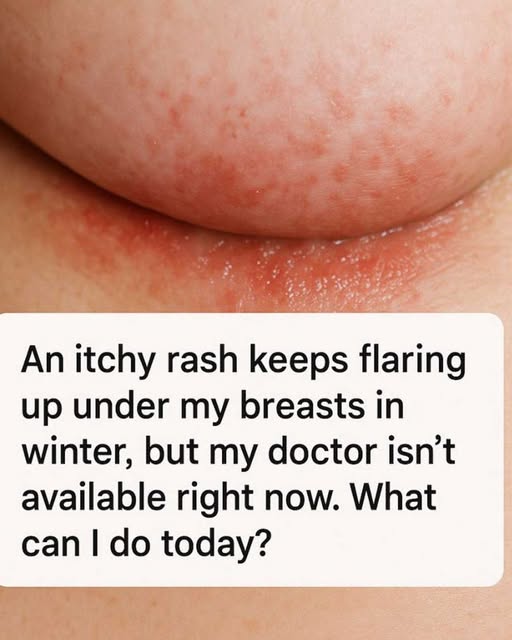
An itchy rash under the breasts during winter can be uncomfortable, frustrating, and sometimes even painful. If your doctor isn’t available right now, don’t worry — there are safe and practical steps you can take today to calm irritation, reduce itching, and help your skin heal.
Most under-breast rashes are caused by moisture buildup, friction, trapped sweat, or fungal overgrowth. Even in winter, layers of clothing and indoor heating can create warmth and humidity under the breasts, leading to irritation. This condition is often called intertrigo.
1. First: Gently Clean and Dry the Area
Start by washing the area carefully.
What to do:
Use lukewarm (not hot) water.
Choose a mild, fragrance-free soap.
Gently cleanse without scrubbing.
Pat completely dry with a soft towel — do not rub.
Moisture is the biggest trigger. After drying with a towel, you can even use a hair dryer on a cool setting for 20–30 seconds to make sure the skin is fully dry.
2. Apply an Antifungal Cream (If It Looks Red and Shiny)
If the rash is:
Red
Itchy
Slightly shiny
Possibly with small red spots around it
It may be fungal.
Over-the-counter antifungal creams containing clotrimazole or miconazole can help. Apply a thin layer twice daily for at least 1–2 weeks.
If you’re unsure whether it’s fungal, antifungal creams are generally safe to try for a few days.
3. Soothe with a Natural Calming Remedy (Simple Home “Recipe”)
Here’s a gentle, soothing home remedy you can prepare today.
Soothing Oat & Aloe Relief Paste
Ingredients:
1 tablespoon plain oatmeal (finely ground)
1 tablespoon pure aloe vera gel
A few drops of clean water (if needed)
Instructions:
Grind oatmeal into a fine powder (if not already powdered).
Mix with aloe vera until you form a soft paste.
Apply a thin layer to the rash.
Leave on for 15–20 minutes.
Rinse gently and pat completely dry.
Oatmeal reduces itching and inflammation. Aloe helps cool and hydrate irritated skin.
Use once daily.
4. Keep the Area Dry All Day
This is critical for healing.
Here’s how:
Wear a clean, breathable cotton bra.
Avoid tight underwire bras temporarily.
Change bras daily.
Place a clean cotton cloth or gauze under the breast if sweating occurs.
Avoid synthetic fabrics that trap moisture.
You can also lightly dust the area with a fragrance-free antifungal powder to keep it dry.
5. Try a Simple Barrier Protection Method
If friction is part of the problem, protecting the skin barrier helps.
After cleaning and drying:
Apply a thin layer of zinc oxide cream (like diaper rash cream).
Or use petroleum jelly very lightly.
This reduces rubbing and protects irritated skin.
6. Avoid These Common Mistakes
Many rashes worsen because of simple habits:
Don’t use perfumed lotions.
Don’t apply strong steroid creams unless prescribed.
Don’t scratch — trim nails if needed.
Don’t leave damp clothing on the skin.
Steroid creams can sometimes make fungal infections worse if used alone.
7. Improve Indoor Air During Winter
Winter heating dries the air but increases sweating under layers.
If possible:
Keep indoor temperature moderate.
Avoid overheating.
Wear layered clothing you can remove easily.
8. Watch for Warning Signs
You can manage mild rashes at home, but seek medical help if you notice:
Severe pain
Pus or yellow discharge
Cracking with bleeding
Fever
Rash spreading quickly
No improvement after 5–7 days
These may indicate bacterial infection or a more serious skin condition.
9. Long-Term Prevention Tips
Once the rash improves, prevent flare-ups with these habits:
Always dry thoroughly after bathing.
Apply antifungal powder during winter if prone to recurrence.
Maintain a healthy weight if applicable (reduces skin folds).
Rotate bras to keep them fully dry between wears.
Wash bras with gentle detergent and rinse thoroughly.
When It’s Likely Just Winter Irritation
If your rash:
Appears only in colder months
Improves when skin stays dry
Isn’t severely painful
It’s likely moisture and friction-related rather than something serious.
Final Thoughts
An itchy rash under the breasts is common, especially during winter when layers and indoor heating create hidden moisture. The key today is:
Clean gently
Dry completely
Treat with antifungal cream if needed
Keep the area dry and protected
Most mild cases improve within a few days with proper care.
If symptoms persist beyond a week or worsen, schedule a doctor’s visit when available. In the meantime, these steps can bring relief and help your skin recover safely.
