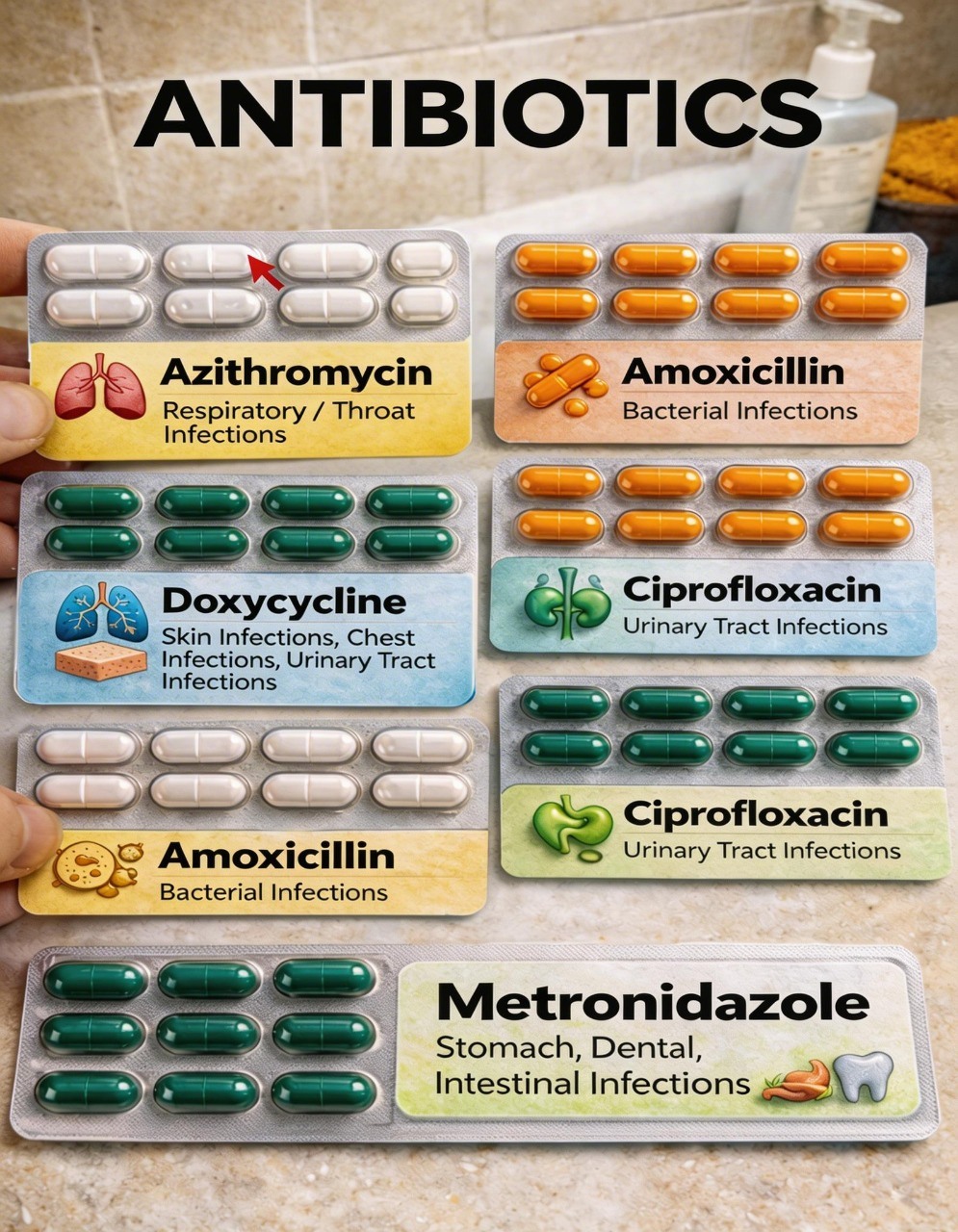
Antibiotics are among the most powerful tools in modern medicine. Since the discovery of Penicillin, these medications have saved millions of lives by fighting bacterial infections that were once deadly. Yet, despite their importance, many people still misunderstand how antibiotics work, when to use them, and why proper use is critical.
🚀 Make Money Online – Up to $50 Per Day!
Doctors prescribe antibiotics every day—but not all antibiotics are the same. Each type targets specific bacteria and infections. Knowing the most commonly prescribed antibiotics and their purpose can help you better understand your treatment and protect your long-term health.
Let’s explore the top five most commonly prescribed antibiotics and why they truly matter.
1. Amoxicillin – The Everyday Infection Fighter
Amoxicillin is one of the most widely prescribed antibiotics in the world. It belongs to the penicillin family and is often the first choice for many routine infections.
Doctors typically prescribe amoxicillin for:
- Ear infections
- Sinus infections
- Throat infections (like strep throat)
- Respiratory tract infections
It works by breaking down the cell walls of bacteria, effectively killing them. Its popularity comes from its effectiveness, safety profile, and affordability.
Why it matters:
Amoxicillin is often the “go-to” antibiotic, but overuse can lead to antibiotic resistance. That’s why it’s important to take it only when prescribed—and always finish the full course.
2. Azithromycin – The Fast-Acting Z-Pak
Azithromycin is known for its convenience and short treatment duration. Often referred to as a “Z-Pak,” this antibiotic is commonly used for respiratory infections and some sexually transmitted infections.
Doctors prescribe azithromycin for:
- Bronchitis
- Pneumonia
- Sinus infections
- Certain skin infections
Unlike many antibiotics, azithromycin stays in your system longer, which allows for shorter courses—sometimes as little as three to five days.
Why it matters:
Its convenience makes it popular, but misuse (like taking it for viral infections such as colds) can reduce its effectiveness over time. Responsible use ensures it remains a powerful treatment option.
3. Ciprofloxacin – The Powerful Broad-Spectrum Option
Ciprofloxacin is a strong, broad-spectrum antibiotic that fights a wide range of bacteria. It belongs to a class called fluoroquinolones.
It is commonly prescribed for:
- Urinary tract infections (UTIs)
- Gastrointestinal infections
- Certain serious bacterial infections
Because of its strength, doctors usually reserve ciprofloxacin for more complicated or resistant infections.
Why it matters:
While highly effective, ciprofloxacin can have more significant side effects compared to milder antibiotics. This is why doctors use it carefully and only when necessary.
4. Doxycycline – The Versatile Infection Defender
Doxycycline is another widely used antibiotic known for its versatility. It belongs to the tetracycline class and is effective against many types of bacteria.
Doctors prescribe doxycycline for:
- Acne
- Respiratory infections
- Tick-borne illnesses
- Malaria prevention in some cases
It works by stopping bacteria from producing the proteins they need to grow and multiply.
Why it matters:
Doxycycline is especially valuable because it treats a wide range of infections. However, it must be taken properly (for example, avoiding direct sunlight exposure and taking it with water) to minimize side effects.
5. Cephalexin – The Skin and Soft Tissue Specialist
Cephalexin is part of the cephalosporin family and is often used to treat infections involving the skin and soft tissues.
Doctors commonly prescribe it for:
- Skin infections
- Bone infections
- Respiratory infections
- Urinary tract infections
Cephalexin works similarly to penicillin by disrupting bacterial cell wall formation.
Why it matters:
It is a reliable alternative for patients who may not tolerate other antibiotics, making it an essential option in a doctor’s toolkit.
Why Antibiotics Matter More Than Ever
Antibiotics don’t just treat infections—they protect lives. However, their effectiveness depends heavily on how they are used.
One of the biggest global health threats today is antibiotic resistance. This happens when bacteria evolve and become resistant to medications that once killed them. Misusing antibiotics—such as skipping doses, not finishing a course, or taking them unnecessarily—accelerates this problem.
Key ways to use antibiotics responsibly:
- Only take them when prescribed by a doctor
- Never share antibiotics with others
- Complete the full course, even if you feel better
- Avoid using them for viral infections like colds or flu
The Bottom Line
The most common antibiotics—amoxicillin, azithromycin, ciprofloxacin, doxycycline, and cephalexin—play a crucial role in modern healthcare. Each serves a specific purpose, targeting different types of bacterial infections.
Understanding how these medications work empowers you to make better health decisions and use them safely. Antibiotics are not just everyday medicines—they are life-saving tools that must be protected through responsible use.
