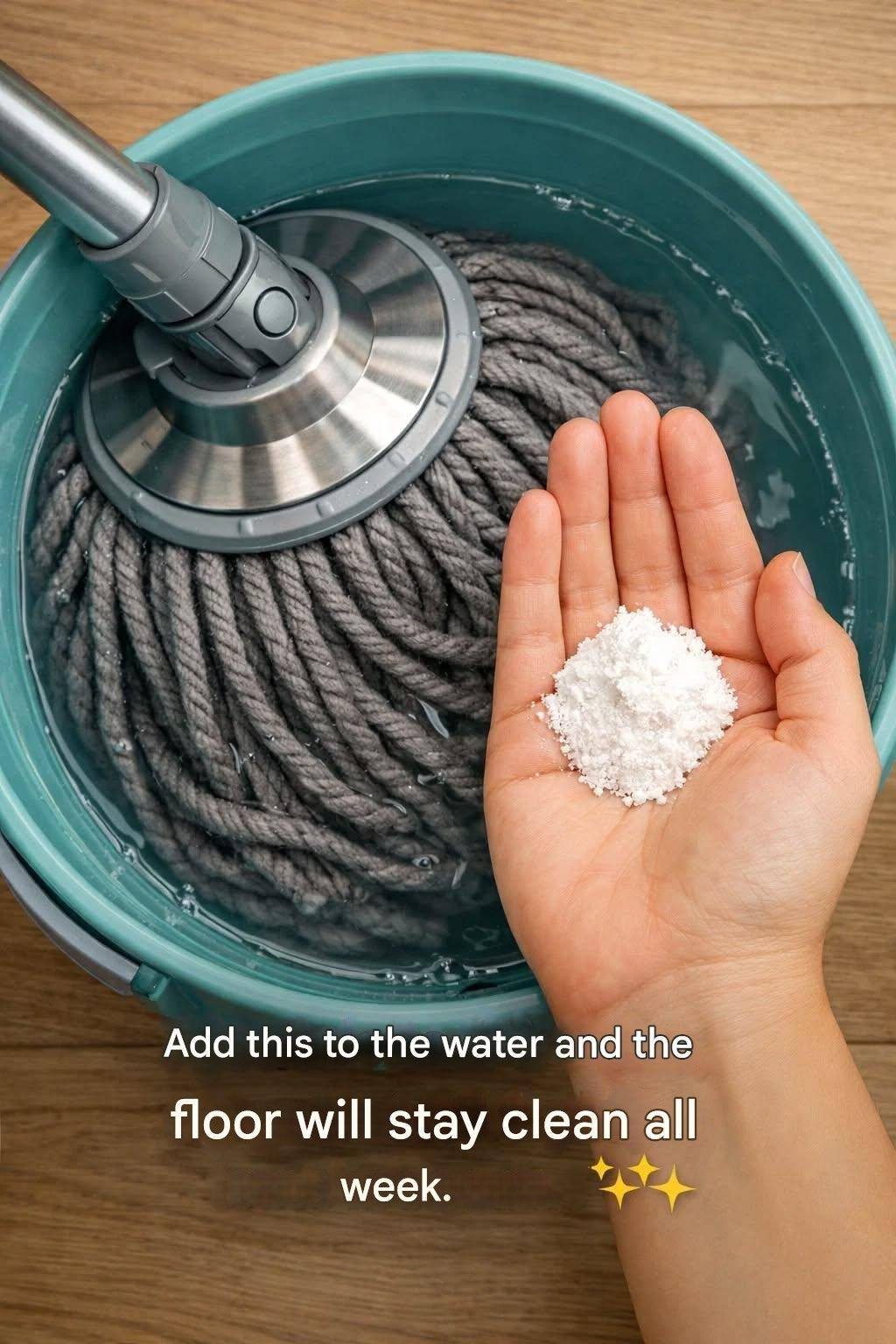
Keeping your floors clean throughout the week can sometimes feel like an endless chore. Dust, footprints, spills, and everyday dirt seem to appear out of nowhere. Many people mop their floors only to see them become dirty again within a day or two. However, there is a surprisingly simple trick that can help keep your floors cleaner for longer. By adding one powerful ingredient to your mop bucket, you can create a cleaning solution that not only removes dirt but also helps prevent dust and grime from sticking to the floor again.
🚀 Make Money Online – Up to $50 Per Day!
The secret ingredient is white vinegar. This common household item is affordable, natural, and extremely effective for cleaning many types of surfaces. When mixed properly with a few other ingredients, it becomes a powerful floor-cleaning solution that leaves floors shiny, fresh, and resistant to dirt buildup.
Why White Vinegar Works So Well
White vinegar contains acetic acid, which helps break down grease, sticky residues, and mineral deposits. When used in floor cleaning, it dissolves dirt and grime while also removing bacteria and unpleasant odors. Another advantage is that vinegar evaporates quickly, which means it doesn’t leave behind a sticky residue that can attract more dust.
Commercial floor cleaners often leave a thin film on the surface. This film may initially make the floor look shiny, but it actually attracts dirt faster. Vinegar, on the other hand, cleans the surface thoroughly and leaves it smooth and residue-free.
The Simple Weekly Floor Cleaning Recipe
To prepare this effective floor-cleaning mixture, you only need a few basic ingredients that are easy to find in most homes.
Ingredients:
-
1 bucket of warm water (about 4–5 liters)
-
1 cup white vinegar
-
1 tablespoon liquid dish soap
-
5–10 drops of lemon essential oil (optional)
Step-by-Step Instructions
-
Fill the Bucket with Warm Water
Start by filling your mop bucket with warm water. Warm water helps dissolve grease and dirt more effectively than cold water. -
Add White Vinegar
Pour one cup of white vinegar into the bucket. This is the key ingredient that will help disinfect the floor and remove stubborn grime. -
Add Liquid Dish Soap
A tablespoon of dish soap helps break down oils and sticky substances that may be on the floor. -
Add Lemon Essential Oil (Optional)
A few drops of lemon essential oil will give the solution a fresh scent and add mild antibacterial properties. It also helps eliminate the strong vinegar smell. -
Mix the Solution
Gently stir the mixture with your mop so the ingredients combine evenly.
How to Use the Solution
Dip your mop into the bucket and wring it out well so it is damp but not dripping. Mop the floor as you normally would, starting from the far corner of the room and moving toward the exit. This prevents you from stepping on the freshly cleaned surface.
For best results, rinse your mop occasionally in the bucket and wring it out before continuing. Once the floor is mopped, allow it to air dry. Because vinegar evaporates quickly, drying usually takes only a short time.
Why This Method Keeps Floors Cleaner Longer
This simple mixture does more than just clean the surface. Vinegar removes the invisible residues that attract dust and dirt. When these residues are gone, new dirt has less ability to stick to the floor. As a result, your floors stay cleaner for a longer period of time.
The dish soap also helps lift grease and oils that often come from shoes, pets, or cooking areas. Removing these substances prevents them from trapping dust particles later in the week.
Floors That Work Best with This Recipe
This cleaning solution works well on many common floor types, including:
-
Ceramic tile
-
Vinyl flooring
-
Laminate flooring
-
Sealed hardwood floors
-
Stone floors (except natural marble)
However, vinegar should not be used on unsealed wood, waxed floors, or natural marble because the acidity may damage the surface.
Extra Tips for Longer-Lasting Clean Floors
To make your weekly cleaning even more effective, follow these simple habits:
-
Sweep or vacuum before mopping. Removing loose dust first prevents muddy streaks.
-
Use doormats. Mats trap dirt from shoes before it reaches the floor.
-
Remove shoes indoors. This dramatically reduces dirt and bacteria entering the home.
-
Clean spills immediately. Sticky spills attract dust if left unattended.
A Natural, Budget-Friendly Solution
One of the biggest advantages of this recipe is that it is both economical and environmentally friendly. Vinegar costs very little compared to many commercial cleaners, and it does not release harsh chemicals into your home. This makes it a great option for households with children, pets, or anyone who prefers natural cleaning methods.
