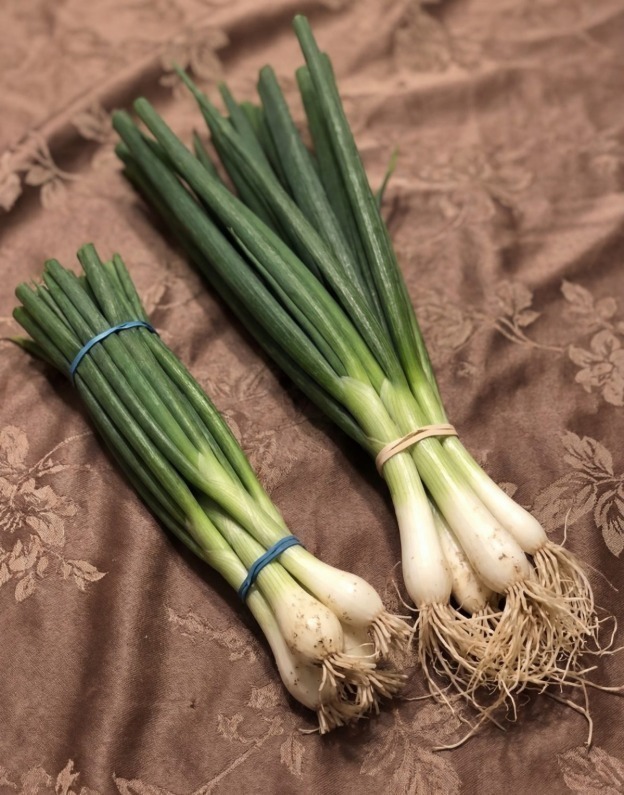
Many recipes call for fresh green herbs or mild onions, and four ingredients often cause confusion: green onions, scallions, spring onions, and chives. While they may look similar at first glance, each has its own flavor, appearance, and best culinary uses. Understanding their differences can help improve your cooking and ensure you use the right ingredient for the best taste and texture.
🚀 Make Money Online – Up to $50 Per Day!
Although these plants all belong to the same botanical family, the Allium family, they differ in maturity, flavor strength, and how they are typically used in cooking. This family also includes well-known ingredients like Garlic, Leeks, and Onions. Let’s explore the key characteristics of each one.
Green Onions
Green onions are one of the most commonly used fresh onion varieties in cooking. They are harvested before the onion bulb has fully developed, which means the entire plant is edible—from the white base to the long green leaves.
Appearance
Green onions have long, hollow green stalks with a small white base that looks slightly thicker than the stems. Unlike mature onions, the bulb remains very small and narrow.
Flavor
Green onions have a mild onion flavor that is fresher and less pungent than regular onions. The white portion is slightly stronger in taste, while the green tops are more delicate and herb-like.
Culinary Uses
Green onions are extremely versatile and can be used raw or cooked. They are often chopped and added to:
-
Salads
-
Stir-fries
-
Soups
-
Omelets
-
Noodle dishes
They are also commonly used as a garnish for dishes like Fried Rice and Ramen.
Because of their mild taste, green onions add freshness without overpowering a dish.
Scallions
Scallions and green onions are often considered the same thing in many countries. In most grocery stores, the terms are used interchangeably.
Appearance
Scallions look almost identical to green onions: long green hollow stalks and a small white base without a large bulb.
Flavor
The flavor is mild and slightly sweet, with a crisp texture. The white base has a stronger onion flavor, while the green tops are lighter and more herb-like.
Culinary Uses
Scallions are popular in many cuisines, especially Asian and Mediterranean cooking. They are commonly used in:
-
Stir-fries
-
Pancakes
-
Rice dishes
-
Sauces
-
Fresh garnishes
One well-known dish featuring scallions is Scallion Pancakes, a crispy savory flatbread popular in Chinese cuisine.
Because they are tender, scallions are best added at the end of cooking or used raw.
Spring Onions
Spring onions are a more mature version of scallions or green onions. They are harvested later, allowing a small bulb to develop.
Appearance
Spring onions are easy to recognize because they have a noticeable round bulb at the base. The bulb may be white, yellow, or slightly purple, depending on the variety.
The green stems are still long and edible but slightly thicker than scallions.
Flavor
Spring onions have a stronger flavor than scallions or green onions, though they are still milder than fully mature onions.
The bulb has a sweeter, richer onion taste when cooked, while the green tops remain mild.
Culinary Uses
Spring onions are great for both raw and cooked dishes. Because of their bulb, they are often grilled, roasted, or sautéed.
They work well in:
-
Roasted vegetable dishes
-
Grilled meats
-
Pasta
-
Salads
They are especially delicious when grilled and served alongside dishes like Steak or Roast Chicken.
Cooking spring onions softens their flavor and enhances their natural sweetness.
Chives
Chives are quite different from the other three ingredients. Instead of being a young onion, they are considered a delicate herb.
Appearance
Chives have very thin, grass-like green stems. They do not have a white bulb like scallions or spring onions.
The stems are soft and flexible, making them ideal for finely chopping.
Flavor
Chives have a very mild onion flavor—much gentler than scallions or spring onions. Their taste is fresh, slightly garlicky, and delicate.
Because the flavor is so light, chives are usually used raw.
Culinary Uses
Chives are often sprinkled over dishes to add color and a subtle onion flavor. They are commonly used in:
-
Baked potatoes
-
Cream sauces
-
Egg dishes
-
Salads
-
Seafood
They pair beautifully with creamy foods like Mashed Potatoes and Scrambled Eggs.
Chives should usually be added at the very end of cooking to preserve their delicate flavor.
Quick Comparison
| Ingredient | Appearance | Flavor | Best Uses |
|---|---|---|---|
| Green Onions | Small white base with long green stalks | Mild onion flavor | Salads, soups, stir-fries |
| Scallions | Nearly identical to green onions | Mild and slightly sweet | Garnishes, pancakes, rice dishes |
| Spring Onions | Round bulb at the base | Stronger onion taste | Grilling, roasting, sautéing |
| Chives | Thin grass-like stems | Very delicate onion flavor | Garnish, eggs, potatoes |
Can You Substitute Them?
In many recipes, green onions and scallions can be used interchangeably. If a recipe calls for scallions but you only have green onions, the result will be nearly identical.
Spring onions can sometimes replace scallions, but remember that their flavor is stronger and the bulb may need longer cooking.
Chives are best used as a garnish rather than a cooking onion. While they can replace scallions in some dishes, you would need a larger amount to achieve a similar flavor.
Final Thoughts
Green onions, scallions, spring onions, and chives may look similar, but each offers unique qualities that can enhance different types of dishes. Green onions and scallions provide fresh, mild onion flavor, spring onions bring a slightly stronger taste with a small bulb, and chives offer a delicate herb-like touch.
