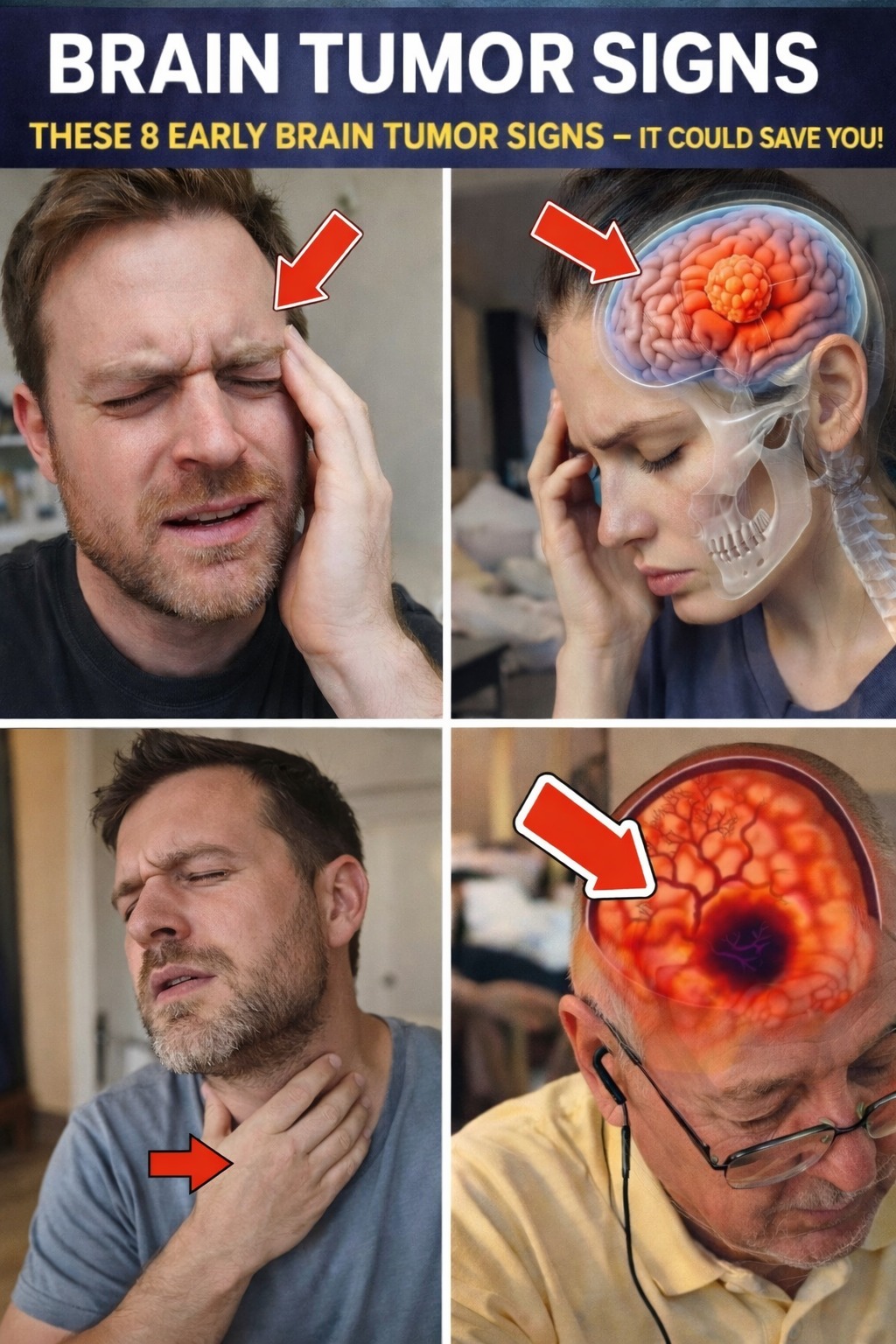
A brain tumor is a serious medical condition that occurs when abnormal cells grow in the brain. While not all brain tumors are cancerous, both benign and malignant tumors can interfere with normal brain function. Because the brain controls everything from movement to memory, even small changes can produce noticeable symptoms. Recognizing early warning signs can make a life-saving difference.
🚀 Make Money Online – Up to $50 Per Day!
Here are 8 early warning signs of a brain tumor you should never ignore.
1. Persistent or Worsening Headaches
4
Headaches are common and usually harmless. However, brain tumor–related headaches often have distinct features:
They become more frequent or severe over time
They are worse in the morning
They may wake you up from sleep
They worsen with coughing, bending, or sneezing
This happens because a tumor can increase pressure inside the skull. If you notice a new type of headache that feels different from your usual migraines or tension headaches, it’s important to consult a doctor.
2. Seizures Without a History of Epilepsy
4
A seizure is often one of the first noticeable symptoms of a brain tumor. About half of brain tumor patients experience seizures at some point.
Seizures may look like:
Sudden jerking movements
Staring spells
Temporary confusion
Loss of consciousness
Strange sensations such as unusual smells or tastes
If you or someone you know experiences a first-time seizure, seek medical attention immediately.
3. Vision Problems
4
Vision changes can occur if a tumor presses on the optic nerve or areas of the brain that process visual information.
You might notice:
Blurred vision
Double vision
Loss of peripheral (side) vision
Seeing flashing lights
Gradual vision loss may go unnoticed at first. Regular eye exams can sometimes detect subtle warning signs before symptoms become severe.
4. Personality or Behavioral Changes
4
The frontal lobe controls personality, judgment, and emotional regulation. If a tumor develops in this area, it can lead to noticeable behavior changes.
Possible signs include:
Increased irritability
Depression or anxiety
Loss of inhibition
Poor decision-making
Apathy or lack of motivation
Loved ones often notice these changes before the individual does. If behavior shifts suddenly without explanation, a neurological evaluation may be necessary.
5. Memory Loss or Cognitive Difficulties
4
Difficulty remembering recent events, focusing, or processing information may signal a problem in certain brain regions.
Symptoms may include:
Forgetting appointments or conversations
Trouble finding the right words
Difficulty concentrating
Slower thinking
While mild forgetfulness can be part of aging or stress, progressive cognitive decline should not be ignored.
6. Weakness or Numbness on One Side of the Body
4
The brain controls movement and sensation. A tumor affecting the motor cortex may cause:
Weakness in an arm or leg
Numbness or tingling
Difficulty with coordination
Problems walking
These symptoms may resemble a stroke. Sudden weakness requires emergency medical evaluation.
7. Speech Difficulties
4
Tumors in language areas of the brain can interfere with communication.
You might experience:
Slurred speech
Difficulty forming sentences
Trouble understanding others
Mixing up words
Any sudden speech change is a red flag and should be assessed promptly.
8. Persistent Nausea or Vomiting
4
Ongoing nausea—especially in the morning without digestive illness—can signal increased pressure inside the skull.
Vomiting that:
Happens frequently
Is not related to food poisoning or infection
Occurs alongside headaches
may require further investigation.
When to See a Doctor
Experiencing one symptom alone does not automatically mean you have a brain tumor. Many of these signs are linked to less serious conditions like migraines, stress, or infections. However, you should seek medical advice if:
Symptoms are new and unexplained
They worsen over time
Multiple symptoms appear together
They interfere with daily life
Doctors may use imaging tests such as MRI or CT scans to determine the cause.
Final Thoughts
Early detection can significantly improve treatment options and outcomes. Paying attention to your body and noticing changes is crucial. While it’s natural to feel worried when reading about serious conditions, awareness empowers you to act quickly if needed.
If you or a loved one experience any of these warning signs, don’t ignore them. A timely medical evaluation can provide reassurance—or, if necessary, allow treatment to begin as early as possible.
