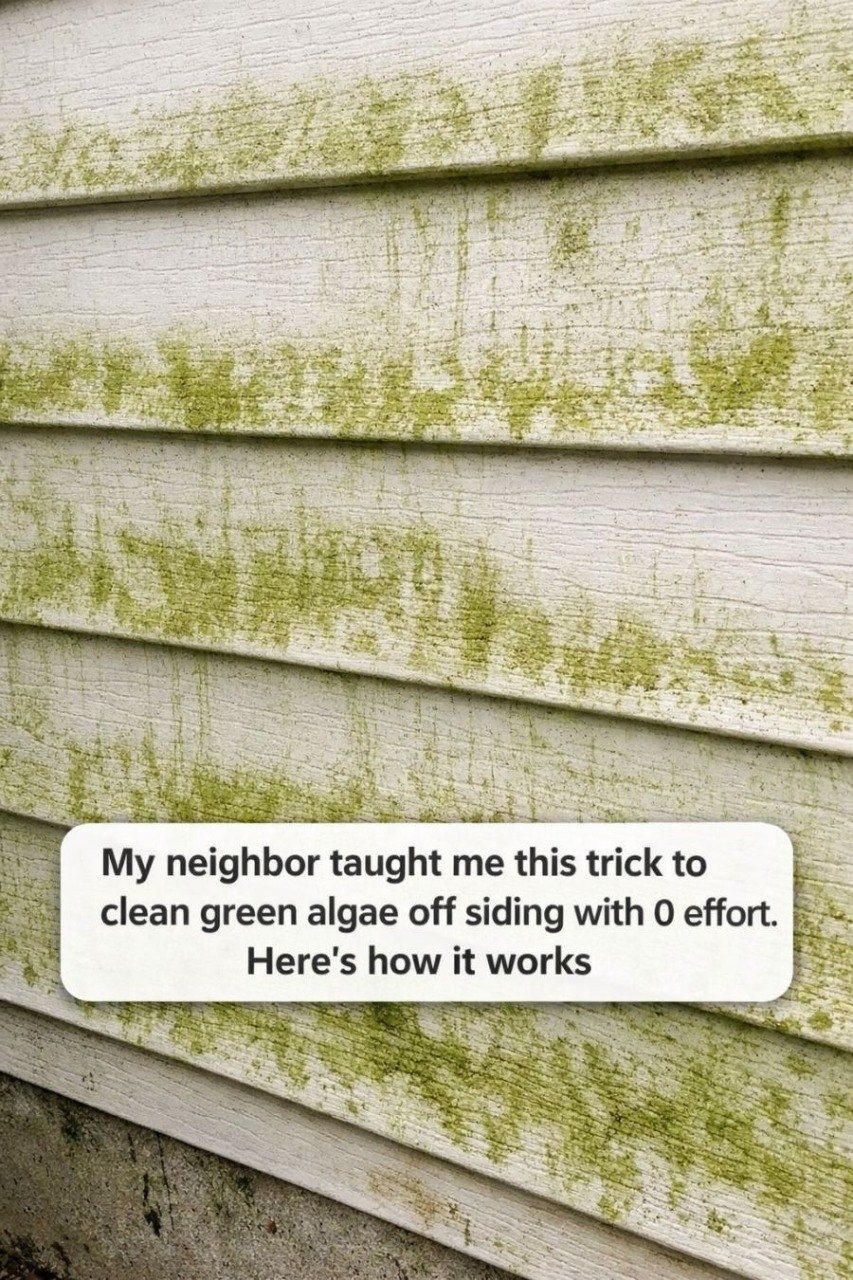
My neighbor leaned over the fence one afternoon while I was scrubbing my siding with a stiff brush and said, “You’re working too hard.” I had been battling stubborn green algae stains that made my once-bright siding look dull and neglected. Living in a humid area means moisture clings to surfaces, and before long, that moisture invites algae to grow. I assumed the only solution was elbow grease and hours of scrubbing. But my neighbor shared a simple, low-effort method that completely changed the way I clean my home’s exterior.
🚀 Make Money Online – Up to $50 Per Day!
If you’ve noticed green streaks creeping up your siding, especially on the north-facing side of your house where sunlight is limited, you’re likely dealing with algae. While it looks unpleasant, it’s usually harmless to the structure itself. Still, leaving it untreated can make your home look older and poorly maintained. The good news? You don’t need expensive equipment or professional services. This easy “recipe” uses common household ingredients and requires almost no scrubbing at all.
Here’s the simple mixture my neighbor swears by:
You will need:
-
1 gallon of warm water
-
1 cup of white vinegar
-
2 tablespoons of liquid dish soap
-
A garden sprayer or spray bottle
That’s it. No harsh chemicals, no power washer, and no climbing ladders with buckets.
To prepare the solution, fill a garden sprayer with one gallon of warm water. Add one cup of white vinegar. Vinegar is mildly acidic, which helps break down algae and inhibit its regrowth. Then mix in two tablespoons of liquid dish soap. The dish soap helps the solution cling to the siding instead of running straight down, giving it more time to work on the algae.
Once mixed, gently shake the sprayer to combine everything.
Before spraying your entire house, choose a small hidden area and test the solution. This ensures your siding material reacts well. Most vinyl and painted siding handle this mixture just fine, but it’s always smart to check first.
Now comes the effortless part. On a dry, overcast day (avoid direct sunlight to prevent streaking), spray the solution generously onto the algae-covered areas. Start from the bottom and work your way up to prevent streaking. Make sure the green areas are thoroughly saturated.
Then walk away.
Let the mixture sit for 20–30 minutes. During this time, the vinegar and soap combination loosens and lifts the algae from the surface. You’ll often see the green color begin to fade on its own.
After the waiting period, use a garden hose with a gentle spray setting to rinse the siding from top to bottom. In most cases, the algae will wash right off with minimal effort. If a small patch remains stubborn, a light pass with a soft-bristle brush will finish the job—but you likely won’t need to scrub much at all.
One of the reasons this trick works so well is that algae thrive in damp, shaded conditions. Vinegar alters the surface environment temporarily, making it less friendly for regrowth. While this solution won’t permanently prevent algae from returning, it dramatically reduces buildup and keeps siding looking fresh for much longer.
For tougher infestations, my neighbor suggested slightly increasing the vinegar to 1½ cups per gallon. However, avoid using straight vinegar at full strength on painted surfaces, as prolonged exposure could dull the finish.
If you prefer a stronger alternative, some homeowners use diluted household bleach instead of vinegar. A common ratio is 1 part bleach to 4 parts water with a small amount of dish soap. However, bleach can harm nearby plants and discolor certain materials if not used carefully. If you choose that method, protect landscaping and rinse thoroughly.
To keep algae from coming back quickly, consider trimming back bushes or tree branches that block sunlight. Improving airflow around the house helps surfaces dry faster after rain. Cleaning your siding once or twice a year—especially in spring and early fall—can prevent heavy buildup.
What I love most about this method is how accessible it is. No renting power washers. No expensive specialty cleaners. No harsh fumes. Just a simple, budget-friendly mixture that gets the job done with very little physical effort.
Since trying this trick, I’ve made it part of my seasonal cleaning routine. The siding looks brighter, the house feels refreshed, and I no longer dread exterior cleaning days. Sometimes the best solutions really do come from friendly advice over the fence.
