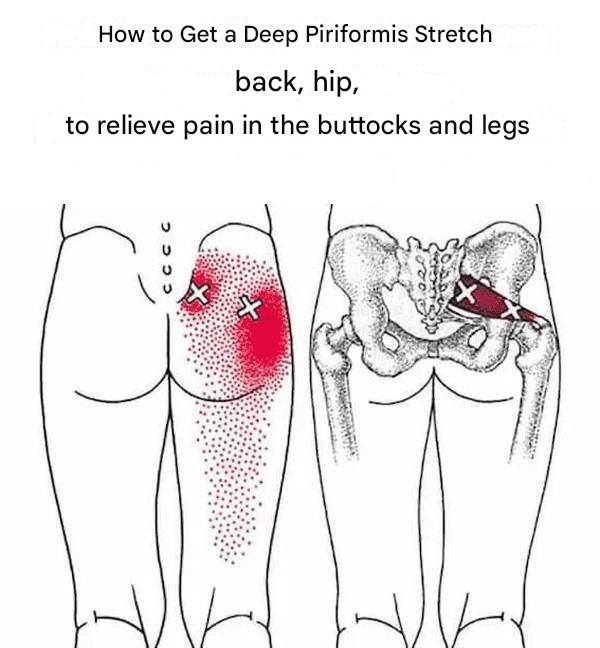
The piriformis muscle is small, but when it becomes tight or inflamed, it can cause intense discomfort in your lower back, hips, glutes, and even down your leg. This is often referred to as piriformis syndrome, a condition where the piriformis irritates or compresses the sciatic nerve. Unlike pain caused by a herniated disc, piriformis-related pain is muscular — which means stretching and mobility work can bring significant relief when done correctly and consistently.
🚀 Make Money Online – Up to $50 Per Day!
If you sit for long hours, drive frequently, or have tight hips from inactivity or intense workouts, your piriformis may be shortened and restricted. A deep, targeted stretch can help lengthen the muscle, reduce nerve compression, improve circulation, and restore balance to your hips and pelvis.
Below is a complete, step-by-step guide to safely performing a deep piriformis stretch routine that can help eliminate back, hip, glute, and leg pain.
Understanding the Piriformis Muscle
The piriformis is located deep in the buttock region. It runs from the lower spine (sacrum) to the top of the femur (thigh bone). Its primary function is to rotate the hip outward and stabilize the pelvis during movement. The sciatic nerve runs either underneath or through this muscle, depending on your anatomy. When the muscle tightens or spasms, it can irritate the nerve, causing symptoms similar to sciatica — including tingling, numbness, and radiating pain.
The Key to a Deep Stretch
A proper piriformis stretch targets hip external rotation combined with flexion and slight adduction (bringing the leg inward). The goal is to gently lengthen the muscle without forcing it, which could worsen irritation.
-
Supine Figure-Four Stretch (Beginner to Intermediate)
This is one of the safest and most effective stretches.
How to do it:
• Lie on your back with both knees bent and feet flat on the floor.
• Cross your right ankle over your left knee, forming a “4” shape.
• Thread your right hand through the space between your legs and grab behind your left thigh.
• Gently pull your left thigh toward your chest.
• Keep your head relaxed and shoulders on the floor.
You should feel a stretch deep in your right glute. Hold for 30–60 seconds while breathing slowly. Switch sides.
To deepen the stretch:
Pull the supporting leg closer to your chest and gently press the crossed knee outward.
-
Seated Piriformis Stretch (Great for Office Relief)
If you sit all day, this is perfect.
How to do it:
• Sit upright in a chair with both feet flat on the floor.
• Place your right ankle on top of your left knee.
• Keep your back straight and hinge forward at the hips.
• Lean forward slowly until you feel the stretch in your glute.
Hold for 30–60 seconds and repeat on the other side.
Tip: Do not round your back — hinge forward to isolate the hip.
-
Pigeon Pose (Advanced Deep Stretch)
This yoga-based stretch provides a powerful release.
How to do it:
• Start in a push-up position.
• Bring your right knee forward toward your right wrist.
• Angle your shin across your body.
• Extend your left leg straight behind you.
• Lower your upper body forward over your front leg.
Keep hips squared toward the floor. Hold for 30–90 seconds. Switch sides.
If you’re new to this stretch, place a pillow under your hip for support.
-
Lying Twist Variation (Targets Piriformis and Lower Back)
• Lie on your back and cross your right ankle over your left knee.
• Grab your left thigh and pull it toward your chest.
• Then gently rotate both legs toward your left side.
This adds spinal rotation and deepens the stretch. Hold 30 seconds per side.
Breathing for Maximum Release
Deep diaphragmatic breathing enhances muscle relaxation. Inhale slowly through your nose for four seconds. Exhale slowly through your mouth for six seconds. Each exhale allows the muscle to soften further.
Common Mistakes to Avoid
• Bouncing during the stretch
• Holding your breath
• Forcing the knee down aggressively
• Ignoring sharp or shooting pain
Stretching should create tension, not severe pain.
How Often to Stretch
For best results:
• Stretch daily if you have active pain
• Hold each stretch at least 30 seconds
• Perform 2–3 rounds per side
• Stay consistent for 2–3 weeks
When to Be Cautious
If pain radiates below the knee, worsens with coughing, or includes muscle weakness, consult a healthcare provider. In some cases, pain may be caused by lumbar spine issues such as a herniated disc rather than muscular tightness.
Supporting Exercises for Long-Term Relief
Stretching alone is not enough. Strengthening the gluteus medius and hip stabilizers prevents recurrence.
Try:
• Glute bridges
• Clamshells
• Side-lying leg raises
• Gentle hip mobility drills
Weak glutes often cause the piriformis to overwork.
Heat and Self-Massage
Applying heat before stretching improves flexibility. A heating pad for 10–15 minutes increases blood flow.
You can also use a tennis ball or massage ball:
• Sit on the floor
• Place the ball under your glute
• Slowly roll over tender spots
• Pause on tight areas for 20–30 seconds
This releases trigger points and enhances stretch effectiveness.
Posture and Lifestyle Tips
• Avoid sitting longer than 45–60 minutes
• Keep hips slightly higher than knees when seated
• Use lumbar support
• Stay active daily
Even short walks improve circulation and reduce muscle stiffness.
Final Thoughts
A deep piriformis stretch routine can dramatically reduce back, hip, glute, and leg pain when practiced consistently and safely. The key is gentle progression, proper breathing, and combining stretching with strengthening exercises. Most people begin to notice improvement within one to two weeks.
