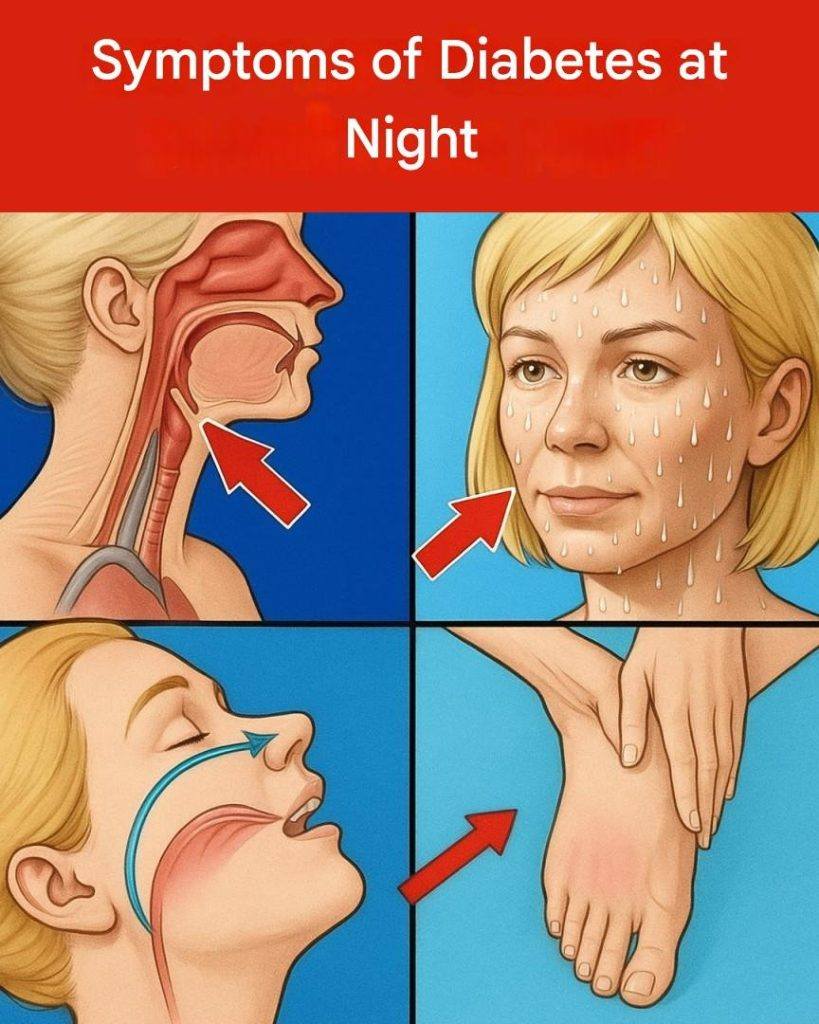
Diabetes is a chronic condition that affects how your body regulates blood sugar (glucose), the main source of energy for your cells. While many people recognize daytime symptoms such as fatigue, increased thirst, or frequent urination, nighttime symptoms are often overlooked. However, the body continues to process glucose while you sleep, and when blood sugar levels are too high or too low, it can trigger noticeable warning signs during the night.
🚀 Make Money Online – Up to $50 Per Day!
Recognizing these nighttime symptoms early can help you take action, manage your blood sugar more effectively, and prevent complications. Below are five common diabetes symptoms that often appear at night, along with explanations and supportive lifestyle tips.
1. Frequent Nighttime Urination (Nocturia)
One of the earliest and most common nighttime symptoms of diabetes is frequent urination during sleep. This condition is known as nocturia.
When blood sugar levels are high, the kidneys work harder to remove excess glucose from the blood. To do this, they pull extra water from the body and produce more urine. As a result, you may find yourself waking up multiple times at night to use the bathroom.
This symptom can disrupt your sleep, leaving you feeling tired and drained the next day. Over time, repeated sleep interruptions can affect your mood, concentration, and overall health.
Supportive tip:
Try to monitor your fluid intake in the evening and maintain stable blood sugar levels through balanced meals and regular physical activity.
2. Excessive Night Sweating
Night sweats can be another warning sign of diabetes, especially when blood sugar drops too low during sleep. This condition is called nocturnal hypoglycemia.
When blood sugar levels fall too much, the body releases stress hormones like adrenaline. These hormones can trigger sweating, even if the room is cool. You may wake up with damp clothes, wet sheets, or feeling unusually hot.
Night sweats may also be accompanied by other symptoms such as a rapid heartbeat, anxiety, or vivid dreams.
Supportive tip:
Eating balanced meals and avoiding skipping dinner can help maintain stable blood sugar overnight.
3. Restless Sleep and Insomnia
People with diabetes often experience poor sleep quality. Fluctuating blood sugar levels can interfere with the body’s natural sleep cycle.
High blood sugar can cause dehydration, thirst, and discomfort, while low blood sugar can activate stress responses that wake you up suddenly. As a result, you may experience:
-
Difficulty falling asleep
-
Frequent awakenings
-
Restlessness during the night
-
Feeling tired even after a full night in bed
Sleep deprivation can also make blood sugar harder to control, creating a cycle that affects both sleep and metabolic health.
Supportive tip:
Establish a consistent bedtime routine and avoid heavy, sugary meals late at night.
4. Tingling or Numbness in Hands and Feet
Another nighttime symptom of diabetes is tingling, numbness, or a burning sensation in the hands or feet. This condition is known as diabetic neuropathy and occurs when high blood sugar damages the nerves over time.
These sensations are often more noticeable at night when the body is at rest and there are fewer distractions. Some people describe it as:
-
Pins and needles
-
Burning sensation
-
Sharp or stabbing pain
-
Increased sensitivity
This discomfort can interfere with sleep and worsen if blood sugar levels remain uncontrolled.
Supportive tip:
Maintaining healthy blood sugar levels and engaging in regular gentle exercise can support nerve health.
5. Increased Thirst During the Night
Excessive thirst, also called polydipsia, is another symptom that can appear during nighttime. High blood sugar levels cause the body to lose more fluids through urination, which leads to dehydration.
As a result, you may wake up feeling extremely thirsty and need to drink water frequently. This can further increase nighttime urination, creating a cycle that disrupts sleep.
Persistent thirst is a sign that your body is trying to restore fluid balance and eliminate excess sugar.
Supportive tip:
Drink enough water during the day and avoid excessive sugary foods and beverages.
Why Nighttime Symptoms Matter
Nighttime symptoms are important warning signals that your blood sugar may not be properly regulated. Ignoring these signs can lead to long-term complications such as nerve damage, kidney problems, and cardiovascular issues.
Early awareness allows you to make positive lifestyle changes, including:
-
Eating balanced, nutritious meals
-
Staying physically active
-
Maintaining a healthy weight
-
Getting regular medical checkups
-
Monitoring blood sugar levels if recommended
These steps can help protect your health and improve your overall well-being.
Gentle Nighttime Support Drink Recipe
A simple, calming herbal drink may help support hydration and relaxation before sleep.
Ingredients:
-
1 cup warm water
-
½ teaspoon cinnamon powder
-
½ teaspoon chamomile flowers or tea
-
A few drops of lemon juice (optional)
Instructions:
-
Boil the water and pour it into a cup.
-
Add chamomile and let it steep for 5 minutes.
-
Stir in cinnamon and lemon juice.
-
Drink warm about 30 minutes before bedtime.
This drink may help promote relaxation and support healthy nighttime habits.
Final Thoughts
Nighttime symptoms such as frequent urination, sweating, thirst, nerve discomfort, and restless sleep can be early warning signs of diabetes or poor blood sugar control. Paying attention to these signals can help you take proactive steps to protect your health.
While supportive habits and natural remedies can help, it is important to consult a healthcare professional if you experience persistent symptoms. Early diagnosis and proper management are the keys to living a healthy and comfortable life.
