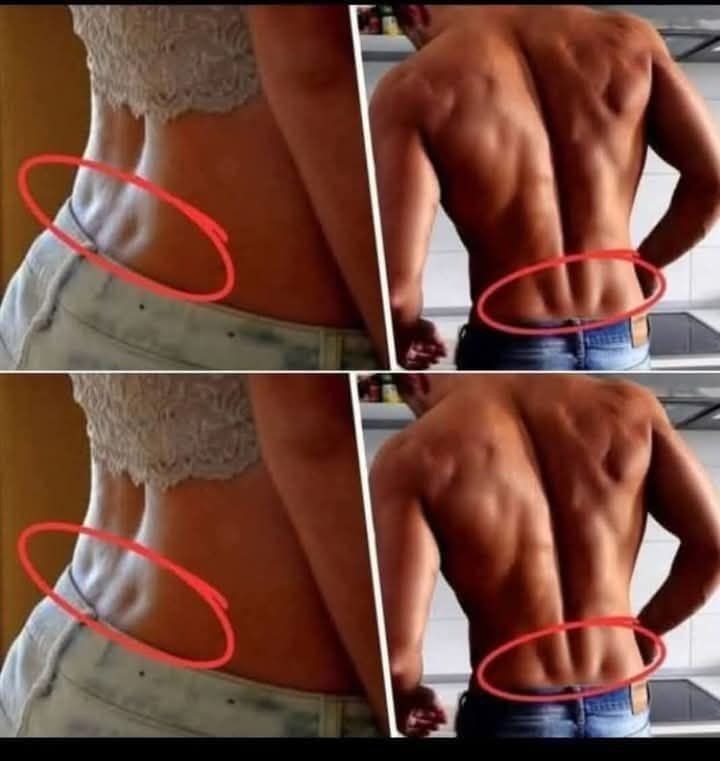
You may have noticed them in the mirror or while changing clothes—two small, symmetrical indentations resting just above the curve of the hips on the lower back. Often called lower back dimples, these subtle marks have sparked curiosity, folklore, and even admiration for generations. But what do they actually mean? Are they rare? Do they say anything about your health, genetics, or physical abilities?
🚀 Make Money Online – Up to $50 Per Day!
Let’s break it down in a clear, science-backed way—no myths, no exaggeration—just the fascinating truth behind these natural features.
What Are Lower Back Dimples, Really?
Those two indentations are most commonly known as Dimples of Venus (in women) or Dimples of Apollo (in men). Medically, they’re associated with the posterior superior iliac spine—a point on the pelvis where the skin is closely connected to the underlying bone.
Because the skin is tethered more tightly in this area, small indentations form instead of a smooth surface. They are completely natural and harmless.
Are They Genetic?
Yes—genetics play the biggest role.
Lower back dimples are an inherited trait, meaning you’re born with the bone structure and skin attachment that creates them. You can’t develop them later through exercise, weight loss, or posture changes. Fitness may make them more visible, but it doesn’t create them.
If one or both of your parents have them, there’s a higher chance you will too.
Do They Mean You’re Healthier?
There’s no medical evidence that lower back dimples indicate better overall health. However, there are a few interesting associations worth understanding:
-
They’re often found in people with lower body fat in the lumbar area, which makes the dimples more noticeable.
-
They sit near major blood vessels, and some studies suggest that people with these dimples may have efficient blood circulation in the pelvic region—but this is a correlation, not a guarantee.
-
They are not linked to spinal problems, nerve issues, or organ function.
In short: they’re neutral—neither a health advantage nor a concern.
Are They Related to Fitness or Athletic Ability?
This is a popular belief, but it’s only partly true.
Athletes, dancers, and fitness enthusiasts may appear to have these dimples more often simply because lean muscle tone makes them easier to see. The dimples themselves do not improve strength, flexibility, or performance.
Think of them like freckles or dimples on the face—visible traits, not performance markers.
Why Are They Often Considered Attractive?
Cultural perception plays a huge role here.
Throughout history, lower back dimples have been associated with:
-
Symmetry
-
Youthful body composition
-
Healthy posture
In art and sculpture—especially classical European art—these dimples were often subtly emphasized, which helped shape modern beauty standards. Today, they’re commonly admired simply because they’re uncommon and naturally symmetrical.
Attraction, of course, is subjective—but these dimples have long been viewed as aesthetically pleasing in many cultures.
Are Lower Back Dimples the Same as Sacral Dimples?
No—and this distinction matters.
-
Dimples of Venus/Apollo:
-
Symmetrical
-
Located on both sides of the lower back
-
Completely harmless
-
-
Sacral dimples:
-
Usually a single dimple
-
Found directly above the tailbone
-
Present at birth
-
Most sacral dimples are also harmless, but very rarely, a deep sacral dimple can be associated with spinal development issues in infants. This does not apply to the classic two lower back dimples discussed here.
Can You Lose Them?
Not really.
Because they’re based on bone structure and skin attachment:
-
Weight gain may make them less visible
-
Weight loss may make them more visible
-
But they don’t disappear permanently
They’re part of your natural anatomy.
