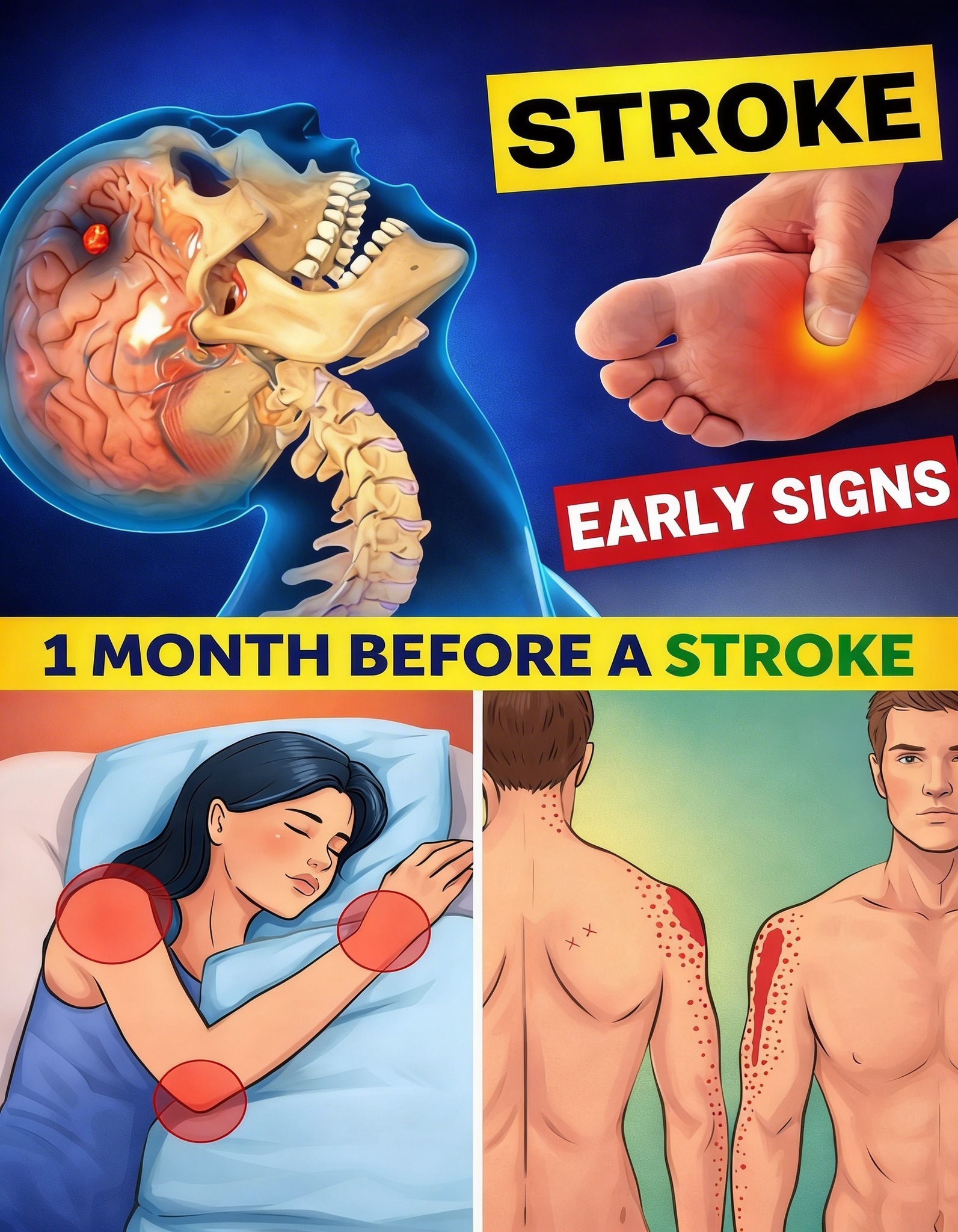
A stroke rarely happens “out of nowhere.” In many cases, the body gives subtle warning signs days or even weeks before a major event. A stroke occurs when blood flow to the brain is blocked (ischemic stroke) or when a blood vessel bursts (hemorrhagic stroke). According to organizations like the World Health Organization and the American Stroke Association, recognizing early symptoms and acting quickly can save brain function — and lives.
Here are 8 warning signs that may appear up to a month before a stroke, followed by 9 powerful prevention tips.
8 Warning Signs of Stroke
1. Sudden Weakness or Numbness
One of the most common early signs is weakness or numbness in the face, arm, or leg — especially on one side of the body. It may come and go. Even if it lasts only a few minutes, it could be a Transient Ischemic Attack (TIA) — often called a “mini-stroke.” TIAs are serious warnings that a full stroke may follow.
2. Temporary Vision Problems
Blurred vision, double vision, or sudden loss of vision in one eye can signal reduced blood flow to the brain. Some people describe it as a curtain briefly covering their eye.
3. Difficulty Speaking
If you suddenly struggle to find words, slur your speech, or have trouble understanding others, it may indicate a disruption in the brain’s language centers.
4. Severe Headaches
A sudden, intense headache — especially one unlike anything you’ve experienced before — may signal bleeding in the brain. This symptom is more common in hemorrhagic strokes.
5. Dizziness or Loss of Balance
Frequent unexplained dizziness, trouble walking, or coordination problems could mean the brain’s balance centers aren’t receiving enough oxygen.
6. Facial Drooping
One side of the face may droop or feel numb. If you smile and one side doesn’t move properly, this is a red flag.
7. Sudden Confusion
Feeling disoriented, confused, or unable to understand simple instructions may signal a neurological issue that requires immediate attention.
8. Unexplained Fatigue
Extreme and unusual fatigue, particularly in women, can sometimes occur weeks before a stroke. If exhaustion appears suddenly and without cause, it’s worth discussing with a healthcare provider.9 Tips to Help Prevent Stroke
Prevention is powerful. Many strokes are linked to lifestyle factors that can be managed.
1. Control Blood Pressure
High blood pressure is the leading cause of stroke. Regular monitoring and medication (if prescribed) are essential. Reducing salt intake and maintaining a healthy weight can make a significant difference.
2. Manage Blood Sugar
Diabetes increases stroke risk. Keep blood glucose levels stable through balanced meals, exercise, and medical supervision.
3. Keep Cholesterol in Check
High LDL (“bad”) cholesterol can lead to plaque buildup in arteries. Eating more fiber, fruits, vegetables, and healthy fats helps support healthy levels.
4. Stay Physically Active
Aim for at least 30 minutes of moderate exercise most days of the week. Walking, cycling, or swimming helps improve circulation and heart health.
5. Quit Smoking
Smoking damages blood vessels and increases clot formation. Quitting can dramatically reduce stroke risk within a few years.
6. Maintain a Healthy Weight
Excess body weight contributes to high blood pressure, diabetes, and heart disease — all stroke risk factors.
7. Eat a Brain-Healthy Diet
Focus on whole foods: leafy greens, berries, nuts, seeds, olive oil, and fatty fish rich in omega-3s. Limit processed foods and added sugars.
8. Limit Alcohol
Excessive alcohol raises blood pressure and increases stroke risk. Moderation is key.
9. Know the FAST Method
Memorize the word FAST:
-
Face drooping
-
Arm weakness
-
Speech difficulty
-
Time to call emergency services
Immediate treatment can reduce brain damage and improve survival.
Final Thoughts
Stroke is a medical emergency, but it often provides early warnings. Never ignore temporary symptoms — even if they disappear quickly. Early medical evaluation after a suspected TIA can reduce the risk of a major stroke by up to 80% with proper treatment and lifestyle adjustments.
If you or someone around you experiences sudden weakness, confusion, vision changes, or difficulty speaking, seek medical help immediately. Acting fast can mean the difference between recovery and permanent disability.
