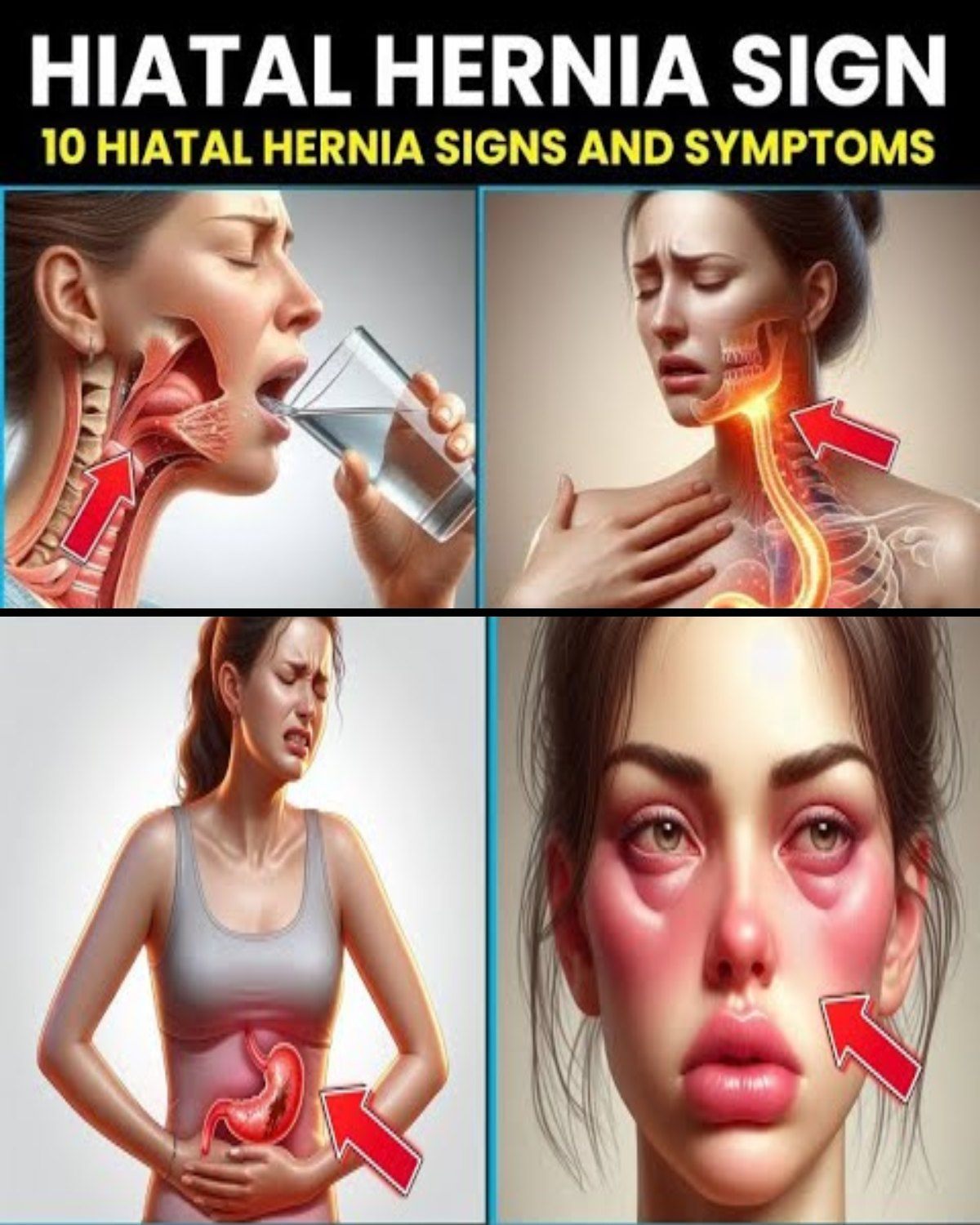
A hiatal hernia is a condition many people have without even realizing it. It happens when part of the stomach pushes up through the diaphragm and into the chest cavity. The diaphragm is the muscle that helps you breathe and separates your chest from your abdomen. Normally, the esophagus passes through a small opening in the diaphragm called the hiatus before connecting to the stomach. When that opening weakens or widens, a hiatal hernia can develop.
Hiatal hernias are especially common in adults over 50 and are often associated with acid reflux and heartburn. While some people experience no symptoms at all, others may struggle with discomfort that affects their daily lives. Here are 10 important signs and symptoms you should know.
-
Frequent Heartburn
One of the most common signs of a hiatal hernia is persistent heartburn. This burning sensation in the chest often occurs after eating or when lying down. Because the stomach is partially displaced, acid can more easily flow back into the esophagus, causing irritation and discomfort. -
Acid Reflux
Acid reflux happens when stomach acid moves upward into the esophagus. A hiatal hernia can weaken the lower esophageal sphincter, the valve that normally keeps acid in the stomach. As a result, you may experience a sour taste in your mouth, burning in your throat, or regurgitation of food and liquid. -
Chest Pain
Chest pain related to a hiatal hernia can sometimes feel alarming. It may mimic the symptoms of a heart problem. The pain is usually caused by acid irritation or muscle strain in the esophagus. However, because chest pain can signal serious conditions, it is important to seek medical attention to rule out heart issues. -
Difficulty Swallowing
Some people with a hiatal hernia notice that food feels stuck in their throat or chest. This condition, known as dysphagia, can happen if inflammation narrows the esophagus. Over time, chronic acid exposure can lead to scarring and further swallowing difficulties. -
Chronic Cough
A persistent cough that does not seem linked to a cold or respiratory infection could be related to acid reflux from a hiatal hernia. Acid irritating the throat and airways can trigger coughing, especially at night. -
Hoarseness or Sore Throat
When stomach acid reaches the throat, it can cause irritation and inflammation. This may lead to a raspy voice, frequent throat clearing, or a sore throat that lingers without signs of infection. -
Feeling Full Quickly
A hiatal hernia can sometimes cause early satiety, meaning you feel full after eating only a small amount of food. The altered position of the stomach may interfere with normal digestion and create a sensation of pressure. -
Bloating and Burping
Excessive burping and bloating are also common symptoms. When the stomach shifts upward, trapped air and digestive gases can build up more easily, leading to discomfort and frequent belching. -
Nausea
Some individuals experience nausea, especially after meals. The pressure caused by the hernia and reflux may upset the stomach and make you feel queasy. -
Shortness of Breath
In larger hiatal hernias, the stomach pressing into the chest cavity can interfere with lung expansion. This may lead to shortness of breath, particularly during physical activity or when bending over.
When to See a Doctor
While mild symptoms may be managed with lifestyle changes, it is important to seek medical advice if you experience severe chest pain, difficulty swallowing, unexplained weight loss, vomiting blood, or black stools. These could signal complications such as bleeding or significant esophageal damage.
Risk Factors
Several factors increase the likelihood of developing a hiatal hernia. Aging naturally weakens muscle tissue. Obesity puts extra pressure on the abdomen. Heavy lifting, chronic coughing, pregnancy, and frequent straining during bowel movements can also contribute.
Management and Treatment
Treatment often focuses on reducing acid reflux. Doctors may recommend smaller meals, avoiding trigger foods, losing excess weight, and not lying down immediately after eating. Elevating the head of the bed can also help reduce nighttime symptoms.
Medications such as antacids, H2 blockers, or proton pump inhibitors may be prescribed to reduce acid production and protect the esophagus. In severe cases or when complications occur, surgical repair may be necessary to reposition the stomach and tighten the diaphragm opening.
Final Thoughts
A hiatal hernia is a common but often overlooked condition. Recognizing the signs early can help you take steps to manage symptoms and prevent complications. If you frequently experience heartburn, chest discomfort, or swallowing issues, it is worth discussing these symptoms with a healthcare professional. With proper care and lifestyle adjustments, most people can successfully control their symptoms and maintain a good quality of life.
